
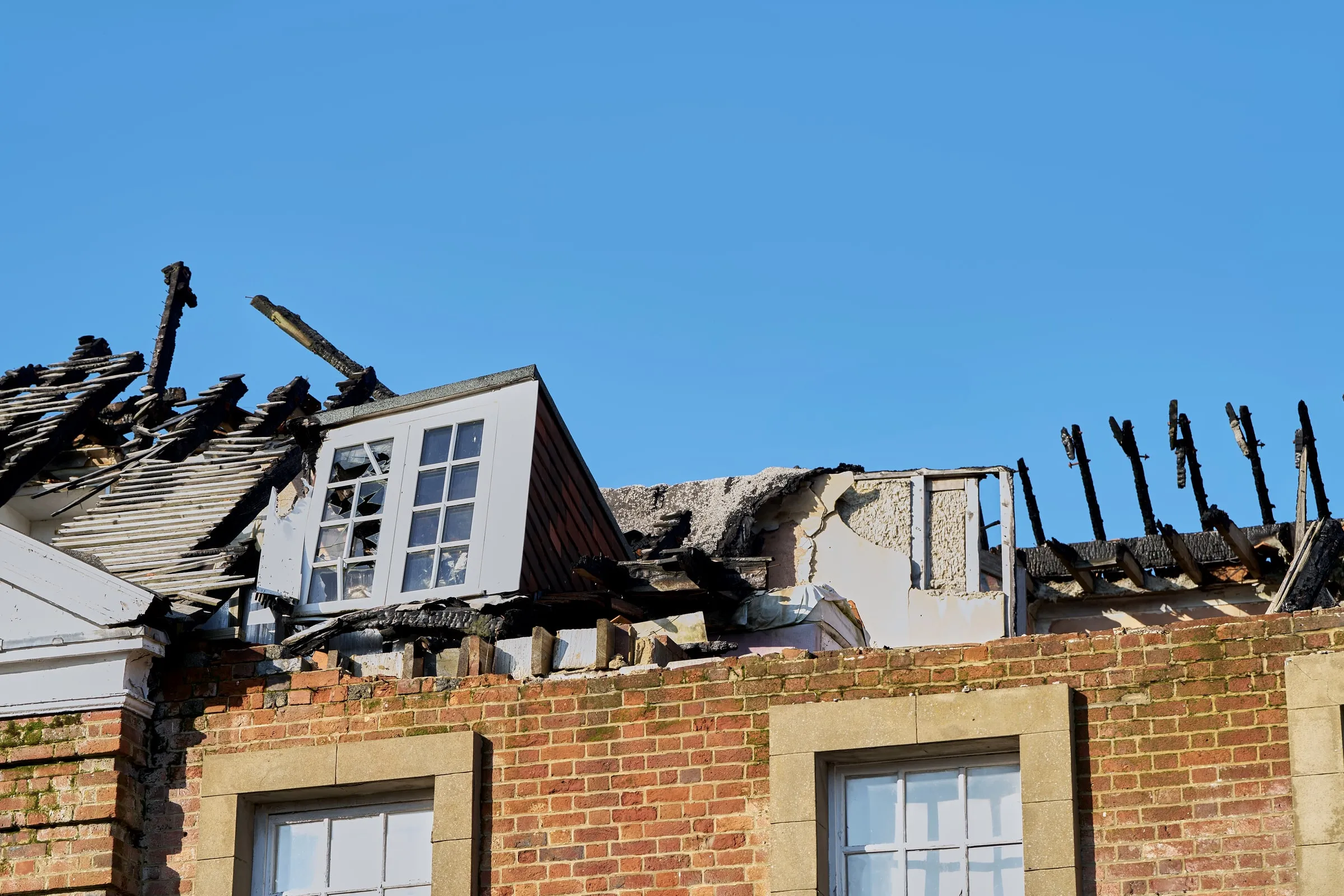
Security and Fire Watch for Fire-Damaged Buildings
From the night of the fire until the building is secured or demolished: a fire watch for rekindle, a post for the scene and a log for the marshal and adjuster.
Request a proposalThe situation
What a fire-damaged building deals with
Rekindle
A fire that is out is not necessarily finished. Embers in insulation, voids and debris piles can flare hours or days later, and the building's alarm and sprinklers are gone. The fire marshal often requires a watch until the risk has passed.
The scene
The fire marshal and the insurer's investigator need the scene undisturbed until they release it. Anyone walking through, from the owner to a scrapper, compromises the investigation and the claim.
Looters and the curious
A burned building is open by definition, its contents are exposed, and the neighborhood knows. Residents' belongings, a business's inventory and the building's copper go out the openings the fire made.
Displaced residents and tenants
People who lived or worked there want their belongings and their records, often that night. They need to be admitted safely, at the right time, with an escort, and turned away when the structure or the investigation does not allow it.
The night of the fire
Coverage for a fire-damaged building starts while the fire department is still on scene. The officer takes the marshal’s conditions from the incident commander: whether a watch is required, the interval, the areas that may be entered, the fire department’s number and any restriction on the upper floors. From that point there are three jobs at once: the fire watch for rekindle, the perimeter for the scene and the door for the people who need to get in. Price Protection staffs all three from one post, on short notice, around the clock.
Rekindle
A fire that is out can flare from embers in insulation, voids and debris hours or days later, and the building’s own systems are gone. Where the fire code official or the insurer requires a watch, the officer walks rounds through and around the structure as far as it is safe, watches for smoke and heat, calls the fire department at the first sign and logs every round and every call. The log is the record the marshal and the adjuster read.
The scene and the list
Until the investigators release the scene, nobody walks through it who is not on the list: the marshal’s investigator, the insurer’s investigator, the adjuster, the restoration contractor and the board-up crew. Residents and tenants who need belongings or records are admitted when the marshal and the owner allow it, with an escort, to the areas that are permitted, and each retrieval is logged. Everyone else is refused courteously and logged, and the police are called for anyone who will not leave.
After the release
Once the scene is released and the openings boarded, the post becomes a patrol: checks on a schedule with every opening tested, contractors admitted by the list as restoration begins, and the building watched until it is restored, sold or demolished. Where the restoration involves hot work or the building’s systems remain impaired, the fire watch continues under those rules.
Calling
Dispatch takes the address, the marshal’s conditions, the owner’s and the adjuster’s contacts and the hours wanted, and sends an officer. The supervisor follows to write the post orders with the owner and the adjuster, and the report and the log go out every day until the coverage ends.
How we cover it
Every service, applied to this post.
- Fire watch
A fire watch from the night of the fire where the fire code official or the insurer requires it, with rounds through and around the structure as far as it is safe, watching for smoke, heat and flare-ups, a means to call the fire department and a log of every round under IFC 901.7 as adopted locally.
- Unarmed security guards
An unarmed officer posted at the scene around the clock or for the hours the owner and the adjuster choose, holding the perimeter, admitting only people on the list, escorting residents and tenants to retrieve belongings when it is permitted and walking the exterior on rounds.
- Access control
The fire marshal, the investigators, the adjuster, the restoration contractor, the board-up crew and the residents are admitted by the list the owner and the adjuster keep, signed in and out, and everyone else is refused and logged.
- Vehicle patrol
Once the building is boarded and the scene released, a patrol checks it on a schedule with every opening tested, until it is restored, sold or demolished.
- Incident reporting
A daily report and the fire watch log to the owner, the adjuster and, on request, the fire marshal: rounds with times and conditions, flare-ups and calls to the fire department, persons admitted and refused, retrievals escorted, damage and entry found.
A typical post
What a shift looks like here.
The officer arrives while the fire department is still packing up and takes the scene from the incident commander with the marshal's conditions: a watch through the night, rounds every thirty minutes around the exterior and through the ground floor where it is safe, the fire department's number, no entry above the ground floor. The perimeter tape is checked and the openings noted.
Through the night the rounds are walked and logged. At two, smoke rises from a debris pile at the rear and the officer calls the fire department, which returns and wets it down; the time and the response are logged. A resident arrives for medication and is escorted to a ground-floor unit the marshal allowed, and it is logged. A man with a flashlight at the rear fence is told the property is closed and leaves.
In the morning the adjuster and the restoration contractor arrive and are signed in, the marshal's investigator releases the scene at noon, and the board-up crew is admitted. The report and the log go to the owner and the adjuster, with the flare-up, the retrieval and the man at the fence.

Reporting
What the daily report covers here
Every client receives a written report each day, and officer performance is reviewed and documented daily. This is what the report records on this kind of post.
- Fire watch rounds with times, areas covered and conditions found
- Smoke, heat or flare-ups observed and the fire department called, with times
- Persons admitted by the list and persons refused, with times
- Residents and tenants escorted to retrieve belongings, with the unit and time
- Investigators, adjuster, contractors and board-up crew on site
- Entry or attempted entry, looting and damage found, photographed
- Scene released and openings secured, with times
Who decides whether a fire watch is required after a fire?
The fire code official, in Houston the Fire Marshal's Office, under IFC 901.7 as the city adopts it, and often the insurer under the policy. The conditions, the interval and the duration come from them and are written into the log.
How fast can an officer be at the scene?
Fire watch and emergency security are staffed on short notice around the clock. Dispatch takes the address and the marshal's conditions and the officer typically arrives while the fire department is still on scene or shortly after.
Can residents get their belongings?
When the marshal and the owner allow it, with an escort, to the areas that are permitted, signed in and out. Retrievals are logged for the adjuster and the residents.
What happens to the log?
The original goes to the owner or the adjuster and a copy is kept by the company. The fire marshal can see it on request. It is the record that the watch was kept and the scene was held.
How long does coverage last?
The watch lasts as long as the marshal or the insurer requires it. The post lasts until the building is boarded and the scene released, and a patrol takes over until the building is restored, sold or demolished.
Related pages
Industries we serve
Service areas
Insights
Answers
Request a proposal
Request a proposal for fire-damaged buildings.
Two short steps. Dispatch reviews every request and calls you back about coverage. For urgent unarmed coverage we can typically staff most sites within hours.
24-hour dispatch
(281) 326-9189