
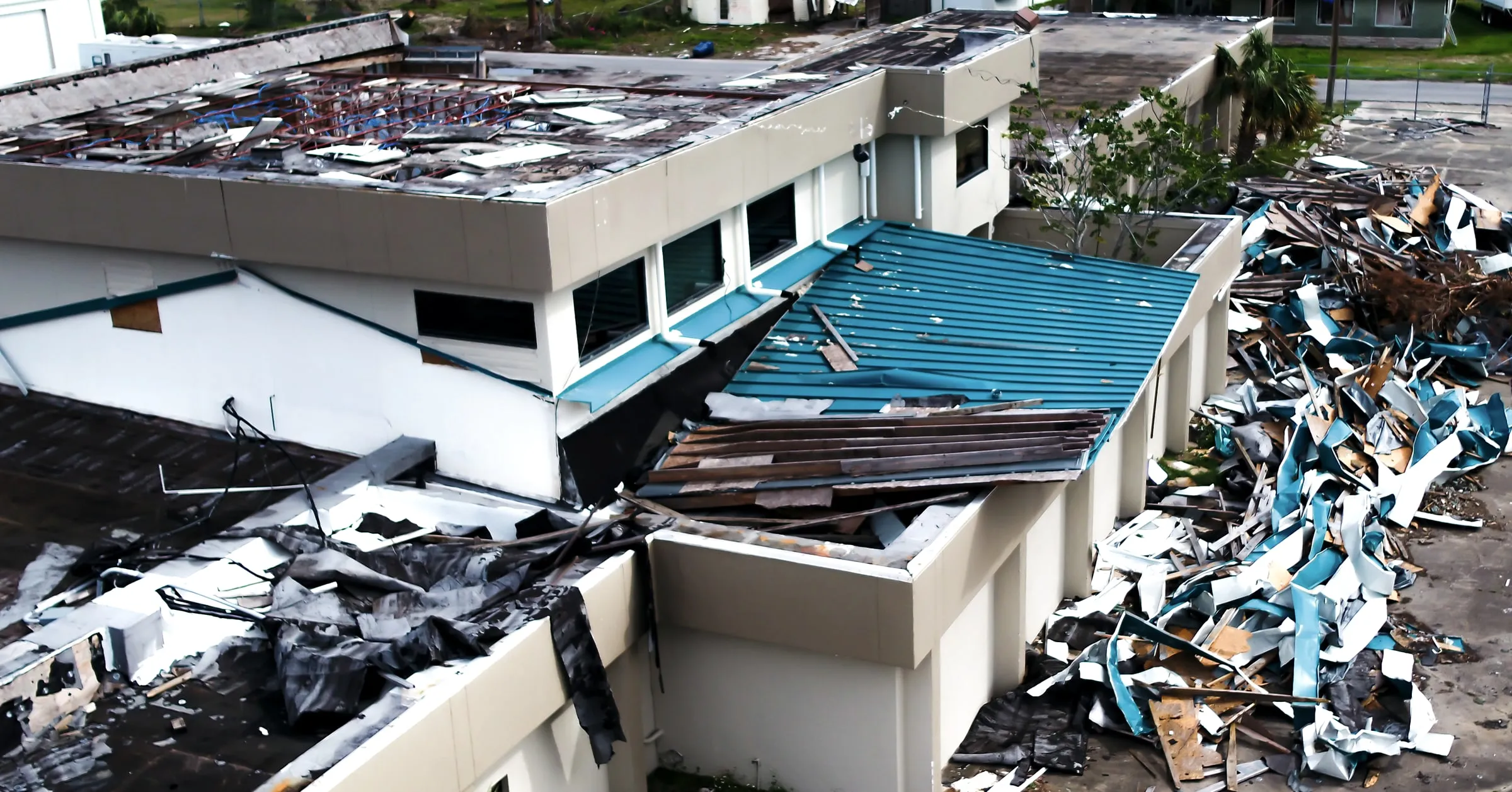
Security After Storm and Hurricane Damage
When the power is out, the gates are open and the windows are gone, a visible officer on the property until the systems are back.
Request a proposalThe situation
What a storm-damaged property deals with
Open buildings without power
Windows blown in, roofs peeled, doors forced by water. The gates fail open, the cameras and the lights are dark, the alarm is silent. For days the property is exactly as exposed as it looks.
Looting and the curious
Damaged retail centers, apartment communities and warehouses are looted in the first nights, and people walk through damaged buildings to see. The owner's liability for an injury in a building with no floor does not depend on whether the person was invited.
Contractors and materials
Restoration brings crews, dumpsters, generators, roofing and drywall to a property with no fence and no lighting. The materials are stolen from the site the same week they arrive.
Displaced residents and tenants
People whose homes and businesses were damaged need to get in for belongings, inventory and records, and need to be kept out of the parts that are unsafe.
The days between the storm and the power
The exposure after a storm is not the storm. It is the period after it, when the gates have failed open, the cameras and the lights are dark, the windows are gone and everyone in the area knows which buildings are open. Price Protection’s storm coverage is officers on the property as soon as roads allow, visible at the entrances, walking the buildings on the hour with a flashlight, holding the gates that will not close and staying until the systems are back or a patrol can take over. Hurricane season is June through November, and the plan is written before it.
The first round
The first round documents the property: every opening, every unit door that is open, every fence panel down, photographed with times. That record is the adjuster’s baseline and the manager’s list for the board-up crew. From it the post orders for the recovery are written: which units residents may be escorted to, which buildings are closed, where the materials will be stored, who is on the list.
Residents, contractors and looters
Residents and tenants are admitted by the manager’s list to cleared units, escorted where the structure allows, and logged. Contractors, adjusters and crews are admitted by the list and their materials, generators and equipment are checked on every round, because a roofing stack on an unfenced site disappears in a night. Everyone else is refused courteously and logged, with the police called for anyone who will not leave.
Systems down
Where the storm has taken a required fire protection system out of service, the impairment is reported to the fire department and the fire code official and a fire watch is kept if required, with rounds and a log, until the system is restored. Gates that failed open are covered in person until repaired, and the report records each system as it comes back.
Before the season
Owners who call before June get post orders with a storm section, an agreed stand-down and return, a ranking of their properties and a plan for the coverage after the storm, and they are staffed first when it comes. The hurricane checklist is the starting point. After a storm, dispatch takes the address and the owner’s priorities and sends officers as roads allow.
How we cover it
Every service, applied to this post.
- Unarmed security guards
Unarmed officers dispatched as soon as roads allow to the properties the owner ranks first, on the property around the clock or for the hours the owner chooses, visible at the entrances, walking the buildings, admitting residents and tenants by the list and staying until the systems are restored or a patrol can take over.
- Access control
Gates that failed open covered by an officer until repaired, contractors and adjusters admitted by the list, residents escorted, and the owner's temporary fencing and board-up confirmed on each round.
- Vehicle patrol
Where the owner has several damaged properties or a large site, a marked vehicle covers them on a route with foot checks at each, and works the streets at night when the power is out.
- Fire watch
Where the storm has taken a required fire protection system out of service and the fire code official requires a watch, a fire watch is kept with rounds and a log under IFC 901.7 as adopted locally, until the system is restored.
- Incident reporting
A daily report to the owner and the adjuster: openings and damage photographed with times, entries and looting found, persons admitted and refused, contractors' materials and equipment checked, systems restored and anything the adjuster asked to be documented.
A typical post
What a shift looks like here.
The officer reaches the apartment community the morning after the storm through a street still half blocked by branches. The gate is open with no power, three buildings have lost roofs, the leasing office's windows are gone. The first round photographs every opening and every unit door that is open, and the officer takes the entrance while the manager calls the board-up crew.
Through the day residents are admitted by the list to units the manager has cleared and escorted through the breezeways that still have stairs; two men with a truck who say they are roofers are not on any list and leave. The generator arrives with the restoration crew and is logged, and the officer stays with the materials as they are unloaded.
That night the power is still out and the officer walks the buildings with a flashlight on the hour, turns away three people at the rear fence and logs them, and checks the roofing stack and the generator. The report goes to the manager and the adjuster in the morning with the photographs of the openings and the entries.

Reporting
What the daily report covers here
Every client receives a written report each day, and officer performance is reviewed and documented daily. This is what the report records on this kind of post.
- Openings, damage and unsecured units photographed on the first round, with times
- Entries, looting and damage found on subsequent rounds
- Gates, cameras, lighting and alarms out of service and covered by the post
- Residents and tenants admitted and escorted, by unit and time
- Contractors, adjusters and crews admitted by the list
- Materials, generators and equipment on site checked each round
- Fire watch rounds where a system is impaired
How soon after a storm can officers arrive?
As soon as roads allow, to the properties the owner ranks first. Owners with post orders and a storm plan written before the season are staffed first, because the officers already know the property.
Can you cover several properties at once?
Yes. A vehicle route with foot checks at each, fixed posts at the properties with the most exposure and one report sectioned by property. The owner ranks the properties and the coverage follows.
What about residents who want their belongings?
Admitted by the manager's list to units that have been cleared, escorted where the structure allows, and logged. Units and buildings the manager or the inspector has declared unsafe are not entered.
Does the storm trigger a fire watch?
If a required fire protection system is out of service because of the storm and the fire code official requires a watch, yes, under IFC 901.7 as adopted locally. The impairment is reported and the watch is kept with a log until the system is restored.
Can you plan this before the season?
Yes, and it is the reason to call before June. Post orders with a storm section, an agreed stand-down and return, and a ranking of the properties are written in advance, and the coverage after the storm follows the plan.
Related pages
Industries we serve
Service areas
Insights
Answers
Glossary
Request a proposal
Request a proposal for storm and hurricane damage.
Two short steps. Dispatch reviews every request and calls you back about coverage. For urgent unarmed coverage we can typically staff most sites within hours.
24-hour dispatch
(281) 326-9189