
Security for Vacant Retail Centers
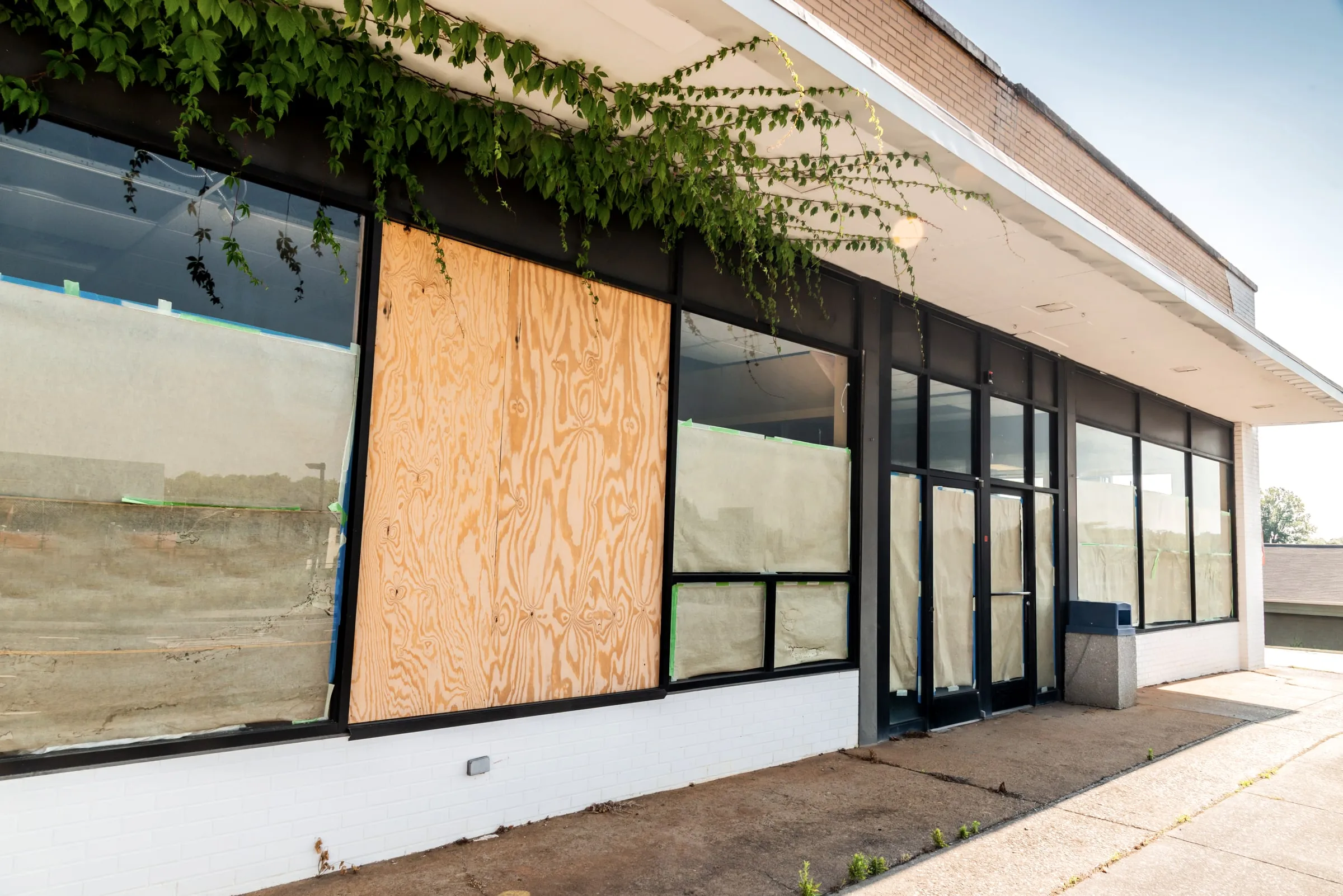
A dark strip center with a lit lot is an invitation. We check every storefront and rear door, clear the lot and report what the broker's next showing will see.
Request a proposalThe situation
What a vacant retail center deals with
The rear doors
Every vacant bay has a rear door onto a service alley nobody drives, with a padlock, a hasp and a wall of block behind it. The rear is where the copper leaves and the squatters enter, and the front looks fine from the road.
The lot
A large, lit, empty lot draws everything a lot can draw: dumped trailers and tires, encampments in the drive-through, cars stored and stripped, late-night gatherings, a car meet on Saturday. The owner pays for all of it.
The tenants who are left
A center with two tenants left in twenty bays has employees closing alone at nine in a dark row, customers who stop coming, and a landlord who owes them a safe property.
The showing
The broker's prospect walks the center on Tuesday and sees the graffiti, the broken glass at the rear and the mattress in the vestibule. The deal takes a step back with every walk.
The rear alley and the lot
A vacant retail center fails from the back and from the lot. The front is lit and faces the road; the rear service alley is dark, unvisited and lined with padlocked doors that open onto empty bays full of copper and fixtures; the lot is large, lit and empty, which is exactly what dumpers, encampments and car meets look for. Price Protection’s checks drive all three on a written schedule, with the officer on foot at every rear door and storefront, pulling every padlock, photographing what has changed and reporting it that night.
Remaining tenants
A center with a few tenants left owes them a safe property. Where the schedule overlaps their closing hours, the officer is at the front while employees close and walk to their cars, the tenants have dispatch’s number, and their concerns go to the owner in the report. A center that has lost tenants to the conditions in the lot sometimes keeps the ones it has by putting an officer on the property for the evening hours.
Dumping, encampments and the county
What is dumped is photographed with the location and any vehicle information, so the owner’s report to the county has the record. Encampments are recorded and reported, the people are told the property is closed, and the police are called where the post orders direct; removal is the owner’s decision. Over a few weeks a visible, irregular patrol and a cleared lot make the center a poor choice for both.
Showings and renovation
The broker can receive the report, and the officer notes what a showing will see, so the mattress in the vestibule is gone before Tuesday. Prospects, inspectors and contractors are admitted by the list and the lockbox procedure. When renovation begins, the crew is admitted by the schedule, hot work gets its own fire watch under OSHA’s rules and an impaired alarm or sprinkler system gets a watch if the fire code official requires it.
Starting checks
Dispatch needs the center’s address and layout, the bays and their status, the remaining tenants and their hours, the fire system’s status, the owner’s list and after-hours number and the schedule wanted. The supervisor walks the center with the owner’s representative, writes the sheet and the post orders and checks start on the agreed night.
How we cover it
Every service, applied to this post.
- Vehicle patrol
A marked vehicle checks the center on a written schedule, several times a night or as the owner chooses, driving the front, the rear service drive and the lot, with the officer on foot at every rear door, every storefront and every vestibule, testing locks and boards and photographing changes.
- Unarmed security guards
For centers with remaining tenants, an active encampment or a run of entries, an unarmed officer is posted on the property for the hours the problem runs, visible at the front during the tenants' closing hours and walking the rear on rounds.
- Access control
Brokers, prospects, inspectors and contractors admitted by the owner's list and the lockbox procedure, remaining tenants and their vendors recognized by the list, and rear doors, roof hatches and utility rooms recorded when found open.
- Fire watch
Where the center's fire alarm or sprinkler system is out of service and the fire code official requires a watch, a fire watch is kept with rounds and a log under IFC 901.7 as adopted locally, and hot work during a renovation gets its own watch under OSHA's rules.
- Incident reporting
A daily report to the owner, the receiver or the broker: each check with times, rear doors and storefronts tested, entries and damage photographed, dumping and encampments with location, persons and vehicles contacted, the remaining tenants' concerns and what the next showing will see.
A typical post
What a shift looks like here.
The patrol arrives at dusk as the last tenant, a nail salon, is closing; the officer stands at the front while the employees walk to their cars and logs the time. The first round drives the rear service alley slowly: eighteen rear doors, each padlock pulled, one hasp found pried and the door still closed, photographed and reported to the owner's after-hours line.
The lot on the second pass has a car with two people in the drive-through of the former bank; they are contacted courteously, told the property is closed and leave, and the plate is logged. Tires dumped by the dumpster enclosure since yesterday are photographed with the enclosure's camera reviewed for the time. The vestibule of the former grocery is checked and empty.
The last pass before dawn repeats the rear alley in the other direction and finds the pried hasp untouched. The report goes to the owner and the broker with the hasp, the car, the tires and a note that the vestibule is clean for Tuesday's showing.
Reporting
What the daily report covers here
Every client receives a written report each day, and officer performance is reviewed and documented daily. This is what the report records on this kind of post.
- Each check with the time and the front, rear and lot covered
- Rear doors, storefronts, vestibules, roof hatches and utility rooms tested on foot
- Entries, pried locks, broken glass and graffiti photographed with the bay
- Dumping, encampments and stored vehicles with location and photographs
- Persons and vehicles contacted, with plates and the outcome
- Remaining tenants' closings covered and concerns taken
- Condition notes for the broker before a showing
Patrol or a post for a vacant center?
A patrol on a written schedule suits a sealed center with no tenants. A center with tenants closing at night, an active encampment or a run of rear-door entries needs an officer on the property for the hours the problem runs. The walk-through decides and the first weeks' reports confirm it.
Can the officer walk our tenants to their cars?
Yes. Where the schedule overlaps the tenants' closing hours, the officer is at the front while employees close and walk to the lot, and it is logged. Tenants are given dispatch's number for anything outside those hours.
What about dumping and encampments in the lot?
Dumping is photographed with the location and any vehicle information for the owner's report to the county. Encampments are recorded and reported, the people are told the property is closed, and the police are called where the post orders direct. Removal is the owner's decision.
Do you coordinate with the broker?
The report can go to the broker as well as the owner, and the officer notes what a showing will see. Brokers and prospects are admitted by the list and the lockbox procedure and signed in and out.
What if the fire system is off?
The impairment is reported to the fire department and the fire code official, and a fire watch is kept with rounds and a log if the official requires it, until the system is restored or the building is demolished.
Related pages
Industries we serve
Insights
Glossary
Request a proposal
Request a proposal for vacant retail centers.
Two short steps. Dispatch reviews every request and calls you back about coverage. For urgent unarmed coverage we can typically staff most sites within hours.
24-hour dispatch
(281) 326-9189