
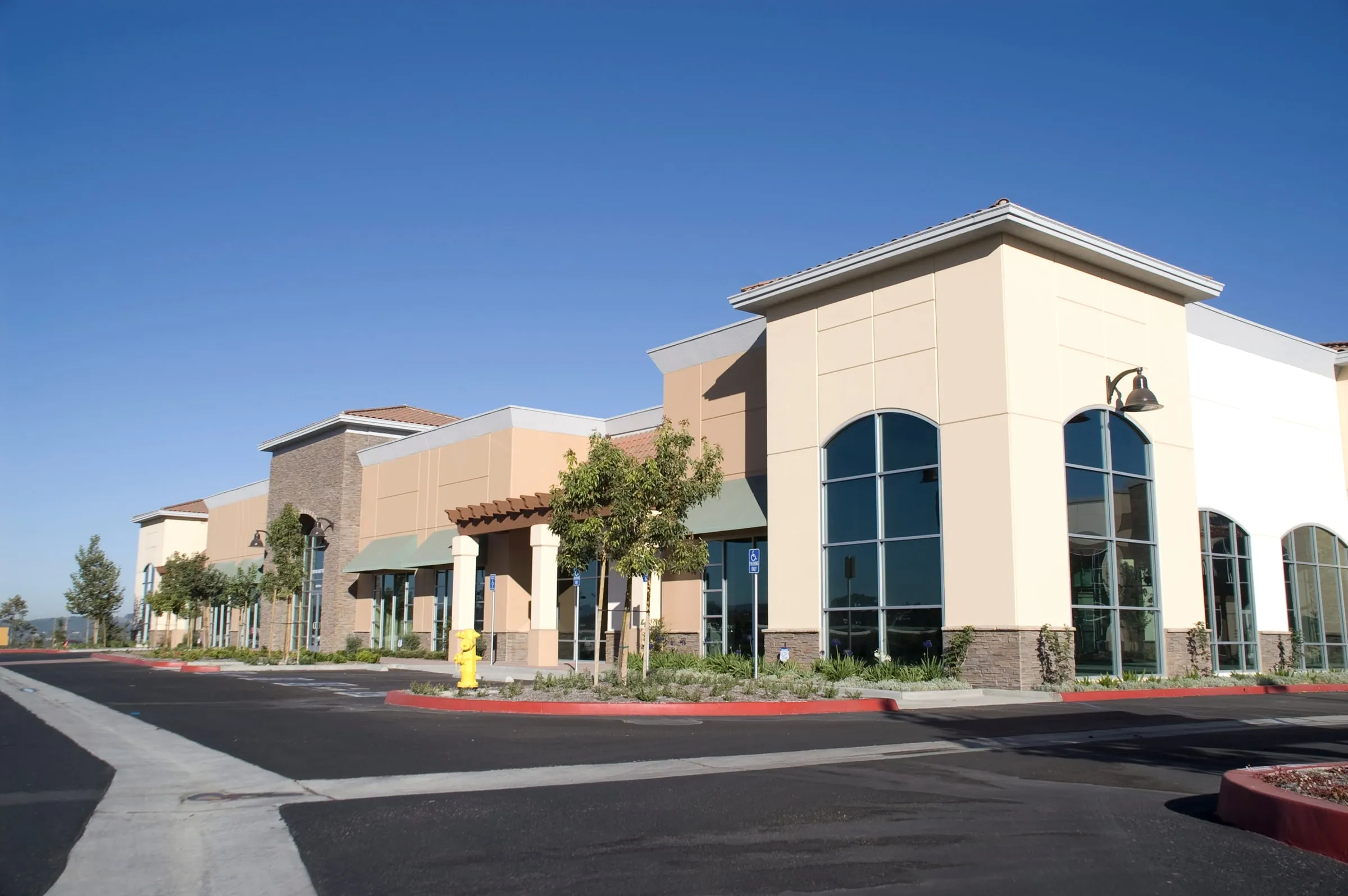
Security Guards for Shopping Centers and Strip Malls
One post for the whole center: the lot, the rear drive, the vacant bays and the tenants that trade late, reported to the property manager every day.
Request a proposalThe situation
What shopping center owners deal with
The owner has the lot, not the stores
Tenants secure their own doors and inventory; everything between the curb and the storefront is the owner's problem. Car break-ins, people living in vehicles at the far end, panhandling at the anchor's doors and dumping behind the center all arrive as tenant complaints and lease-renewal arguments.
Every tenant closes at a different hour
The nail salon locks up at seven, the restaurant at eleven, the gym never does. The center is half dark and half open for hours every night, and the lit half attracts people who have nowhere to be while the dark half hides them.
Vacant bays and the rear drive
An empty suite draws break-ins for the copper and a place to sleep; the service drive behind the buildings has the grease traps, the back doors and the dumpster enclosures, and nobody looks at it unless they are paid to.
Loitering that turns into a lease problem
Groups at the corner of the lot, day laborers at the entrance, a bus stop that spills into the parking spaces. The loss is rarely dramatic; it is the anchor tenant telling the leasing agent that customers no longer feel comfortable parking there.
The post belongs to the property, not the tenant
A shopping center post is written for the owner. The officer’s territory is the parking lot, the sidewalks, the rear service drive, the pad sites and the vacant suites; the inside of each store is the tenant’s own arrangement. That boundary matters because it shapes what the officer does when a tenant’s employee reports a shoplifter: the officer observes from the sidewalk, notes a description and a vehicle, calls police if the tenant asks, and does not go inside to make a stop unless the owner’s post orders and the tenant’s policy both say so. Price Protection writes that boundary into the post orders with the property manager before the first shift, so nobody discovers it during an incident.
Reading the center’s clock
Every center has a closing sequence, and the sequence is where the incidents cluster. Salons and clinics close first, restaurants and bars last, and a gym or a laundromat may never close at all. The post orders list each tenant’s hours and the officer times the rounds to them: in view of the restaurant door at eleven, behind the buildings once the kitchens have taken the trash out, back at the front when the bar empties. On weekends the sequence changes, and so do the rounds. Houston’s summer heat pushes activity in the lot later into the night, and hurricane season adds boarded storefronts and tenants who reopen before the lights do.
What the property manager gets from it
The daily report is the evidence a property manager needs at lease renewal, at an insurance review and in the call from an anchor tenant who says the lot feels unsafe. It says which vehicles were parked overnight and where, who was warned off the property and under which policy, which lights were out and which rear doors were unlocked, and what each tenant call was about. Because the report is written for forwarding, a manager can send the relevant lines to a tenant the same morning. Maintenance uses it for the punch list; leasing uses it to answer prospects who ask what security the center has. Centers that have emptied out entirely are a different post, covered on the vacant retail centers page.
Starting coverage at a center
To start a center post, dispatch needs the address and the number of buildings, a tenant roster with hours, the owner’s parking and trespass policies, which suites are vacant and who holds the keys, and a contact who can approve a tow or a police call after hours. Unarmed vehicle coverage can usually begin within hours of the request at centers that need it quickly, and the post orders are adjusted through the first week as the officer learns which tenants close late and which end of the lot draws the problems. Request a proposal for your center, or call dispatch to talk through the closing window first.
How we cover it
Every service, applied to this post.
- Vehicle patrol
The standard center post is a marked vehicle working varied rounds through the front lot, the side parking and the rear service drive, stopping at the dark end, the vacant bays and each late-trading tenant's door. The officer gets out at every checkpoint that needs a hand on a handle.
- Unarmed security guards
An unarmed Level II officer covers most centers, in uniform and visible to tenants and customers. On foot during the evening peak, the officer walks the sidewalk in front of the storefronts and answers the questions tenants have been saving up.
- Armed security guards
Centers with a late bar, a check-cashing tenant or a history of armed robbery at closing sometimes run a commissioned officer instead, particularly for the closing window when tenant staff walk to their cars with the night's deposit.
- Access control
Where the center has a gated service drive or a restricted rear lot, the officer checks that gates close, logs delivery trucks after hours and turns away vehicles that have no business behind the buildings.
- Incident reporting
The daily report goes to the property manager, not to the tenants, and it is written so it can be forwarded: which tenants were open, what was found at each vacant bay, vehicles logged, trespass warnings issued and every call from a tenant with the outcome.
A typical post
What a shift looks like here.
The evening officer starts with a full loop in daylight, noting which bays are vacant this week, which lights are out and which tenants have put merchandise or seating outside their lease line. Tenant managers wave the vehicle down with the things they have been meaning to report.
As stores close, the officer times the rounds to the closings on the post orders and sits in view of the restaurant's door while its staff carry the deposit out. Between closings the vehicle covers the rear drive and the dark end of the lot, logging plates on vehicles that were there on the last round too.
After the last tenant locks up, the rounds shift to the vacant suites and the dumpster enclosures. Anyone sleeping in a doorway is woken, asked to move on and given a trespass warning under the owner's policy; a refusal is a call to police, and the officer waits at a distance.
The overnight hours end with a check of every storefront glass and rear door for signs of entry, a note of any dumping, and the daily report, which is in the property manager's inbox before the leasing office opens.

Reporting
What the daily report covers here
Every client receives a written report each day, and officer performance is reviewed and documented daily. This is what the report records on this kind of post.
- Rounds by time, with the lot sections, rear drive and vacant bays covered on each
- Tenant closings observed and deposit walks escorted, by suite
- Vehicles logged as parked overnight or occupied, with plate and location
- Trespass warnings and move-alongs under the owner's policy
- Storefront glass, rear doors and vacant-bay locks checked for signs of entry
- Lighting out, dumping and maintenance items found, by location
- Calls from tenants during the shift and what was done about each
Questions
About shopping centers and strip malls coverage.
Anything else? Call dispatch at (281) 326-9189.
Who pays for security at a shopping center, the owner or the tenants?
The owner usually contracts the post and recovers the cost through common area maintenance charges under the leases; some anchors negotiate their own hours on top. We contract with the owner or the property manager, and the post orders cover the common areas and the lot rather than the inside of any store.
Can one officer cover a large center?
A vehicle post can cover a center of several buildings when the rounds are planned around the tenants' closing times and the dark areas. Very large power centers, or centers with a twenty-four-hour gym and a late bar, sometimes add a second officer on foot for the closing window. The walk-through settles the number.
What do you do about people living in cars on the lot?
The officer applies the owner's parking policy as written in the post orders: a conversation, a written notice where the policy uses one, and a call to police or the tow contractor when the policy allows it. Every step is logged with the plate and the time so the property manager can show what was done.
Will the officer respond if a tenant calls?
Yes, when the post orders include a tenant contact line. Tenants call for disturbances in front of their store, a person refusing to leave, or a customer dispute that has moved outside. The officer responds, calls police if the situation needs them, and records the call and the outcome for the property manager.
Do you patrol centers with vacant anchor space?
Yes, and the vacant space gets its own checkpoints on every round. An empty anchor draws break-ins for copper and fixtures, and its rear doors are the usual point of entry. Fully vacant centers are staffed as a separate post, described on the vacant retail centers page.
Related pages
Industries we serve
Service areas
Insights
Glossary
Request a proposal
Request a proposal for shopping centers and strip malls.
Two short steps. Dispatch reviews every request and calls you back about coverage. For urgent unarmed coverage we can typically staff most sites within hours.
24-hour dispatch
(281) 326-9189