
Security guard service
Overnight Security Guards
An officer on the property from the last employee out to the first one in, checking the doors, walking the rounds and writing down when things happened.
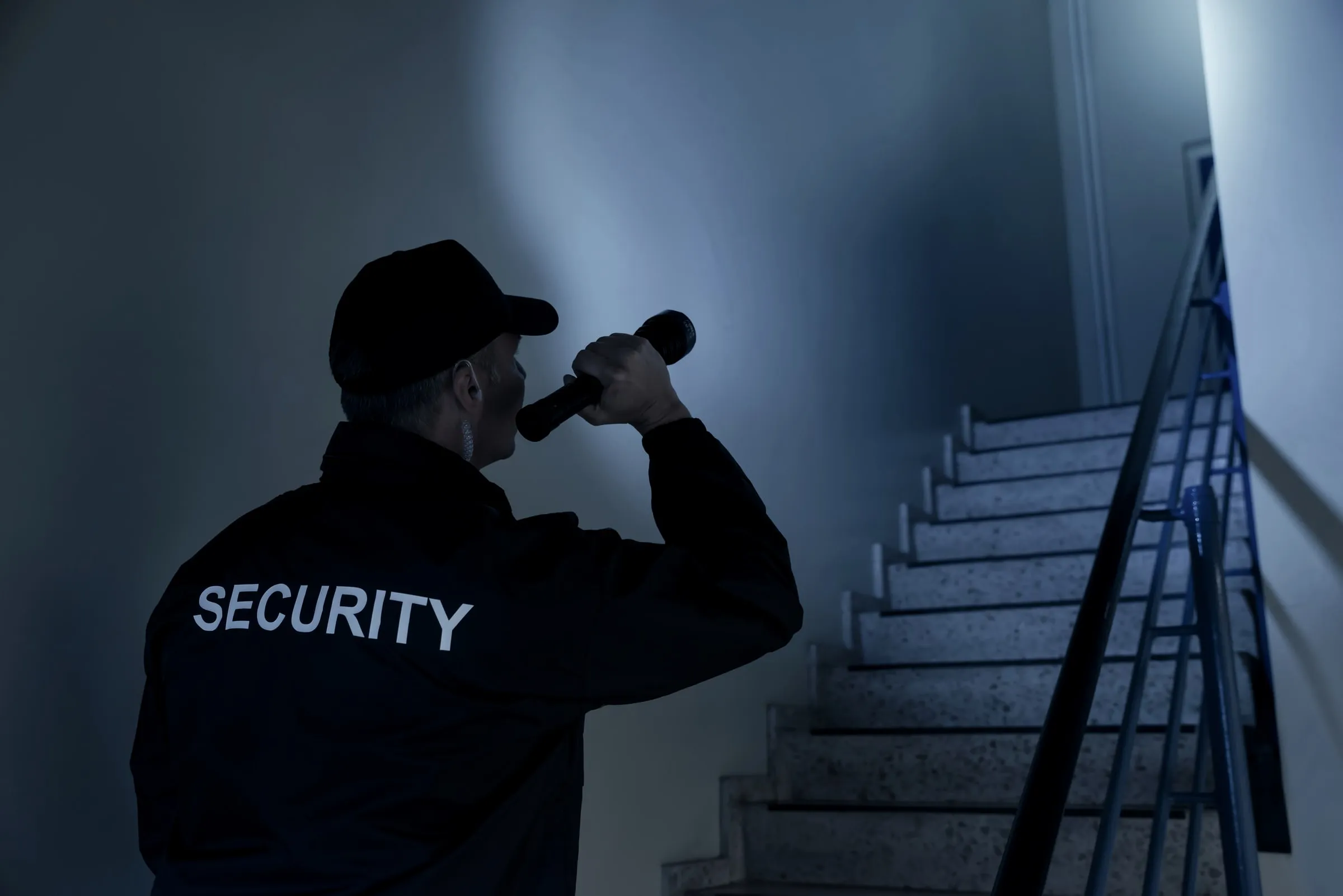
Overnight security guards are officers posted for the hours when a property’s own people have gone home: from the last employee out to the first one in, with the doors, the lot, the fence and the building systems as the job. Price Protection staffs overnight posts across Greater Houston for properties that are watched by their own staff during the day and by nobody after dark. The post can be a single officer on foot, a vehicle patrol, or an officer at a gate, and it runs on the nights the client chooses.
The shape of an overnight shift
The shift begins with a lock-up. The officer walks the list from the post orders: every exterior door, every gate, the roof hatch, the windows on the ground floor, the fuel cage, the trailer. Anything found open is closed and logged, and anything that cannot be secured is called in. Then the rounds begin on the interval the post orders set, with a checkpoint at each place that matters and a note for each thing found: a light out on the north wall, a vehicle in the lot that was not there at lock-up, a wet floor outside the mechanical room. The quiet hours are the ones supervisors visit. Toward morning the officer walks the list again in reverse, opens what the client wants opened, and is at the gate or the door when the first employee arrives.
What overnight officers actually find
Propped doors that the cleaning crew left. Lights that have been out for weeks. Cars that arrive after midnight and leave before dawn. People sleeping in stairwells, in the loading dock, in the vacant unit with the broken slider. Dumping at the dumpster enclosure. Water where there should be no water. A gate motor that has quit with the gate open. Most of it is not a crime; all of it goes in the report with a time, and the manager reads it over the first coffee of the day. The article on lighting, locks and perimeter checks on a patrol round lists what a round looks for and why.
Handing the property back in the morning
An overnight post has no incoming officer to hand over to, so the handover is to the client. The officer meets the manager or the superintendent, or calls if nobody is on site yet, and covers what happened, what is still open and what needs maintenance today. The daily report follows by email. On a job site the superintendent gets the overnight log before the crew arrives; on a dealership the sales manager knows before the doors open whether anything in the lot was touched.
Properties that run overnight posts
Construction sites, Sunday through Thursday, with a weekend post or a patrol on the other nights; the guide on preparing a construction site for overnight security covers lighting, fencing and the laydown yard. Auto dealerships with stock outside. Retail centers after close, watching the back doors and the dumpster corrals. Schools and churches with empty campuses. Office buildings without a night receptionist. Apartment communities that add an after-hours patrol to a daytime leasing staff. Self-storage facilities after the gate code hours end.
Armed or unarmed after dark
Many overnight posts are unarmed, and unarmed officers are typically on site within hours of a request. Armed posts are usual where there is stock that is targeted, such as a dealership lot or a pharmacy, or where a property has a history of forced entry; a Level III commissioned officer is scheduled with the client for those. The choice is made at the walk-through and written into the post orders, and the armed security guard page explains what changes.
Starting an overnight post
Dispatch needs the window, the nights, the keys or codes for the round, the alarm details and a contact for the middle of the night. A supervisor walks the property at dusk if possible, because the lighting and the sightlines are different after dark, and writes the lock-up list and the round from what is found. The 24-hour coverage page describes what changes when the post has to run through the day as well.
When you need it
When overnight is the right call.
Everything of value sits in the dark for ten hours
A dealership lot, a job site, the back doors of a strip center, a school. Between the last staff member out and the first one in, nobody is there, and that window is when the fence gets cut and the catalytic converters come off.
Your own people cover the day
An office with a receptionist, a plant with a full day shift, a church with staff in the building until evening. The risk is the gap after they leave, and an overnight post fills only the gap rather than duplicating the day.
The losses are discovered at six in the morning
You find the damage at opening and cannot say when it happened. An overnight officer's timed log says which round found the gate closed and which found it open, and the incident report is written before you arrive.
Something runs at night that nobody watches
A boiler, a sump pump, a walk-in freezer, a server room, an irrigation controller. The officer on rounds is the one who notices water on the floor or an alarm panel flashing at two in the morning and makes the call.
Starting coverage
What dispatch needs to start.
- The window: the time the last staff member leaves, the time the first arrives, and the nights of the week
- Keys or codes for the doors on the round, and the alarm code or the alarm company's contact
- Where the officer can shelter, sit and take a break: an office, a trailer, the patrol vehicle
- The things that go wrong at night on your property: a known leak, a gate that sticks, a tenant who works late
- Who to call at three in the morning for a break-in, and who to call for a burst pipe
Does an overnight officer patrol or stay in one place?
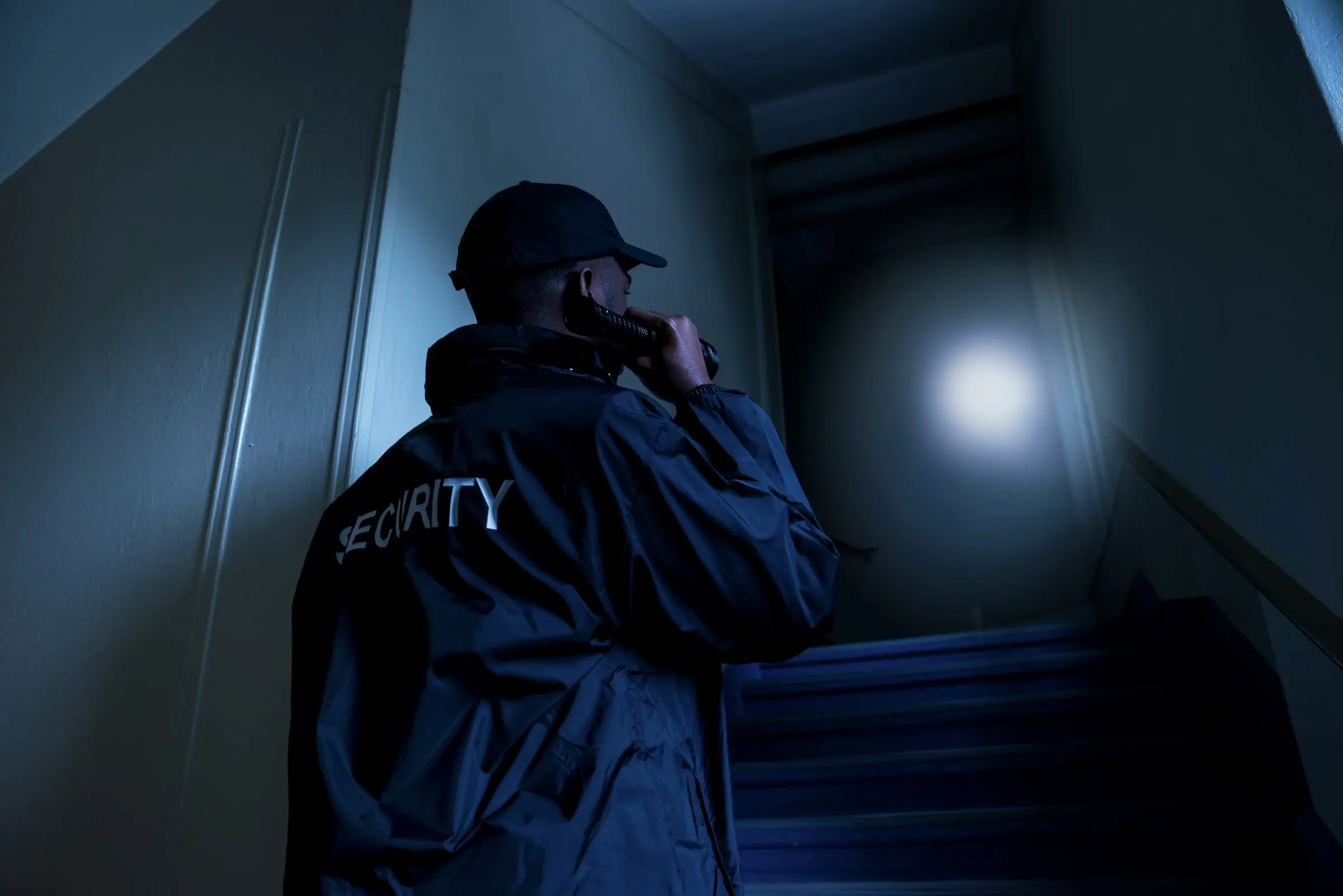
Usually both. The post orders set a base, often the office or the gate, and a round interval, and the officer walks or drives the round on that interval and returns. A large lot or a site with several buildings uses a vehicle; a single building uses foot rounds with a checkpoint at each door and each mechanical room.
What does the officer do when the alarm sounds?
Goes to the zone, checks it from outside first, and calls it in. If there are signs of entry the officer does not go in alone; police are called and the officer keeps eyes on the exits until they arrive. A false alarm is reset if the client has authorized it, and either way the time, the zone and the cause are in the report.
Can the officer let in an early delivery or a contractor?
Only if the delivery or the contractor is on the list in the post orders, or the client's after-hours contact confirms it by phone. The arrival is logged with the company, the name and the time. An unlisted arrival waits outside until someone from the client confirms, however early the truck is.
Will the officer notice a water leak or a fire?
The rounds are written to include mechanical rooms, roof access and any equipment the client names, and officers are trained in fire safety and first aid. A leak, smoke, an odor or a flashing panel is called in to the contact the client has given and logged. Where a fire protection system is out of service and a fire watch is required, that is a separate post with its own log; the fire watch pages explain it.
Do you cover only certain nights of the week?
Yes. Many overnight posts run Sunday through Thursday nights, with a weekend post added or a vehicle patrol covering Friday and Saturday. The nights are set in the post orders and can change with notice as the property's pattern becomes clear from the reports.
How do I know the officer was awake and moving all night?
The log has a time against every round and every checkpoint, guard tour scans are used where the client has a system, supervisors visit unannounced at night, and every officer's performance is reviewed and documented the next day. A round that was not made shows up as a gap in the log, and the daily review is designed to find it.
Related pages
Industries we serve
Service areas
Insights
Glossary
Where we are
Overnight across Greater Houston.
Every area below is staffed and supervised from our Sugar Land headquarters. Open an area to see the property types, neighborhoods and questions we hear there.
24-hour dispatch
(281) 326-9189Fort Bend County
Sugar Land and its neighbors, closest to our headquarters.
Houston
Neighborhoods and business districts inside the city.
North and west
Katy and Cypress up to The Woodlands and Conroe.
South and east
Pearland and Clear Lake across to Pasadena and Baytown.
Request a proposal
Request a proposal for overnight.
Two short steps. Dispatch reviews every request and calls you back about coverage. For urgent unarmed coverage we can typically staff most sites within hours.
24-hour dispatch
(281) 326-9189