
Security guard service
24-Hour Security Guard Coverage
One post, staffed every hour of every day, with a handover at each shift change so the property never waits for an officer to arrive.
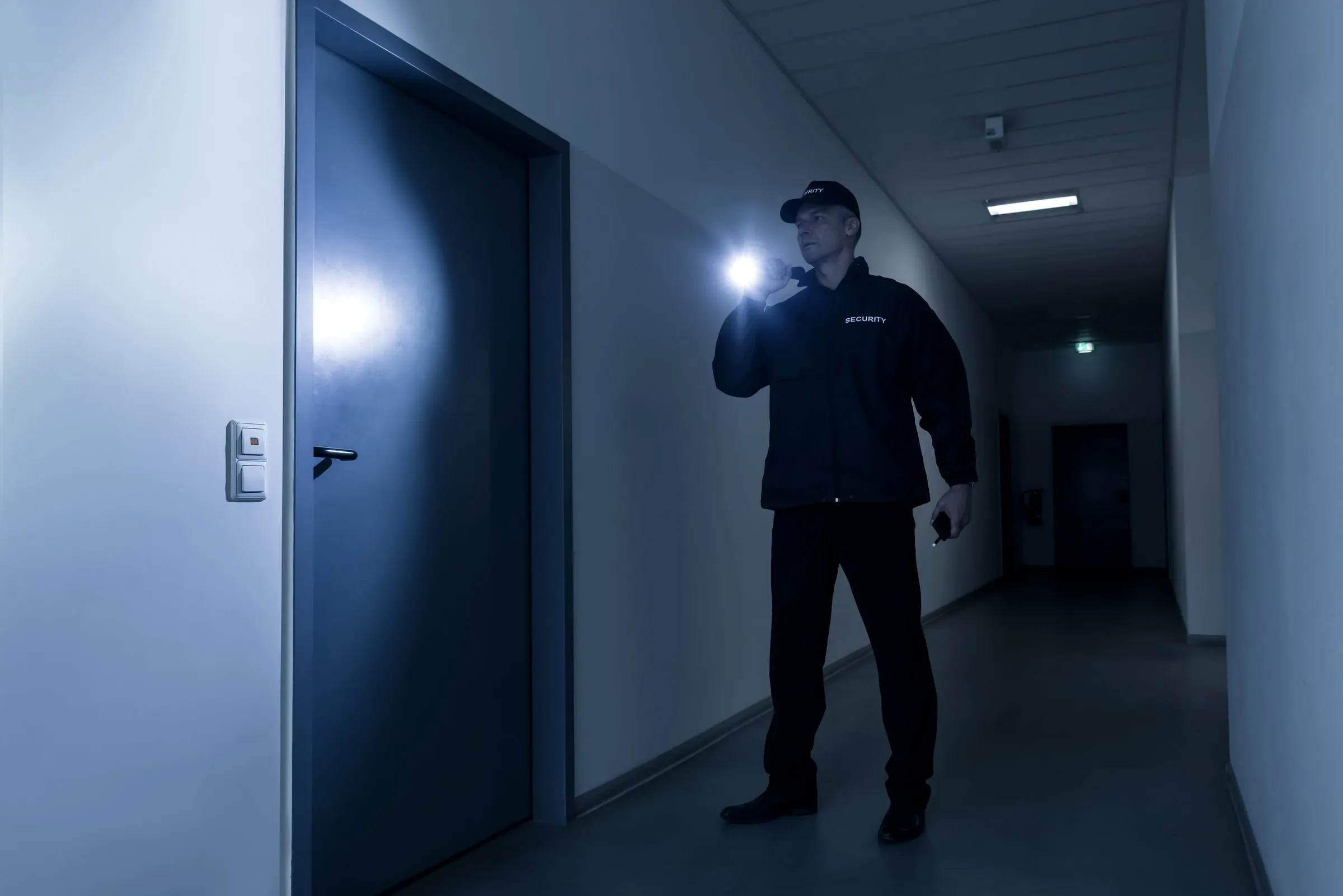
Twenty-four-hour security guard coverage is a single post staffed without interruption: three shifts a day, every day of the week, with an officer physically at the post at every minute and an in-person handover at each shift change. Price Protection runs continuous posts at properties across Greater Houston where the building, the risk or the situation does not stop at closing time, using armed or unarmed officers as the client decides. Dispatch, which is itself staffed around the clock, sits behind the post at every hour.
What continuous coverage means on the rota
A post that never closes is not one officer. It is a group: regular officers assigned to the day, evening and night shifts, relief officers who cover days off, and a supervisor who visits on all three shifts. The rota is written before the first shift and shared with the client, so the manager knows who to expect on Tuesday night and on Sunday morning. Shift length is set with the client; eight-hour and twelve-hour patterns both work, and the choice usually follows the property’s own rhythm. Holidays are on the rota like any other day. The article on security guard scheduling explains how the windows and the handovers are built.
The handover
The moment a continuous post fails is the shift change, so the handover is written into the post orders and not left to habit. The incoming officer arrives before the hour. The two meet at the post, not in the parking lot. Keys and access cards are counted. The log is read back: what happened, what is open, who is expected. The outgoing officer leaves only when the incoming officer has signed on. Supervisors time their visits to shift changes more often than to any other hour. The glossary entry on shift handover and the article on keeping a post covered around the clock go further.
The property is a different place at different hours
Post orders for a continuous post are written in sections because the job changes with the clock. The morning is deliveries, the office opening, the school-morning traffic out of an apartment community. Midday is visitors and contractors. Evening is residents home, the pool and the clubhouse, retail closing, the dock finishing. Overnight is rounds, locks, lighting and the few arrivals that matter. The weekend has its own section. An officer coming on shift reads the section for those hours, and the daily report is organized the same way so the manager can see the day as a whole.
Reporting on a continuous post
One daily report covers all three shifts and reaches the client every morning. Incident reports are written when the incident happens and go out at once, with a phone call for anything serious. Officer performance is reviewed and documented each day across the whole rota, and the review looks hardest at the hours when nobody from the client’s office is there to see.
Who runs posts around the clock
Hospitals and emergency departments. Hotels. Manufacturing plants and terminals on three shifts. Large apartment communities with a staffed gate. Vacant and distressed buildings while they are being secured or sold. Properties after a fire or a storm, and companies during a dispute. Each of the property pages on this site says whether continuous coverage is usual there and what the alternative looks like.
Deciding between continuous and overnight coverage
Not every property needs all twenty-four hours, and the daily reports are the honest way to find out. Where the incidents cluster after dark, an overnight post covers them at a third of the hours; where they spread across the day, only a continuous post does. The article on 24-hour coverage vs overnight only and the answer page on whether an apartment complex needs 24-hour security both walk through the decision. Dispatch can start a full rota on short notice, with unarmed officers usually on site within hours.
When you need it
When 24-hour coverage is the right call.
The property never empties
A hospital, a hotel, a plant running three shifts, a large apartment community. There is no hour when nobody is inside, so there is no hour when the post can close. Coverage follows the building, not the office schedule.
Losses are happening around the clock
A vacant building being stripped by day and squatted at night, a lease-up where the model unit is hit in the afternoon and the vacant units after dark. When the report shows incidents at every hour, an overnight post alone leaves half the problem uncovered.
Someone has to answer the gate at three in the morning
Ambulances, contractors on a night shutdown, a resident locked out, a delivery that only comes at night. A staffed post means the gate opens for the right vehicle and the log says who it was.
A crisis has no gap in it
After a fire, after a storm, during a labor dispute, following a termination that did not go well. The need is temporary and continuous at the same time, and the post runs until the situation is closed.
Starting coverage
What dispatch needs to start.
- The property, the post location, and whether the post is a desk, a gate, a camera room or a patrol
- The hours that differ across the day: when the office opens, when the dock runs, when the pool closes
- Who the officer answers to on each shift, and who takes the call at two in the morning
- Armed or unarmed, and whether that choice changes between day and night
- The start date; a full rota can begin on short notice, with unarmed officers typically on site within hours

How many officers does it take to staff a post around the clock?
More than three, because every officer needs days off and someone has to cover them. The rota names the regular officers for each shift and the relief officers who cover their days off, so the client meets a small, consistent group rather than a stranger every night. The exact number depends on shift length and whether the client prefers eight-hour or twelve-hour shifts.
Is the same officer on the post each night?
As far as a rota allows. Regular officers are assigned to a shift and stay on it; relief officers cover days off and are briefed on the same post orders. When a regular officer changes, the client is told before it happens, not after.
What happens if the relief officer does not arrive?
The post is not left empty. Post orders say the outgoing officer holds the post while dispatch, which is staffed around the clock, sends a replacement. The delay is logged, and the supervisor follows up the same day.
Can we start with round-the-clock coverage and reduce it later?
Yes, and many clients do. After a few weeks the daily reports show which hours carry the incidents and which are quiet, and the post can be reshaped to an overnight or a split post on that evidence. The reverse is also common: an overnight post that grows to full coverage after the reports show daytime problems.
Does the report come once a day or once a shift?
Once a day, covering all three shifts in one document, so the manager reads one report over coffee rather than three. Incident reports are separate and go out when the incident happens, at any hour, with a call if it is serious.
Related pages
Industries we serve
Service areas
Insights
Where we are
24-hour coverage across Greater Houston.
Every area below is staffed and supervised from our Sugar Land headquarters. Open an area to see the property types, neighborhoods and questions we hear there.
24-hour dispatch
(281) 326-9189Fort Bend County
Sugar Land and its neighbors, closest to our headquarters.
Houston
Neighborhoods and business districts inside the city.
North and west
Katy and Cypress up to The Woodlands and Conroe.
South and east
Pearland and Clear Lake across to Pasadena and Baytown.
Request a proposal
Request a proposal for 24-hour coverage.
Two short steps. Dispatch reviews every request and calls you back about coverage. For urgent unarmed coverage we can typically staff most sites within hours.
24-hour dispatch
(281) 326-9189