
Security Guards for Hospitals
A licensed presence at the doors, the garages and the campus edge, working the entrances the hospital's own team cannot cover alone.
Request a proposalThe situation
What a hospital campus has to control at its entrances
Many doors, one campus
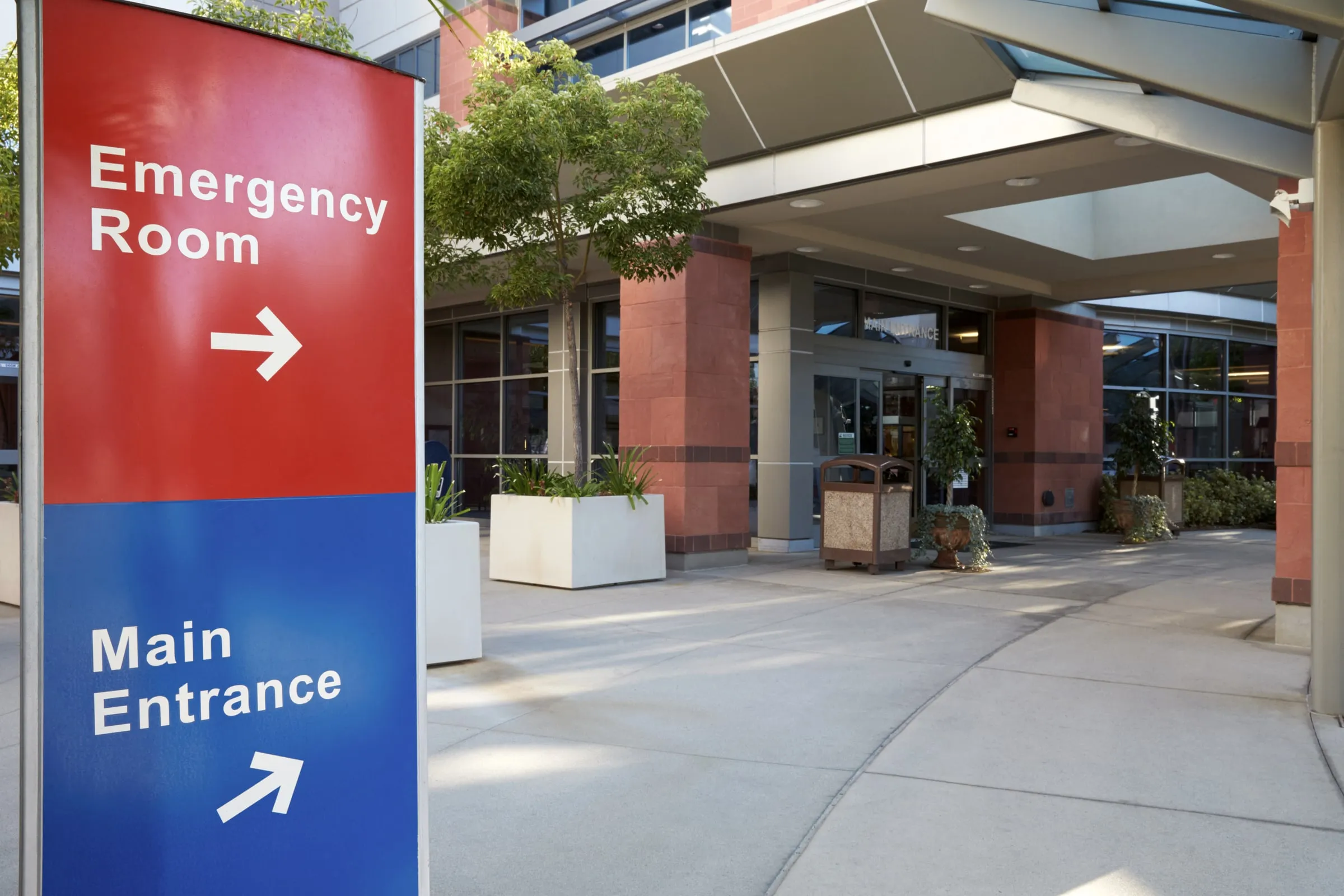
A hospital is rarely one building with one door. A main lobby, an emergency entrance, a garage-level walkway, a loading dock and a handful of specialty-clinic doors all open onto the same campus, and each one needs its own rule for who walks through after visiting hours end.
The visitor who should not be on the unit
A restraining order, a custody dispute, an estranged relative asked to leave a floor: the front desk is told who is not welcome, and the request does not always reach every door an hour later. A hospital depends on the entrance being staffed by someone who was told, not guessing.
Parking structures after the day shift ends
Multi-level garages built for a day's worth of staff and visitors empty out fast at shift change and sit mostly dark overnight. Break-ins and a nurse walking alone to a car at eleven at night are the two problems every hospital parking structure eventually has.
Arrivals do not wait for daylight
An emergency department and a labor and delivery unit take arrivals at any hour, and a hospital that runs around the clock needs its entrances watched around the clock, not staffed for the day shift and left on cameras overnight.
A campus, not one door
A hospital is a cluster of buildings sharing a campus, and the security plan has to cover every entrance that cluster has: a main lobby with a reception desk, an emergency department entrance that runs day and night, a garage-level walkway that staff use more than visitors ever will, a loading dock, and doors at specialty clinics that keep their own hours. Price Protection’s post orders are written entrance by entrance, because the rule for who gets through the emergency department door at two in the morning is not the rule for the main lobby at nine.
The badge desk and the after-hours list
Hospitals restrict visitors for reasons that rarely reach every door at once: a unit on lockdown for an infection concern, a family dispute that means one relative should not be let onto a floor, a discharge that means a room no longer has a patient in it. The officer at the entrance works from the list the hospital’s own staff keeps current, checks names against it, and calls the unit when a name is not on the list rather than guessing. Badge policy for staff, contractors and vendors after business hours is set the same way, in post orders written with hospital security rather than improvised at the door.
The garages after the day shift
Multi-level parking structures are built for a full day of staff and visitor traffic and empty out fast once the day shift leaves, and an empty deck after dark is where a hospital’s two most common problems show up: a break-in into an unattended vehicle, and a nurse or technician who has to cross that same empty deck alone at the end of a shift. A patrol on a schedule, with an escort available on request, addresses both without needing a post at every level.
Working alongside hospital security
Most hospitals that bring in Price Protection already have an internal security department, and the arrangement is built around that fact rather than around replacing it. The company’s officers take the shifts, entrances or garage rounds the internal team needs covered, follow post orders that hospital security helped write, and send the daily report to that department rather than working from a separate plan. Where hospital leadership wants an armed presence at a lobby or an emergency department, a commissioned officer is positioned exactly where hospital security specifies.
Starting coverage
To begin, dispatch needs the campus address, the entrances or garages the hospital wants covered, the hours, hospital security’s contact and whether an armed post has been requested. A supervisor walks the campus with hospital security to confirm doors, badge points and garage levels, post orders are written together, and an unarmed officer can generally be at an entrance within hours once the hospital is ready to start.
How we cover it
Every service, applied to this post.
- Unarmed security guards
An unarmed officer at the main entrance or the emergency department lobby, checking arrivals after visiting hours against the list the front desk keeps, directing families to the right door, and walking a badge-holder to a car on request.
- Armed security guards
Where hospital leadership has asked for an armed presence at a main lobby or emergency department, a commissioned officer works under post orders written with hospital security, observing and reporting and calling police for anything beyond that.
- Vehicle patrol
A marked vehicle or a walking round through the parking structures and surface lots on a schedule the hospital sets, watching for break-ins, checking stairwells and elevator lobbies, and escorting staff to their cars on request during the overnight shift.
- Access control
After-hours doors are checked against the hospital's own badge and visitor policy: which entrances lock, which stay staffed, who is on the standing list for a unit, and what a contractor or vendor needs to show to be let in outside business hours.
- Camera monitoring
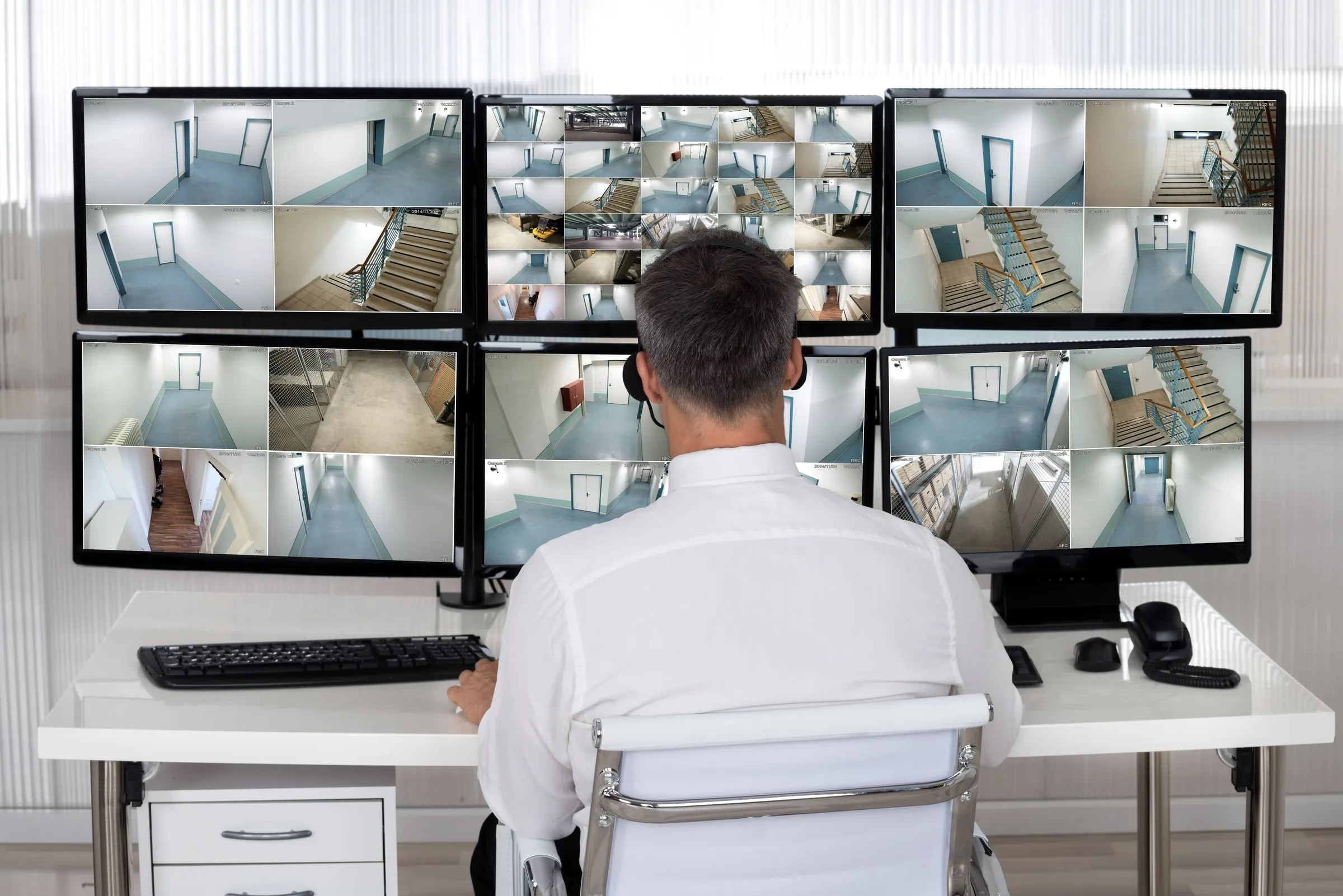
Where the hospital gives access, the officer watches its own camera feeds for the garages, the loading dock and the exterior grounds from a post inside the building, and pulls a clip when hospital security asks which vehicle came through a gate at a given time.
- Incident reporting
A written report reaches hospital security or the administrator on call after every shift: entrance activity, refusals, garage rounds, badge or access issues and anything a supervisor should know before the next shift starts.
A typical post
What a shift looks like here.
The evening officer takes the main entrance from the day shift with a note on which doors lock at what hour and who is on tonight's restricted list. Visiting hours wind down, the lobby traffic turns to family members checking in on a patient and staff arriving for the night shift, and the officer checks each arrival against the desk's list before waving them toward the elevators.
Through the middle of the night the work moves outward: a round of the parking garage between entrance checks, a walk past the loading dock to confirm it is secured, an escort for a nurse finishing a shift who does not want to cross an empty deck alone. The emergency department lobby gets more traffic than any other door at this hour, and the officer stays visible there between rounds rather than posted at a desk out of sight.
Near dawn the officer logs the night's garage rounds, any refusal at the entrance and any door found propped or an access reader not reading a badge, and hands the report to the morning shift along with anything hospital security flagged overnight. The day officer inherits a campus that is about to fill with staff, deliveries and a full visitor list again.
Reporting
What the daily report covers here
Every client receives a written report each day, and officer performance is reviewed and documented daily. This is what the report records on this kind of post.
- Entrance and lobby activity after visiting hours, with names checked against the desk's list
- Visitors refused entry to a floor or unit, and the reason given at the door
- Parking garage and lot rounds, with the time of each pass
- Staff escorts to vehicles, with the time and the garage level
- Doors found propped, unlocked or with a badge reader not working
- Anything hospital security or the administrator on call asked the post to watch for
Do you replace the hospital's own security department?
No. Price Protection works alongside a hospital's in-house security team, covering entrances, garages and shifts the internal team asks for help with. Post orders are written with hospital security, and the report goes to them.
Can an officer be posted specifically at the emergency department?
Yes. An emergency department lobby is one of the most common posts hospitals request, staffed for the hours the hospital chooses, from a single overnight shift to a continuous presence.
How do you handle a visitor who is not allowed on a unit?
By the post orders, which restate the hospital's own restriction. The officer checks the name at the door, declines entry courteously, and notifies the unit and hospital security. A dispute is handled by hospital staff, not the officer.
Do you cover the parking garages as well as the entrances?
Where the hospital wants it. A vehicle or walking patrol of the garages and lots is a common addition to an entrance post, especially overnight when staff are walking to their cars alone.
Can coverage start with a single unit or a single shift?
Yes. Many hospitals start with one entrance or one overnight shift and add coverage later. Dispatch prices the hours and the posts the hospital chooses, not a fixed campus-wide package.
Related pages
Industries we serve
Service areas
Insights
Glossary
Request a proposal
Request a proposal for hospitals.
Two short steps. Dispatch reviews every request and calls you back about coverage. For urgent unarmed coverage we can typically staff most sites within hours.
24-hour dispatch
(281) 326-9189