

Security Guards for Behavioral Health Facilities
A controlled entrance and a calm officer trained in de-escalation, positioned where the facility's own admission and visitation rules say to stand.
Request a proposalThe situation
What a behavioral health facility deals with at its entrance
One controlled entrance carries the whole facility's rules
A behavioral health facility restricts who comes and goes far more than a typical clinic, and nearly all of that policy is enforced at a single door. An entrance staffed by someone who was actually told the day's rules matters more here than almost anywhere else in healthcare.
Visitation has its own hours and its own list
Family visitation is scheduled and screened, and a visitor arriving outside the window, or a person not on the approved list, is a routine occurrence the front desk needs backup handling without turning the lobby into a confrontation.
The grounds matter as much as the doors
Where a facility has exterior grounds or a courtyard, keeping the perimeter secure is part of the same job as the front door. A fence line or a gate that is not checked regularly is a gap the entrance post alone cannot close.
Every interaction calls for a calm approach first
A facility's own clinical staff set the plan for de-escalation on the unit; the posted officer's role at the entrance and in the lobby is the same instinct applied to intake, visitors and anyone arriving upset, with force used only to prevent harm.
One entrance, a clear set of rules
A behavioral health facility controls who enters far more deliberately than a general medical clinic, and nearly all of that control runs through a single staffed entrance. Price Protection’s post orders for a facility like this are written directly from the admission and visitation policy the facility already has: who is expected that day, what hours visitation runs, and what has to be verified before anyone is let past the door. The officer works from that list rather than from personal judgment, which keeps the entrance consistent from one shift to the next.
Visitation without turning the lobby into a checkpoint
Family visitation at a behavioral health facility is scheduled and screened, and the lobby during that window is often full of people who are themselves under stress, waiting to see someone they are worried about. The officer’s job is to make that window run smoothly: checking names against the approved list, directing family to the right waiting area, and handling the visitor who arrives outside the window or is not on the list calmly and by the facility’s own stated policy rather than as a confrontation.
The grounds are part of the perimeter
Facilities with exterior grounds or a courtyard have a second line of security beyond the front door: a fence line, a gate, and any area where the building’s perimeter meets the outside. A schedule of perimeter checks, worked into the same post as the entrance, closes the gap between what the front door controls and what the rest of the property needs watched. Where a facility has no exterior grounds, this piece of the post does not apply, and coverage is built around the entrance and lobby alone.
Calm first, always
Officers assigned to a behavioral health facility are trained in de-escalation, and the post orders make clear that a calm, unhurried approach comes before anything else, whether the person at the door is a family member who is anxious about a loved one or an arrival who is upset. The officer’s role stops at the entrance and the building’s common areas; anything involving a person in the facility’s clinical care is handled entirely by the facility’s own trained staff, and the officer never describes a patient’s condition or history to anyone, including in the daily report.
Starting coverage
To begin, dispatch needs the facility’s address, the entrance and any grounds that need covering, the current visitation hours and list procedure, and the administrator’s contact. A supervisor walks the property with the administrator, post orders are written together using the facility’s own admission and visitation rules, and an unarmed officer can generally start at the entrance within hours.
How we cover it
Every service, applied to this post.
- Unarmed security guards
An unarmed officer staffs the facility's entrance, checking arrivals against the admission or visitation list, greeting family members calmly, and referring every clinical question to facility staff.
- Access control
The entrance and any controlled interior doors are worked exactly to the facility's own policy: who is on the visitation list, what hours apply, and what identification or screening step is required before someone is let through.
- Camera monitoring
Where the facility gives access, the officer watches entrance and grounds cameras from the post, useful for confirming who came and went during a shift and for reviewing the exterior perimeter between rounds.
- Vehicle patrol
Where the facility has exterior grounds, a perimeter check on a set schedule covers the fence line and grounds the entrance post cannot see from inside the building.
- Incident reporting
A written report after every shift goes to the facility's administrator: entrance activity, visitors admitted or turned away, and anything staff should know before the next shift, without any clinical detail about a person in the facility's care.
A typical post
What a shift looks like here.
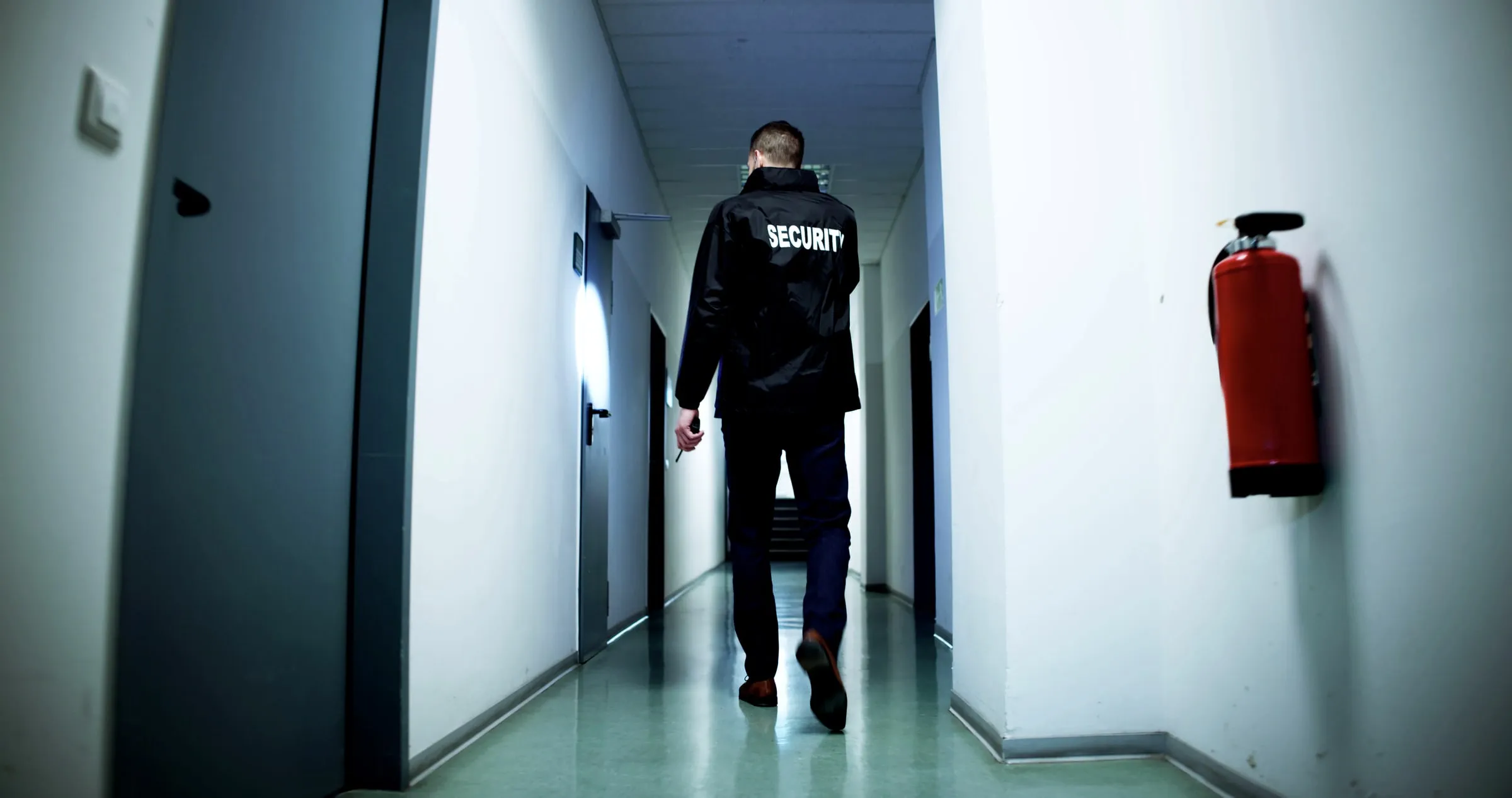
The officer takes the entrance from the prior shift with the day's visitation hours and the current approved-visitor list. Morning admissions and intake tend to cluster early, and the officer checks each arrival's paperwork against what the intake office has confirmed before anyone is let past the entrance.
Through the afternoon the entrance handles the bulk of the day's visitor traffic during the facility's scheduled visitation window, checking names against the list, directing family members to the right waiting area, and turning away anyone outside the window or not on the list, courteously and by the book rather than by judgment call.
In the evening, once visitation ends, the entrance traffic slows and the officer's attention shifts to a perimeter check if the facility has exterior grounds, confirming the fence line and any gate are secure before the report is written for the overnight shift.
Reporting
What the daily report covers here
Every client receives a written report each day, and officer performance is reviewed and documented daily. This is what the report records on this kind of post.
- Entrance activity and admissions checked against the day's paperwork
- Visitors admitted, with the time and the name checked against the list
- Visitors turned away, and the reason, without clinical detail
- Perimeter or grounds checks, with the time of each round
- Anything facility staff asked the post to watch for
Questions
About behavioral health facilities coverage.
Anything else? Call dispatch at (281) 326-9189.
Does the officer have contact with patients on the unit?
No. The posted officer works the entrance, the lobby and, where applicable, the grounds. Contact with anyone in the facility's clinical care stays with the facility's own trained staff.
How does the officer decide who is allowed in during visitation?
By the facility's own visitation list and hours, given to the officer each shift. Nobody is admitted on the officer's own judgment, and a name not on the list is referred to the front office rather than admitted or refused unilaterally.
Is the officer trained for a person who arrives upset or agitated?
Yes. Officers are trained in de-escalation, and the approach at the entrance is calm and unhurried by default, with police called for anything beyond what a calm approach and the facility's own staff can resolve.
Do you cover the exterior grounds as well as the entrance?
Where the facility has grounds or a courtyard, yes. A perimeter check on a set schedule is a common addition to an entrance post, covering the fence line and gates the front door cannot see.
Armed or unarmed for a behavioral health facility?
Most facilities choose an unarmed officer for the entrance and lobby, consistent with a calm, de-escalation-first approach. The decision belongs to facility leadership, and post orders are written to match whatever they choose.
Related pages
Industries we serve
Services
Service areas
Insights
Glossary
Request a proposal
Request a proposal for behavioral health facilities.
Two short steps. Dispatch reviews every request and calls you back about coverage. For urgent unarmed coverage we can typically staff most sites within hours.
24-hour dispatch
(281) 326-9189