
Operations and reporting
De-escalation: How Trained Guards Handle Confrontations
By Price Protection SecurityReviewed TX DPS Lic #B09430601
Short answer
De-escalation is a set of habits an officer uses to keep a tense contact from becoming a physical one: a calm, level tone, enough physical distance to avoid feeling cornered, and clear, limited choices rather than commands that back a person into a corner. When those habits do not work, the officer disengages and calls police, because a security officer's authority is to deter, observe and report, not to force an outcome. Every contact that reaches this level is documented the same day.
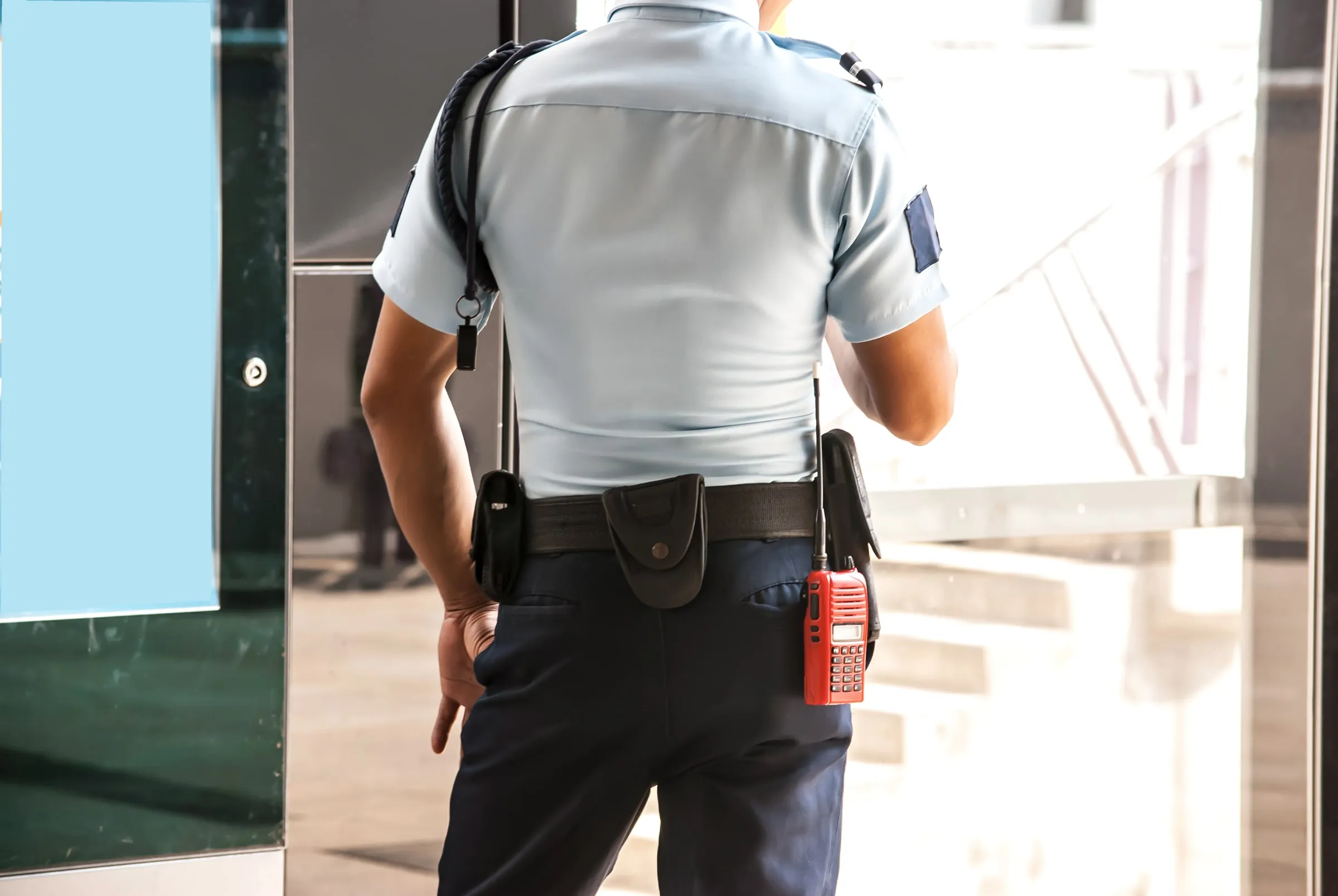
De-escalation is a habit, not a script
De-escalation is not a single line an officer says to calm someone down; it is a set of habits applied together, and applied before a situation reaches the point where words alone might not be enough. Tone stays level regardless of how the other person is speaking. Distance stays open enough that neither person feels cornered, since a person who feels trapped is more likely to react defensively than a person who has room to step back. And choices are kept simple and limited, because a person given a clear way to comply without losing face is far more likely to take it than a person given only an order.
Tone and body language come first
Most confrontations do not start as physical ones; they start as verbal ones that can go in either direction depending on how the first minute is handled. An officer’s own tone sets the pace: matching a raised voice with a raised voice rarely calms anything down, while a level, unhurried tone can slow a situation that is escalating on its own. Body language matters the same way, an open stance rather than a squared-off one, hands visible and not on the duty belt unless the situation genuinely calls for it, enough space that the other person does not feel physically pressed. None of this decides how the other person will react, but it removes the officer’s own presence as a reason for the situation to get worse.
Giving a way out, not just a warning
A common mistake in a tense contact is issuing only a command, leave now, stop that, without giving the person anything to do instead. Effective de-escalation offers a specific, limited choice: quiet down or move to another area, put the item back or speak with the manager, leave now or wait for a resident to come down and vouch for the visit. The difference is not softness; it is giving a person a path to comply that does not feel like total defeat, which in practice produces compliance far more often than a bare order does.
Reading when it is not working
Not every confrontation responds to de-escalation, and officers are trained to recognize the point where continuing to talk is not making things better. Signs include the person’s language moving from complaint to explicit threat, physical posturing that suggests an intent to escalate, or a crowd beginning to form and take sides. At that point, the officer’s job shifts from talking the situation down to creating distance and involving police, rather than continuing to engage in the hope that one more sentence will change the outcome.
| Stage | What the officer does | Goal |
|---|---|---|
| Initial contact | Level tone, open stance, distance | Prevent the situation from escalating further |
| Offering resolution | A specific, limited choice | Give the person a way to comply |
| Signs it is not working | Disengage, create distance, call for backup or police | Avoid a physical confrontation |
| After the contact | Document in the daily or incident report | Record what was said and done, for anyone who asks later |
The limits of an officer’s authority
A security officer’s authority is the same as any private person’s under Texas law: to observe, to deter through presence, to ask someone to leave private property, and, in narrow circumstances, to detain briefly or use reasonable force to protect property. It is not the authority to compel obedience the way a police officer can. This is a summary, not legal advice, but it is the reason de-escalation is not optional politeness; it is often the only tool an officer actually has for resolving a confrontation that has not yet crossed into something requiring police. An officer who cannot talk a situation down and has no legal basis to force an outcome has one option left, disengage and call, and that option is built into training as a legitimate result, not a failure.
Why the goal is always the same outcome
Whether a confrontation involves a trespasser refusing to leave, two residents arguing in a parking lot, or a customer escalating over a denied return, the goal of de-escalation training is identical: resolve the situation with words and presence, and if that does not work, disengage and bring in the people with the authority to do more. Officers are trained to see calling police as the response working correctly, not as giving up, because the training was never meant to promise that talk alone resolves every confrontation. It was meant to make sure that when talk is not enough, the officer has a clear next step instead of a decision made under pressure with no plan behind it.
Documenting the contact afterward
Every confrontation that rises above a routine, momentary exchange gets written up, whether or not it required police involvement. A contact that de-escalated successfully is logged in the daily report with what was said and done. A contact that involved a real threat, a prolonged confrontation or a crowd gathering gets its own incident report the same day, with the same factual, first-person account used for any other incident: what was observed, what was said, what was done, and by whom. This documentation exists for the same reason the training does, so that if the contact is ever questioned later, there is a specific, timed account of it rather than a memory that has to stand on its own.
Questions
Related questions
What does 'giving someone options' actually mean in practice?
Offering a clear, limited choice instead of an ultimatum, for example asking someone to either quiet down or move to a different area, rather than simply ordering them to leave. A person given a way to comply without losing face is more likely to take it.
Can an officer physically remove someone from a property?
Only within the limits of Texas law on use of force to protect property, and only as a last resort after de-escalation has failed. This is a summary, not legal advice; officers are trained to disengage and involve police rather than force a physical outcome.
Does de-escalation training differ for armed and unarmed officers?
The core techniques, tone, distance, limited choices, are taught to both. What differs is that an armed officer's training also covers keeping a firearm a non-issue during a tense contact, since its visible presence can itself raise tension if not handled carefully.
What happens after a confrontation is de-escalated successfully?
It still gets written up. Even a contact that ends without incident is logged in the daily report, and anything that involved a real threat, a raised voice at length or a crowd forming gets its own incident report the same day.
Related pages
Insights
Answers
Glossary
Request a proposal
Request a proposal for your property.
Two short steps. Dispatch reviews every request and calls you back about coverage. For urgent unarmed coverage we can typically staff most sites within hours.
24-hour dispatch
(281) 326-9189