
Security guard service
Access Control Security Guards
A licensed officer at the door who decides who comes in, on which credential, and writes it down, so the entrance is a rule and not a suggestion.

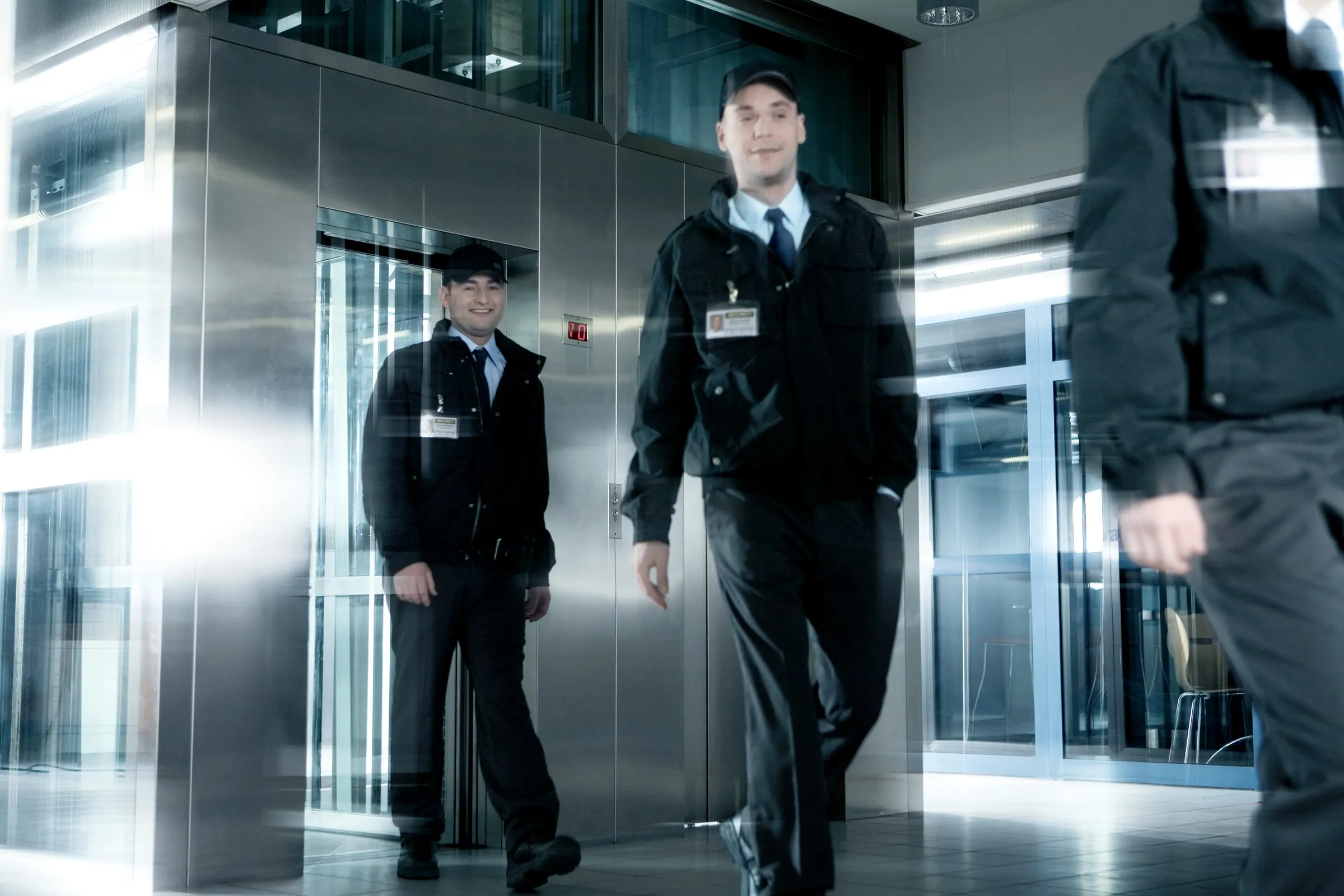
Access control security is a staffed entrance: a licensed officer at a door, a desk or a dock window who admits people by rules written with the client, on a credential the client has chosen, and records every admission and every refusal. Price Protection provides access control as part of a post wherever a property has an entrance that matters more than the others, from a downtown lobby to a warehouse driver window.
The decision the officer makes
A card reader opens a door for anyone holding a card. The officer decides whether the person holding it should be inside. That means checking that the badge belongs to the face, that the visitor has a host who is expecting them, that the contractor’s name matches the work order, that the delivery is for a tenant who still occupies the suite. The rules are the client’s; the officer applies them the same way at nine in the morning and at nine at night, and the post orders say what to do with the exceptions: the executive who forgot the badge, the courier with a package for a company that moved out, the former employee who still has a card.
What goes in the log
Every admission that is not a routine badge-in is written down: name, company, who they are visiting, the time in, the time out, and the badge number they were issued. Contractors get a line per visit with the work order or the vendor company. Refusals get a line too, with the reason. The log is the client’s record when a question comes up a week later about who was on the third floor on Tuesday, and the daily report summarizes it. The article on access control logs goes through the fields and why each one is there, and the visitor and contractor check-in procedures article shows the routine step by step.
Working with the building’s card system
Most buildings that ask for an access control officer already have readers on the doors. The officer’s job is to watch what the readers cannot: the person who walks in behind a badge holder, the door wedged open for a furniture delivery and forgotten, the held-open alarm that maintenance has silenced, the badge that still works for someone who left last month. Each of those is logged and reported to the manager the same day. Where the client’s system produces an event report, the officer reconciles the desk log against it at the end of the shift. For what a staffed post adds to readers and cameras, see gate guard vs access control technology.
Screening at the door
Some clients ask for bag checks or a wand at the entrance. Officers do that where the client’s policy calls for it and where the post orders describe exactly how: what is checked, what happens to a prohibited item, and what the person is told. Officers do not search anyone who declines; they refuse entry and log it. The answer page on whether security guards can search bags explains the limits.
Properties that run access control posts
Office buildings with a tenant directory and a visitor desk. Medical office buildings where patients, vendors and pharmaceutical reps all use the same lobby. Distribution centers and plants where drivers check in at a window and contractors check in at the gate. Data centers and records facilities with a short list and a strict log. Schools during the day for visitor check-in, and apartment leasing offices during a lease-up. Companies bringing in an officer for a termination or a dispute, where the access rule is one name and one day. The property pages on this site say how the post is shaped at each.
Getting the post started
Dispatch needs the entrances, the rules, the log format and a contact who can approve an exception. A supervisor walks the entrance with you, writes the post orders, and the officer is set up on your visitor system before the first shift. Unarmed access control officers are typically on site within hours of a request, and the log is refined over the first week as the officer learns which arrivals are routine.
When you need it
When access control is the right call.
Staff and visitors share one front door
An office building where tenants' employees badge past a desk and visitors need to be announced, given a pass and pointed to the right floor. The officer separates the two streams without slowing either, and the visitor log is complete at the end of the day.
Contractors are in the building all day
A renovation on an occupied floor, a plant with vendors, a distribution center with drivers waiting for a dock. Someone has to know who is on site, for which company, under whose work order and until when, and collect the badge on the way out.
The card system works but nobody watches it
Readers open doors; they do not stop the person walking in behind a badge holder, or notice the door wedged open for a delivery. An officer at the entrance makes the technology mean what the building intended, and reports the lost and still-active badges.
Something inside has to stay inside
A records room, a pharmacy stockroom, a server floor, an evidence closet. Entry is limited to a list, the list changes, and when a question is asked later the log has to show exactly who went in and when.
Starting coverage
What dispatch needs to start.
- Which entrances are staffed and which are locked, badge-only or alarmed after hours
- The admission rules: who is on the list, who must be escorted, what identification is accepted
- Your visitor management system or the log fields you want, and where badges are issued and returned
- A contact who can approve an unlisted visitor or contractor during the day, and one for after hours
- The post hours, and whether the same officer also walks the doors between arrivals
What happens when a visitor is not on the list?
The officer does not admit them. The host or the approving contact is called, and if nobody can confirm the visit the person waits in the lobby or is asked to come back. The refusal, the time and the name go in the log, and a written incident report follows if the person argues or returns.
Can the officer use our visitor management software?
Yes. The officer is set up on the client's system before the first shift and uses it the way the client's own reception staff would. Where a building has no system, the officer keeps a paper log with the same fields and a copy goes to the manager with the daily report.
Should an access control officer wear a marked uniform or business dress?
That is the client's decision and both are common. Corporate and medical lobbies usually ask for a blazer or business dress with a visible identification badge; industrial entrances, docks and construction gates usually want the marked uniform so drivers can find the officer from the truck cab.
Who holds the master keys on an access control post?
Where the client wants keys held at the post, they stay in a locked key box with a signed key log. Each key is signed out and back in with a time, the set is counted at every shift change, and no key leaves the property with an officer. Many clients keep master keys with their own staff and give the officer only the doors on the round.
How does the officer handle someone tailgating through a badge door?
The person is asked to present their badge or to sign in at the desk. Most do. A person who refuses is not chased; the officer notes the time, the door and a description, tells the host or the manager, and calls police only if the post orders or the situation call for it.
Can one officer cover the front desk and the loading dock?
It depends on the distance between them and how the arrivals are timed. A building where trucks come in the morning and visitors in the afternoon can often run one post with a dock schedule in the post orders. Where both are busy at once, two posts sharing one report is the honest answer.
Related pages
Industries we serve
Service areas
Insights
Glossary
Resources
Where we are
Access control across Greater Houston.
Every area below is staffed and supervised from our Sugar Land headquarters. Open an area to see the property types, neighborhoods and questions we hear there.
24-hour dispatch
(281) 326-9189Fort Bend County
Sugar Land and its neighbors, closest to our headquarters.
Houston
Neighborhoods and business districts inside the city.
North and west
Katy and Cypress up to The Woodlands and Conroe.
South and east
Pearland and Clear Lake across to Pasadena and Baytown.
Request a proposal
Request a proposal for access control.
Two short steps. Dispatch reviews every request and calls you back about coverage. For urgent unarmed coverage we can typically staff most sites within hours.
24-hour dispatch
(281) 326-9189