

Security Guards for Office Buildings
A lobby officer who knows the tenants by sight and logs every visitor, contractor and after-hours badge that comes through the door.
Request a proposalThe situation
What a multi-tenant office building deals with at the front desk
The lobby is the only checkpoint
Every tenant, vendor and visitor in the building passes through one desk. Where that desk sits empty between an unstaffed reception and a badge reader nobody watches, a person who looks like they belong walks the turnstile behind someone who does, and no one working three floors up ever knows.
Tenants turn over and nobody updates the list
A suite leases to a new company, employees start before badges are cut, a sublease brings people the building has never seen. A desk that only checks a photo against a name falls behind within a month of any lease change.
Contractors arrive once the building empties
Tenant improvement crews, HVAC vendors and cable techs are often scheduled for six in the evening specifically because the floor is empty then, which is also when the lobby desk that ran all day usually goes home.
Packages outpace the mailroom
Courier volume for a mid-size building runs into dozens of deliveries a day, and a mailroom with no one watching who picks up what becomes the easiest theft in the building, one nobody notices until a tenant asks where their shipment went.
The lobby sets the tone
A multi-tenant office building has exactly one place where every person entering can be seen before they reach a tenant’s suite, and that is the lobby desk. Price Protection staffs it as a static post: an officer who is at the desk, not behind a screen in a back office, checking each visitor against the day’s list or a call to the tenant, and watching the turnstile or badge reader for the second person who follows a badge holder through without presenting their own. The post orders are written with the property manager from the building’s own access rules: which floors are open to walk-in visitors, which require a tenant escort, how deliveries are routed to the loading dock instead of the lobby, and what the desk does with a person who will not say which suite they are visiting.
Badges, tenants and the building engineer
Tenant rosters change with every lease. A new company moves into a vacated suite, employees start before their badges are issued, a sublease brings a second company’s staff into a suite the building’s records still show as one tenant. The officer works from the current access list the property manager provides and updates it as changes come in, rather than relying on a badge system that can lag weeks behind a move-in. Where the building’s elevator or door hardware allows it, the officer works with the building engineer to release specific floors after hours instead of leaving the whole building reachable once a single after-hours badge is used.
After hours and the loading dock
Tenant improvement crews, HVAC vendors and cable technicians are often scheduled for the evening precisely because the floor is empty, which means they typically arrive after the daytime reception has left and only a security post remains. The evening access list names the company, the crew and the suite, and each arrival is checked against it and logged in and out. Deliveries are the other after-hours pattern: a loading dock with no one watching becomes an open door to the building’s interior, so the officer confirms scheduled delivery windows and holds any driver who arrives outside them until the dock manager or building engineer clears the load.
Working with property management
The daily report is the building’s record of who came through the lobby and when, and it reaches the property manager before the next business day so a tenant’s question about a missing package or an unfamiliar visitor has an answer already on file. Over a few months the pattern in that report, which entrances tailgating happens at, which contractors habitually arrive outside their scheduled hours, gives the property manager something concrete to raise at the next tenant meeting rather than a general sense that the building feels less secure than it should.
Starting coverage
To begin, dispatch needs the building’s address, the hours the desk should be staffed, the current tenant and badge access list, the loading dock’s delivery schedule and the building engineer’s contact for elevator and door hardware questions. An unarmed officer can typically be at the desk within hours of a signed proposal, and post orders are refined over the first weeks as the officer learns the building’s tenant mix and traffic patterns.
How we cover it
Every service, applied to this post.
- Unarmed security guards
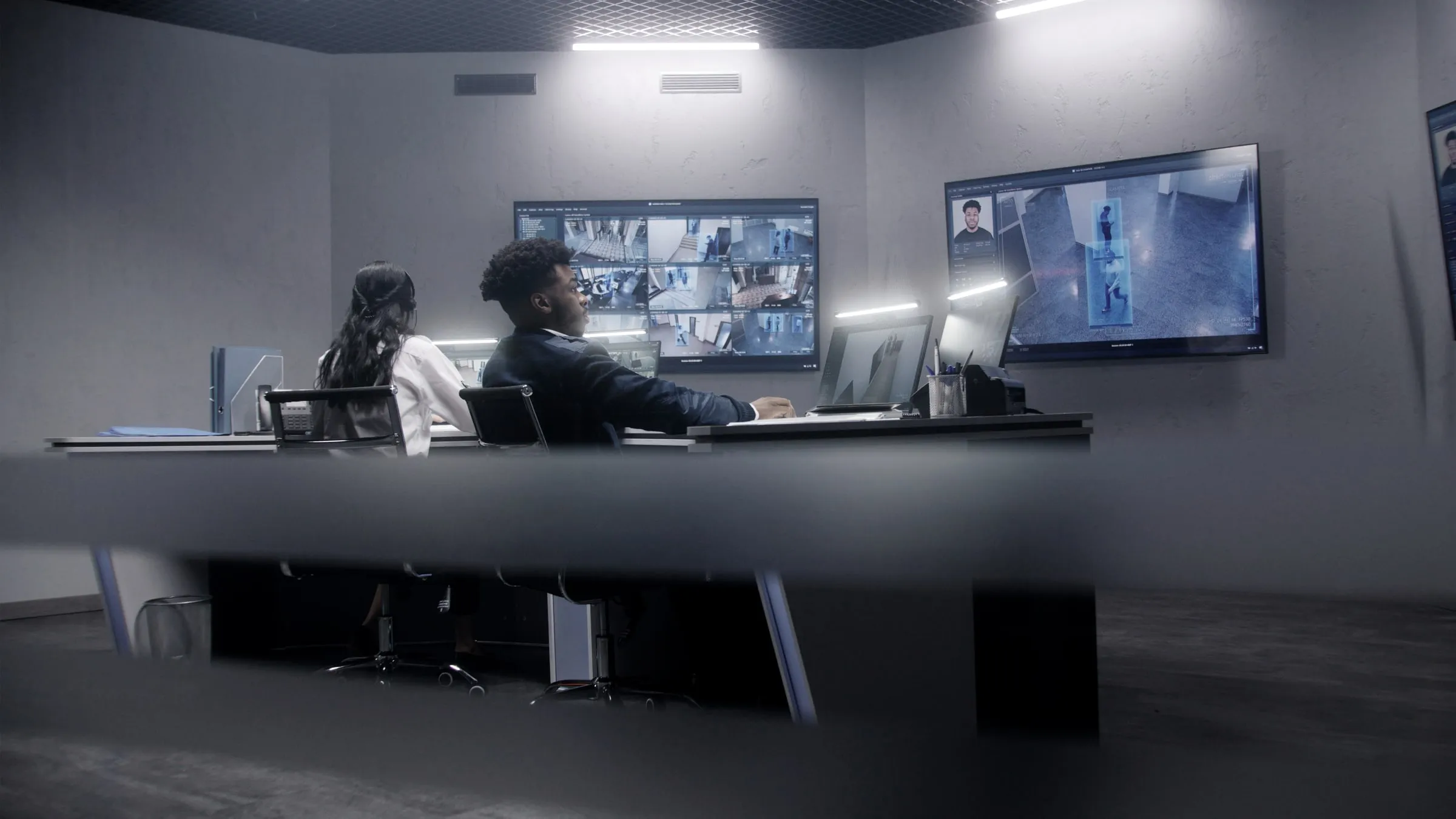
An unarmed officer staffs the lobby desk, checks visitors against the day's list or calls the tenant to confirm, issues a visitor badge and watches the turnstile or badge reader for tailgating during the hours the desk needs a person rather than a card reader.
- Access control
The officer manages badge exceptions for tenants who have lost a card, holds the after-hours sign-in log for the suites that keep late hours, and coordinates with the building engineer when an elevator bank needs to be released for a specific floor.
- Camera monitoring
Where the building owns lobby, garage and loading dock cameras, the officer watches them from the desk, checks the dock feed before releasing a delivery driver upstairs, and pulls a clip for the property manager when a tenant reports something missing.
- Vehicle patrol
Buildings with a surface lot or an attached garage add a patrol round between desk shifts or a dedicated garage officer, since a lobby desk alone cannot see a car being broken into two levels down.
- Incident reporting
The daily report lists every visitor signed in, every contractor admitted after hours, every package logged at the desk and anything the property manager needs to follow up on, delivered before the next business day starts.
A typical post
What a shift looks like here.
The morning shift opens the desk before the first tenants arrive, unlocks the doors the building keeps locked overnight, and spends the seven to nine window checking badges and visitor names as the lobby fills. By midmorning the pace is deliveries: couriers signing in, packages logged, a contractor with a work order for a specific suite.
Midday brings the heaviest foot traffic of the day, tenants leaving for lunch and returning in waves, and the officer's job is less about stopping anyone and more about noticing who does not fit the pattern, a person circling the lobby without heading to an elevator, a badge that beeps red twice in a row.
After six the building empties and the desk shifts to contractor traffic: a tenant improvement crew with a suite number, an HVAC tech the building engineer confirmed, a cleaning contractor working floor by floor. Each is checked against the evening access list and logged in and out, since an empty floor with an unlogged crew on it is the building's actual exposure.
On a 24-hour post the overnight officer walks the common areas and the garage on a set round, checks that doors marked to lock have locked, and writes the report the morning desk reads first: who came through after hours, what was found propped, what the engineer needs to know before tenants arrive.
Reporting
What the daily report covers here
Every client receives a written report each day, and officer performance is reviewed and documented daily. This is what the report records on this kind of post.
- Visitors signed in and badges issued, with company and tenant suite
- Contractors and vendors admitted after hours, with the suite and the time
- Packages received at the desk and held for tenant pickup
- Tailgating observed at the turnstile or an elevator bank
- Loading dock activity outside the building's scheduled delivery windows
- Common-area and garage rounds, with anything found propped or unlocked
- Maintenance or lighting issues reported to the property manager
Does a security officer replace the front desk receptionist?
No. Where a building has a concierge or leasing receptionist, the officer works alongside that role, handling badge exceptions, contractor access and the hours the reception desk is not staffed, rather than answering tenant calls or building mail.
How do you handle a tenant's own after-hours contractors?
The tenant or property manager adds the crew to the evening access list with a name, a company and a suite number, and the officer checks each arrival against it and logs the time in and out. A crew not on the list is held at the desk while the tenant is called.
Can an officer control elevator access after hours?
Where the building's elevator system allows floor-by-floor release, yes, the officer works from the desk with the building engineer to open only the floors that have people working late, rather than leaving every floor reachable overnight.
What happens when a visitor will not name who they are seeing?
The officer does not guess. The visitor is asked to wait at the desk while the tenant is called to confirm, and if no tenant confirms the visit the person is not admitted. The refusal and the reason are written into the daily report.
Do you cover the parking garage as well as the lobby?
When the building wants it. Some properties add a vehicle patrol round through the garage between desk shifts, others staff a dedicated garage post; the proposal is priced to the hours and the coverage the owner chooses.
Related pages
Industries we serve
Service areas
Insights
Glossary
Request a proposal
Request a proposal for office buildings.
Two short steps. Dispatch reviews every request and calls you back about coverage. For urgent unarmed coverage we can typically staff most sites within hours.
24-hour dispatch
(281) 326-9189