
Choosing your coverage
Lobby Officer vs Roving Officer for Office Buildings
By Price Protection SecurityReviewed TX DPS Lic #B09430601
Short answer
A lobby officer holds the front desk, announcing visitors, screening deliveries and controlling who reaches the elevators. A roving officer walks the floors, the garage, the stairwells and the loading dock on a set route. A single-tenant tower with one entrance often needs only a lobby officer; a multi-tenant building with a garage and after-hours floor access usually needs both.
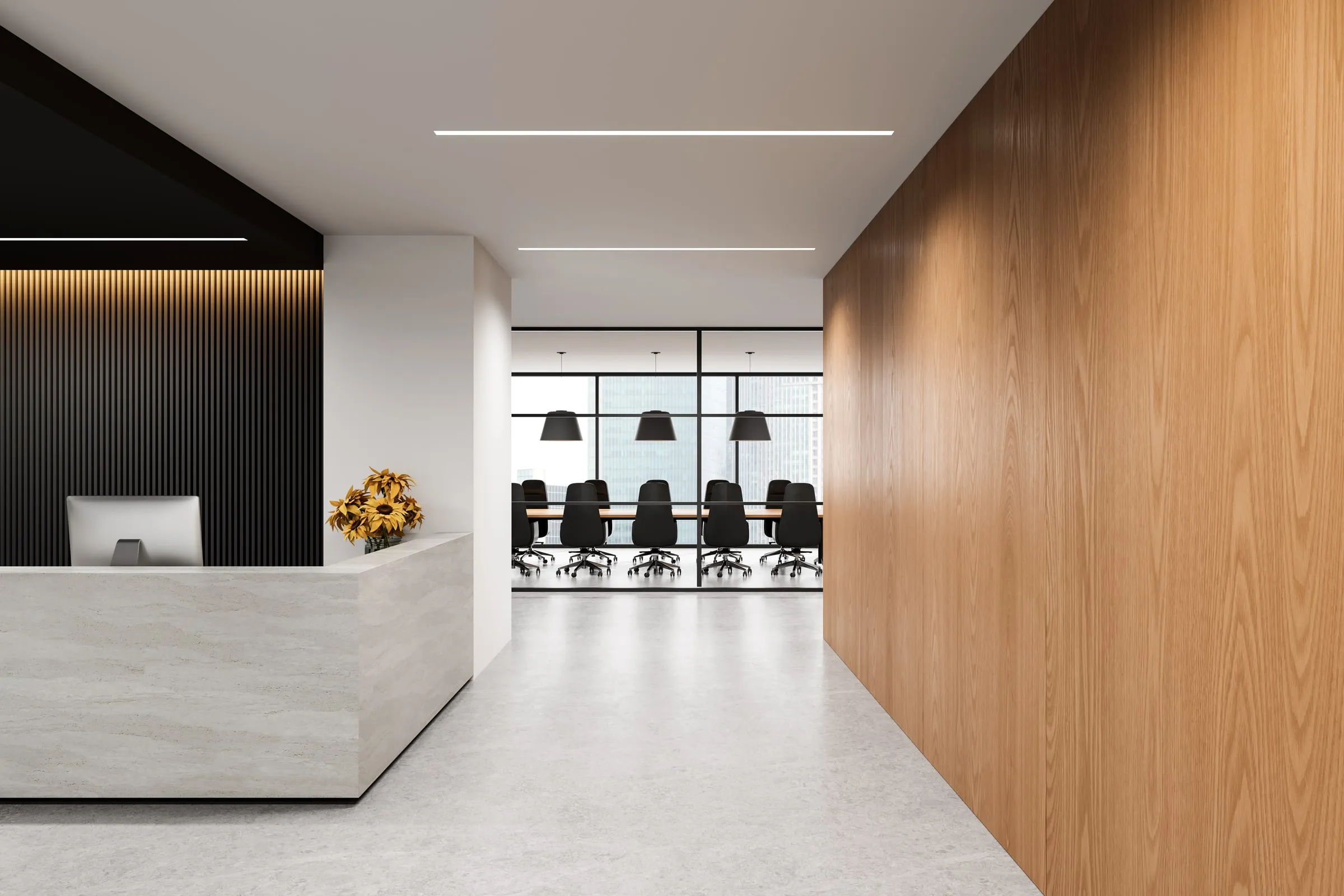
Two jobs that look similar and are not
An office building’s security needs split naturally into two different kinds of attention: watching who enters at one point, and watching what happens across the rest of the building. A lobby officer does the first, stationed at the desk, controlling the entrance and directing traffic upward. A roving officer does the second, moving through floors, stairwells, the garage and the dock on a route the desk officer cannot see from where they sit. Treating the two as one job, or assuming a lobby presence alone covers a whole tower, is the most common gap in an office building’s security plan.
What the lobby officer actually controls
The lobby desk is the building’s single most important control point in a multi-tenant tower, because nearly every visitor, courier and contractor passes through it on the way to an elevator. A lobby officer signs in guests by the building’s procedure, calls the tenant before anyone goes up, directs delivery drivers, holds packages when asked, and watches for tailgating, someone following a badge holder through without presenting their own credential. Camera feeds for the garage, the dock and common areas are often watched from the same desk between visitor arrivals, which is why the position stays occupied continuously rather than being left for periodic checks. What the lobby officer cannot do is also part of the design: from behind the desk, nobody sees what is happening on the eleventh floor or in the third level of the garage.
What the roving officer actually covers
A roving officer’s route is built around the places the lobby desk cannot reach: floor common areas and stairwell doors after the workday tenants have left, the garage levels where cars sit overnight, the loading dock during and after delivery hours, and any secondary entrance the building maintains. The route and the interval between rounds are set with the property manager from a walk-through and vary from one round to the next so a person watching the building from outside cannot predict when the officer will pass a given point. Everything a roving officer finds, a propped fire door, an unfamiliar person on a tenant floor after hours, a car that has not moved in days, is called in to the lobby officer immediately and written into the shared daily report.
Side by side
| Lobby officer | Roving officer | |
|---|---|---|
| Position | Fixed, at the front desk | Moving, on a set route through the building |
| Controls | Who enters, visitor sign-in, deliveries | Floors, stairwells, garage, dock, secondary entrances |
| Camera monitoring | Often, from the desk between arrivals | Not typically; reports what is seen on the round instead |
| Best fit alone | A single-tenant building with one entrance | Rarely used alone; usually paired with a lobby post |
| Communicates with | Tenants, visitors, the roving officer by radio | The lobby officer, by radio, on anything found |
Deciding for a specific building
A small, single-tenant office with one entrance and minimal after-hours traffic can often run on a lobby officer alone, with a brief, defined round added if the building has a garage or a second door that needs occasional checking. A multi-tenant tower with several floors of independent businesses, a parking garage, and staff who work irregular hours needs both roles running at once, because the risk at the garage entrance at nine at night has nothing to do with what is happening at the front desk at the same moment. Buildings that grow, adding tenants, extending hours, opening a garage they did not originally staff, are the ones that most often discover the gap between what a lobby-only post can see and what the rest of the building actually needs watched.
What tenants notice and what management measures
Tenants mostly experience only the lobby officer, since that is the face they see arriving each morning and the one who calls up when a client visits, and a building’s reputation for security often rests on that single desk interaction more than on anything else in the coverage plan. Management, reading the daily report, sees the fuller picture: how many after-hours entries the roving officer logged, which floor’s fire door keeps getting propped, whether the garage round found the same unfamiliar car three nights running. The two views rarely conflict, but they answer different questions, and a manager relying only on tenant feedback can miss a pattern the report would have shown weeks earlier. Building committees and ownership groups reviewing a security contract usually want both accounted for separately: the visitor experience the lobby officer creates, and the coverage record the roving officer’s rounds produce.
Setting up coverage that matches the building
Dispatch takes the building’s floor count, entrances, garage layout and current desk hours, a supervisor walks the property with the manager, and the two roles, if both are needed, are written into separate sections of the same post orders: the lobby’s admission rules and camera duties in one, the roving route and interval in the other. Both officers report into the same daily report so the manager reads one document covering the whole building rather than two disconnected accounts, and the arrangement can start with a lobby officer alone and add the roving role later if the building’s own patterns show it is needed.
Questions
Related questions
Does a lobby officer ever leave the desk?
Only briefly, and only as the post orders allow, for example to walk a visitor to an elevator bank the desk cannot see. A lobby that goes unattended even for a few minutes stops functioning as a control point, so most post orders keep the desk covered continuously and assign floor and garage rounds to a separate roving officer.
Can one officer do both jobs in a smaller building?
In a small, single-tenant building with one entrance and little after-hours traffic, one officer sometimes covers the desk and a limited round, stepping away for short, defined intervals. As the building adds tenants, floors or a garage, the two roles typically split so the desk is never left uncovered for longer stretches.
What does a roving officer check on a typical round?
Stairwell doors, floor pantries and common areas after hours, the garage levels and any loading dock, looking for propped doors, people who should not be present and anything reported by tenants during the day. The route and interval are set with the property manager and vary from round to round.
Who does a roving officer report to during the shift?
The lobby officer, by radio, since the desk is the fixed point tenants and visitors reach first. Anything found on a round, from a propped door to an after-hours visitor without an escort, is relayed to the lobby immediately and recorded in the shared daily report.
Related pages
Industries we serve
Insights
Glossary
Request a proposal
Request a proposal for your property.
Two short steps. Dispatch reviews every request and calls you back about coverage. For urgent unarmed coverage we can typically staff most sites within hours.
24-hour dispatch
(281) 326-9189