
Choosing your coverage
Gate Guard vs Access Control Technology
By Price Protection SecurityReviewed TX DPS Lic #B09430601
Short answer
A barrier arm, keypad or card reader opens for whoever has the code, the card or the app; it does not know whether that person is the resident it was issued to. A gate officer checks a face against a list, calls to verify an unexpected guest, and closes the gate behind every vehicle by hand. Technology handles routine, repeat entries well; a person handles the exceptions technology cannot judge.
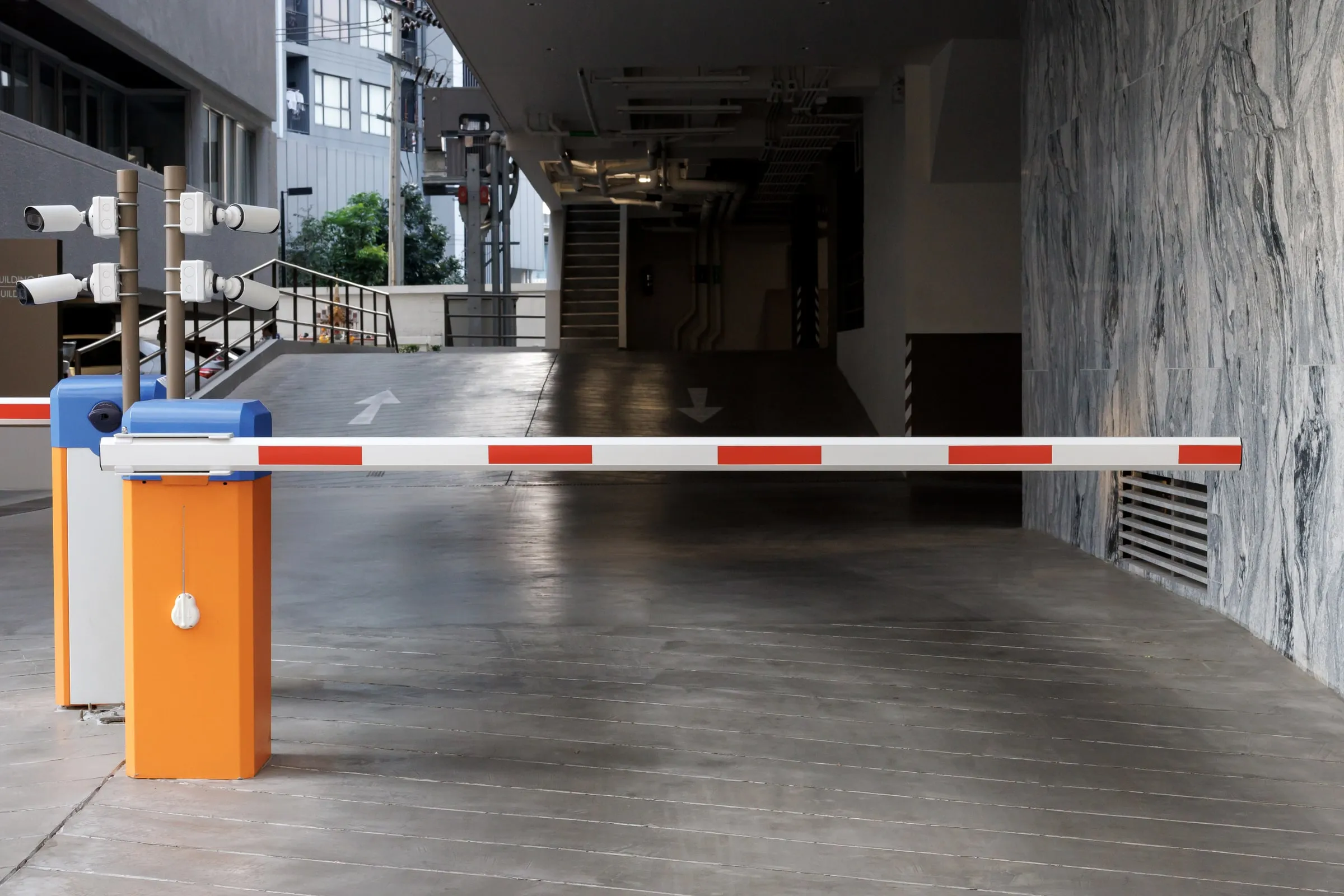
What each option actually decides at the gate
A barrier arm, a keypad, a card reader and a phone-based entry app all answer the same narrow question: does this credential match one on the approved list. They answer it instantly and consistently, and they never get tired, distracted or slow to respond during a busy hour. What none of them can do is answer a different, more common question: is this specific situation, right now, one the rules anticipated. A guest whose resident forgot to add them, a delivery driver with no code at all, a second car riding through behind the first before the arm comes down, a contractor who shows up a day early, none of these are covered by a credential check, and a gate that only checks credentials has no answer for any of them beyond denying entry or letting it happen unchecked.
What a gate officer adds that hardware cannot
A gate officer performs the same credential check technology does, operating the same barrier arm, reading the same access list, but adds judgment to every case the list does not resolve on its own. An unlisted guest gets a phone call to the resident before the arm opens, not an automatic denial or an automatic pass. A driver without a code gets asked who they are visiting and why, and the answer is logged. A vehicle that follows another through the gate gets seen and stopped, because the officer is watching the gate itself, not just the credential reader. Every non-resident vehicle, guest, vendor, delivery, gets a written log entry with plate, driver, destination and time, which becomes the record a manager or police can use later. None of that requires replacing the hardware; a gate officer typically operates the same arm and reader the community already has.
Side by side
| Access control technology alone | A staffed gate officer | |
|---|---|---|
| Checks a known credential | Yes, instantly | Yes, using the same system |
| Verifies an unlisted guest | No | Yes, by calling the resident |
| Stops a vehicle following through behind another | No | Yes, if watching the gate |
| Handles a driver with no code | No | Yes, by judgment and a phone call |
| Keeps a written log of every non-resident vehicle | Only what the system automatically records | Every vehicle, with details a system cannot capture |
| Continues functioning if the system fails | Depends on the fail-open or fail-closed setting | Yes, by operating the gate manually |
Where technology alone is enough
A low-traffic gate serving a small, stable group of residents or employees, where nearly every entry is a known credential and unlisted guests are rare, can run adequately on access control technology by itself, provided someone reviews the system’s logs periodically and a plan exists for what happens when a resident’s guest shows up without a code. Some commercial sites use automated gates for after-hours entry specifically because traffic is minimal and predictable during those hours, reserving a staffed presence for the daytime volume that needs it.
Where a gate officer earns the post
A community or site with meaningful guest, vendor or delivery traffic, a history of tailgating, or a genuine concern about who is actually driving through, needs the judgment a reader cannot supply. Gated communities where residents routinely have guests, yards and plants where every truck has a driver, a carrier and an appointment to verify, and construction sites where the sub list changes weekly all fall into this category. The officer does not slow down the credentialed majority of entries, which still move through quickly, but catches the exceptions that would otherwise pass unchecked or get turned away incorrectly by a system with no way to ask a follow-up question.
What happens when the two disagree
The clearest illustration of the difference shows up the day the technology and the situation on the ground do not match. A card that should be deactivated after a resident moves out sometimes stays live for weeks if nobody updates the system promptly, and a keypad code that was meant for one weekend of movers can keep working long after the move is done. A reader has no way to notice that mismatch; it only knows the credential is valid. A gate officer who has been working the same post for months develops a different kind of knowledge, recognizing that a car using an old code belongs to a resident who left two months ago, or that a contractor’s temporary code is still being used well past the job’s end date. That kind of pattern recognition depends on a person being present shift after shift, not on the access control system itself, however well it is maintained.
Running both together
Most properties that staff a gate keep the access control technology in place rather than removing it; the officer uses the reader for known credentials and applies judgment only to what the reader cannot resolve, which keeps routine traffic moving while still catching the exceptions. Post orders for a staffed gate typically describe exactly this split: which entries the technology clears on its own, which get a phone call, and what gets logged regardless of how the vehicle entered. A community weighing whether to add a gate officer to an existing automated system is really asking how often the exceptions come up, not whether the technology works, and that answer usually comes from the access log itself once someone reviews it with that question in mind.
Questions
Related questions
Can access control technology replace a gate officer entirely?
For entries that never need judgment, an authorized resident with a working transponder, it functions well. It cannot decide what to do with an unlisted guest, a delivery driver without a code, or someone following another vehicle through before the arm closes, which is why most communities that try full automation add a staffed gate back once those situations start to accumulate.
Does a gate officer use the access control system, or replace it?
Uses it. The officer operates the barrier arm and, where the community has one, the card or code system, but adds the judgment the system cannot apply: verifying an unlisted guest by phone, refusing an expired code, and logging every vehicle that is not on file.
What happens when the access control system fails?
At a technology-only gate, the arm typically fails open or stays closed until repaired, either leaving the entrance uncontrolled or blocking residents entirely. At a staffed gate, the officer operates the arm manually and keeps a paper log until the system is restored, so the entrance stays controlled either way.
Is tailgating a bigger problem at a staffed or an unstaffed gate?
Unstaffed gates are more exposed to it, since an automated arm has no way to notice or stop a second vehicle following through before it closes. A gate officer watches for exactly that and can act on it, though it takes attention and post orders that specifically call it out.
Related pages
Industries we serve
Services
Insights
Glossary
Request a proposal
Request a proposal for your property.
Two short steps. Dispatch reviews every request and calls you back about coverage. For urgent unarmed coverage we can typically staff most sites within hours.
24-hour dispatch
(281) 326-9189