
Security Guards for Garden-Style Apartment Communities
Spread-out buildings, open breezeways and long parking runs need an officer who moves, not a desk. We patrol the whole property and report every round.
Request a proposalThe situation
What garden-style communities are dealing with
Twenty acres, no front door
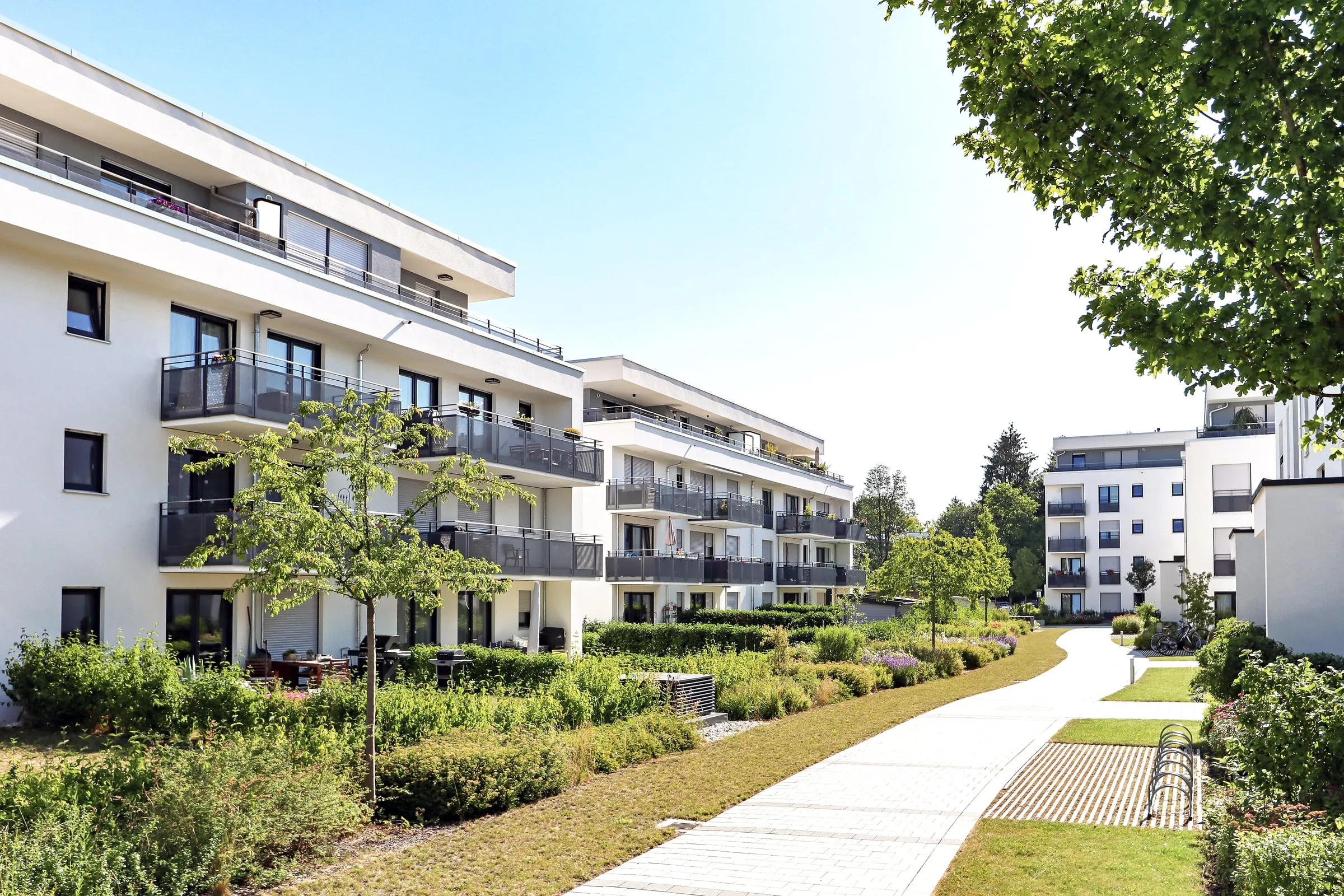
A garden community has a dozen or more buildings, several parking runs and open breezeways that anyone can walk into from the street. There is no lobby to control and no single point where a visitor has to pass an officer, so coverage has to move through the property on a schedule that is hard to predict.
Parking lots after dark
Catalytic converters, wheels, tools in work trucks and cars left unlocked are the usual losses, and they happen between midnight and five in the lots farthest from the office. Lighting that is out in one run becomes the run where the next incident happens.
Non-residents in the amenities
Pools, grills, dog parks and mail rooms attract people who do not live there, especially on summer weekends. Residents notice, complain to the office on Monday, and the office has no record of who was there or what was done about it.
Doors propped, gates open
Breezeway doors on secured buildings get propped by movers and delivery drivers, and vehicle gates get held open by tailgaters. Each one turns a controlled property into an open one for as long as nobody notices.
Coverage built around the layout
A garden-style community is defined by its sprawl: two- and three-story buildings arranged around courtyards and parking, connected by sidewalks and breezeways, with the office and the clubhouse at the front and the quietest buildings at the back. That layout is what residents pay for and it is what makes the property hard to secure with a single fixed post. Price Protection sets these communities up as patrol posts, staffed in the evening and overnight, with a vehicle for the lots and the perimeter and foot rounds through the buildings.
The post orders are written with the community manager before the first shift. They record which buildings have secured breezeway doors, where the pool and amenity gates are and when they close, which lots have had losses, what the parking policy says and who is authorized to approve a tow, what the courtesy line is for, and who to call at the management company after hours. Every officer who works the property reads them, and they change whenever the property does.
Where the incidents actually happen
On garden communities across Houston the pattern repeats. Vehicle break-ins and catalytic converter thefts happen in the lots farthest from the office and the street, in the small hours. Non-resident use of the pool and grills peaks on summer weekends. Propped breezeway doors follow move-ins and deliveries. Loitering gathers at the mail kiosk, the back stairwells and the dog park after dark. The patrol route is drawn to put the officer at those places at the times they matter, and to vary the order so the route cannot be timed.
Working with the office and maintenance
The officer is on the property when the office is not, which makes the daily report the main line of communication. Managers use it to see what happened overnight, to follow up on tow notices and trespass warnings, and to give maintenance a list: lights out in a specific lot, a gate that is not closing, a leak found in a breezeway. When the community has a courtesy line, the officer answers it, so noise and parking complaints get a same-night response and a written record instead of a voicemail for the morning.
Starting coverage
To start a patrol post, dispatch needs the address and the number of buildings, the hours wanted, whether the community has a vehicle gate and secured buildings, the parking and pool policies, and a contact for the walk-through. Unarmed coverage can typically start within hours when a community needs it quickly, with the post orders refined over the first week as the officers learn the property.
How we cover it
Every service, applied to this post.
- Unarmed security guards
Most garden communities run an unarmed officer on an evening and overnight post, on foot and in a vehicle, with a courtesy line residents can call. The officer is trained in customer service as well as patrol, because on a residential property most contacts are with people who live there.
- Vehicle patrol
A marked vehicle covers the parking runs and the perimeter far faster than an officer on foot, and it is visible from the street. Routes vary from round to round and stop at each building, each lot and each gate, with the officer out of the vehicle at the checkpoints that need a hand on a door.
- Access control
Where the community has a staffed gate, the officer checks residents, logs visitors and contractors, and holds the gate on tailgaters. Where it does not, the patrol officer checks that vehicle gates close behind cars and that breezeway doors on secured buildings are shut and latched on every round.
- Camera monitoring
If the leasing office has cameras on the pool, the mail room or the lots, the officer watches them from the post between rounds and uses them to decide where the next round goes, so the cameras have someone looking at them at two in the morning.
- Incident reporting
The daily report lists every round with the buildings and lots covered, every door or gate found open, every vehicle logged, every resident contact and every incident, and it reaches the manager before the office opens. Incidents get their own written report the same day.
A typical post
What a shift looks like here.
The evening officer starts at the office, picks up the tow list and any notes from the day, and walks the pool and clubhouse at closing time to clear them and lock the gates. The first vehicle round covers every parking run while there is still light, noting cars without permits and lights that are out.
Through the night the officer alternates vehicle rounds and foot rounds through the breezeways, checking that secured doors are shut, answering the courtesy line for noise and parking calls, and logging each round with the time. Around two, the officer parks in the lot with the most history and watches it for a while.
Before handing off in the morning, the officer walks the mail room and package area, checks the pool gate again, notes any vehicle that should be towed under the community's policy, and finishes the daily report so it is in the manager's inbox when the office opens.

Reporting
What the daily report covers here
Every client receives a written report each day, and officer performance is reviewed and documented daily. This is what the report records on this kind of post.
- Vehicle and foot rounds, with the buildings, lots and gates covered on each
- Pool, clubhouse and amenity closings, with the time each gate was locked
- Breezeway and stairwell doors found propped or unlatched, by building
- Vehicles without permits, abandoned vehicles and tow notices issued
- Courtesy line calls: noise, parking, disturbances, and how each was resolved
- Lighting out, water leaks and maintenance issues found on rounds
- Trespass warnings issued and non-residents cleared from amenities
On the client wall
Communities and businesses in this category that Price Protection protects.
- Park Lakes
- Tomball Ranch Apartments
- Sommerall Station
Do we need a guard at the gate or a guard on patrol?
For most garden-style communities, patrol. A gate post controls one entrance while the rest of the property stays open along the fence line and the pedestrian gates, so the officer's time is better spent moving through the buildings and lots. Communities with a single controlled entrance and a high visitor volume are the exception, and some run both.
What hours make sense for a garden community?
Evening and overnight, typically from the time the office closes until early morning, seven days a week. That window covers amenity closings, the hours when parking lot theft happens and the calls residents make when the office cannot answer. Weekend afternoon coverage is added by communities whose pools draw non-residents in summer.
Can residents call the officer directly?
Yes. Communities usually publish a courtesy line that rings the officer on post. The officer responds to noise, parking and disturbance calls, records each call and its outcome in the daily report, and calls police when a situation needs them.
How do you handle tow-away parking?
The officer enforces the community's written parking policy exactly as the post orders state it, from first notice to tow authorization, and logs each step with the vehicle description and the time. Nothing is towed on the officer's own judgment.
Will the same officers work our property?
Dispatch assigns a small group of officers to each community so the people on post learn the buildings, the residents and the problem spots. Performance on every shift is reviewed against the daily report.
Related pages
Industries we serve
Services
Service areas
Insights
Answers
Glossary
Request a proposal
Request a proposal for garden-style apartments.
Two short steps. Dispatch reviews every request and calls you back about coverage. For urgent unarmed coverage we can typically staff most sites within hours.
24-hour dispatch
(281) 326-9189