
Property manager guides
How Many Security Guards Does an Apartment Community Need?
By Price Protection SecurityReviewed TX DPS Lic #B09430601
Short answer
Most apartment communities need one officer at a time, on an evening and overnight post, seven days a week. That becomes two when the property has a controlled gate that must be staffed while a patrol covers the grounds, when the site is large enough that one round takes longer than the interval the risks demand, or when the calls on a busy night exceed what one person can answer. Count posts, not guards.
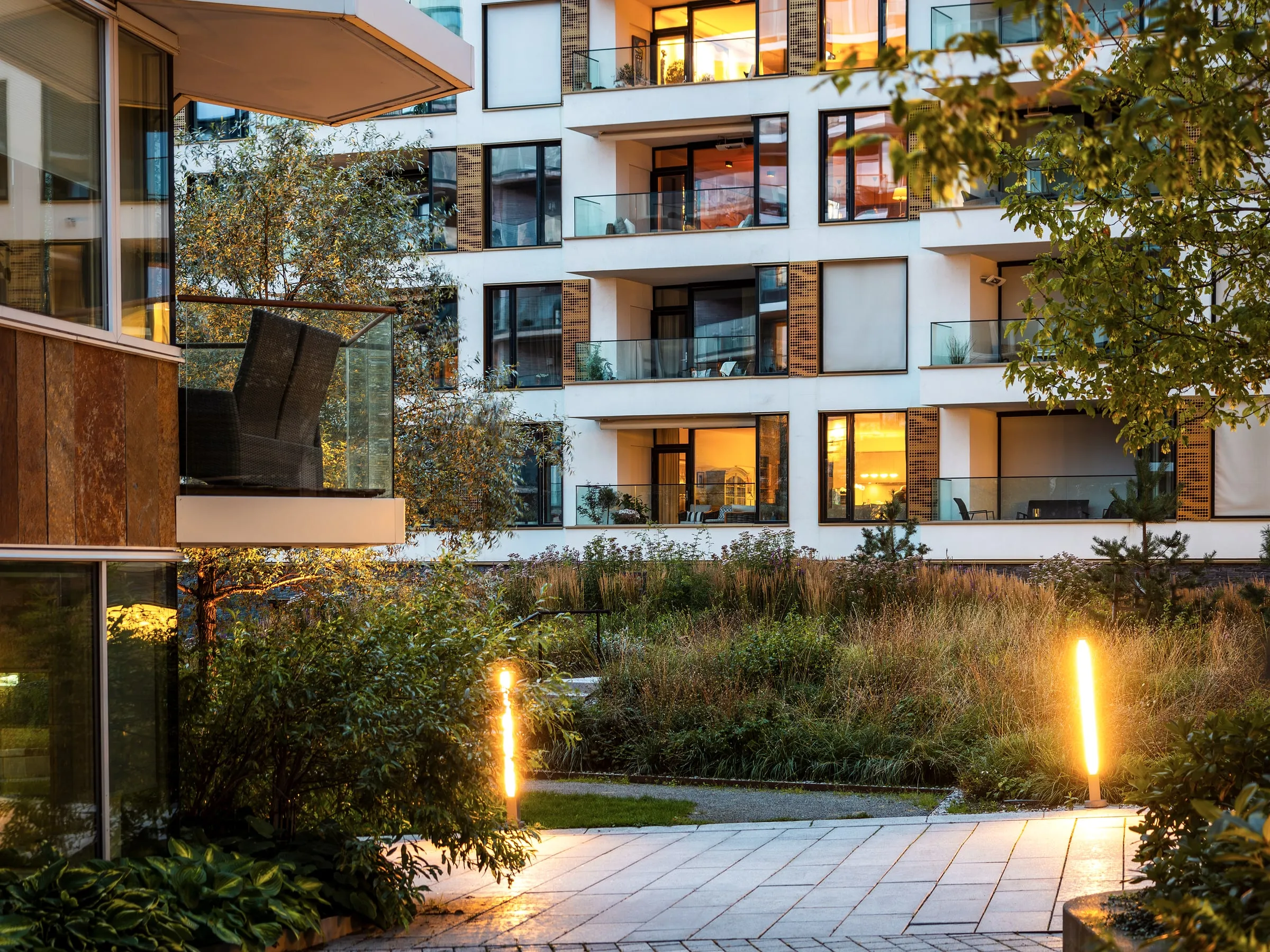
Start with posts, not headcount
A security company does not sell guards by the dozen; it staffs posts. A post is one position, a gatehouse or a patrol route, for a set of hours, filled by one officer at a time. An evening and overnight patrol post running from six in the evening to six in the morning is one post, even though it takes a small team of officers to fill it seven nights a week. So the real question for an apartment community is how many positions need to be filled at the same time, and for how many hours.
For most communities the answer is one: a single patrol post during the hours the office is closed. The question becomes interesting when the property has more than one thing that needs an officer at the same moment.
The four things that add a second post
A gate that must be staffed. A controlled entrance where residents are checked and visitors logged is a fixed position. The officer cannot leave it to walk the back buildings. If the community wants both a staffed gate and patrol of the grounds during the same hours, that is two posts, not a busier one.
Ground that one round cannot cover. A patrol route has an interval, the time between visits to the same checkpoint. Post orders for a garden community usually put the pool, the far lots and the secured building doors on a round of roughly an hour, with variation so it cannot be timed. When the property is large enough that a full round takes longer than that even with a vehicle, either the interval stretches or a second officer takes half the route.
Nights with more calls than one person can answer. A community with a courtesy line, a busy pool deck and a history of disturbances can generate more calls on a Friday night than one officer can reach while still walking rounds. A second post on Friday and Saturday nights is a common answer, with one officer on the phone and the amenities and the other on the vehicle.
A second building type on the same site. A community with a parking garage and a surface lot, or a mid-rise tower next to garden buildings, often needs the garage or the tower lobby covered as a fixed post while the rest is patrolled.
Hours matter more than headcount
Doubling the officers on a post costs the same as doubling the hours, and hours usually buy more. A community that runs one officer from ten at night to four in the morning and finds that its incidents happen at eight in the evening and six in the morning does not need a second officer; it needs the post moved or lengthened. The daily report is the tool for this: it records when the calls come, when the doors are found propped and when the lots are busy, and after a few weeks the pattern is plain.
A way to work it out before you call
| Question | If yes | If no |
|---|---|---|
| Does a gate or lobby need to be staffed while the grounds are patrolled? | Two posts during those hours | One patrol post |
| Can a vehicle round reach every checkpoint inside the interval the risks need? | One patrol post | Split the route: two posts, or shorten the property covered |
| Do weekend nights bring more calls than the rounds allow? | Add a weekend second post | Keep one |
| Is there a garage, tower or amenity building that needs a fixed presence? | Add a fixed post for it | Keep one |
Write down the hours you want for each post and the reasons, and bring that to the walk-through. Dispatch will confirm or adjust it from what the supervisor sees on the property.
What Price Protection recommends on the walk-through
The supervisor looks at the entrances, the acreage, the lighting, the amenity closing times, the parking layout and the history the manager describes, then proposes a post plan: usually one patrol post on evenings and overnights, sometimes a gate post as well, occasionally a weekend second officer. The plan is written into the proposal with hours per week per post, and the post orders are drafted from it. After the first month the daily reports show whether the plan fits, and it is adjusted with the manager rather than left alone.
When to revisit the number
Revisit after any incident that the report shows the officer could not reach in time, after a change in the property such as a new gate or a new phase of buildings, and at renewal, when a season’s reports are available to compare against the original assumptions. The right number is the one that lets every checkpoint be reached inside the interval and every call be answered, and no larger.
Two examples from the kinds of communities we staff
A 280-unit garden community on fourteen acres with an unstaffed vehicle gate, a pool and two back lots that lose catalytic converters: one patrol post with a vehicle, six in the evening to six in the morning, seven nights. The gate is checked on every round rather than staffed, the pool is cleared at closing, and the far lots get the two o’clock watch.
A 400-unit community with a staffed entrance, a five-level garage and a clubhouse that hosts resident events on weekends: a gate post from four in the afternoon to midnight, a patrol post overnight, and a second patrol officer on Friday and Saturday evenings for the garage and the clubhouse. That is two posts on weeknights and three on weekend evenings, and the daily reports from each are combined into one for the manager.
Neither example is a rule. They show the arithmetic: count the positions that must be filled at the same moment, set the hours for each from the property’s own pattern, and let the report tell you when to change it.
Questions
Related questions
Is one guard enough for a 300-unit community?
Usually, on an evening and overnight patrol post, if the property has no staffed gate. A three-hundred-unit garden community with a vehicle can be covered on a round every hour or so with foot rounds between. Add a second post if the gate must be staffed at the same time.
Do we need coverage during the day?
Most communities do not; the office is open and residents are at work. Daytime posts are added for a staffed gate, for move-in weekends, for a property with daytime loitering, or after a specific incident.
How do I know if the post is working?
Read the daily report. It shows the rounds, the calls, the doors found open and the incidents. If the report shows the officer cannot complete the rounds the post orders set, the post is too big; if it shows nothing for weeks, the hours or the route may need to change.
Related pages
Industries we serve
Services
Insights
Answers
Glossary
Request a proposal
Request a proposal for your property.
Two short steps. Dispatch reviews every request and calls you back about coverage. For urgent unarmed coverage we can typically staff most sites within hours.
24-hour dispatch
(281) 326-9189