
Property manager guides
Construction Site Theft in Houston: What Gets Stolen and When
By Price Protection SecurityReviewed TX DPS Lic #B09430601
Short answer
What gets stolen from a Houston job site depends almost entirely on which phase the project is in. Fuel, rebar and small equipment go missing during sitework and foundations, lumber and tools disappear during framing, copper wire is the highest-value target during rough-in, and appliances, fixtures and HVAC condensers are taken as the building nears completion. Nearly all of it happens in the evening, overnight or across a weekend, when the crew is gone and the site is left to itself.
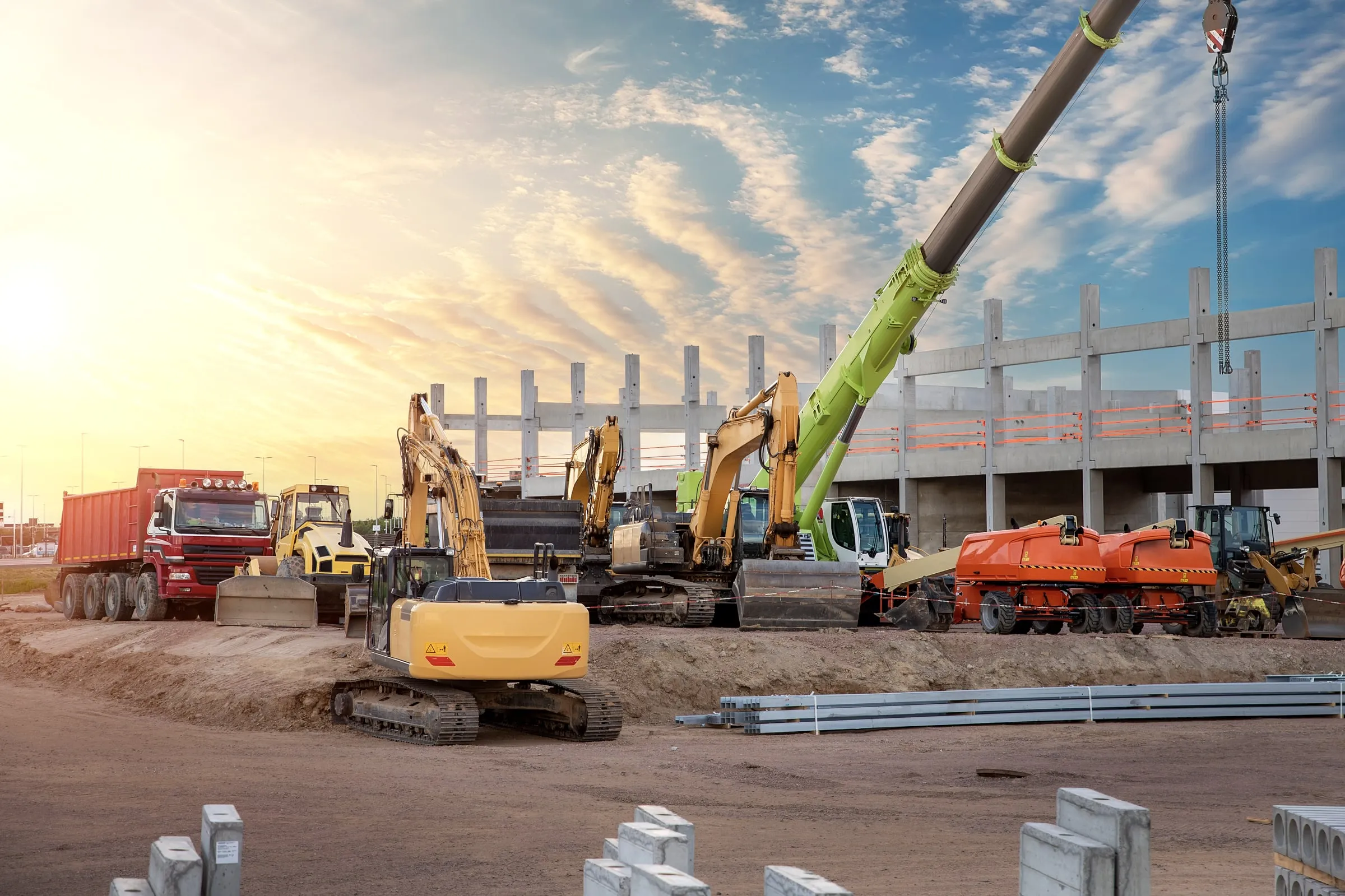
The target changes as the building rises
Ask what gets stolen from a construction site and the honest answer is: it depends on what week it is. A project loses different things at different points, because the site itself holds different things at different points, and a security plan built around one phase’s risks misses the next phase entirely. Houston’s job sites, from subdivisions in the growth corridors to mid-rise towers inside the loop, follow a pattern that repeats project after project even though the buildings themselves have nothing in common.
Sitework and foundations: fuel, rebar and small equipment
Before there is a building, there is earthwork, and earthwork brings diesel fuel, rebar bundles and small equipment onto a site that has almost no walls to slow anyone down. Fuel is siphoned from parked machines overnight. Rebar, especially cut and bent pieces staged for a pour, is loaded onto a trailer faster than it can be replaced before the concrete crew arrives. Skid steers, plate compactors and generators left on open ground are the easiest equipment losses of the entire project, because nothing about an unfenced dirt lot stops a trailer from backing up to them.
Framing: lumber and the tool trailer
Once framing starts, lumber theft becomes the pattern to watch, particularly stacks staged near the fence line for a crew that has not gotten to them yet. Tool trailers and gang boxes are the other target through this phase, and they are attractive because a single break-in can clear out tools worth far more than the lock protecting them. A framing site with lumber staged close to a gap in the fence is inviting a loss that has nothing to do with the building itself and everything to do with where the material happened to be stacked that week.
Rough-in: copper, the highest-value window
Electrical rough-in is when a site’s exposure peaks. Wire is pulled through open stud bays, visible and reachable with nothing but hand tools, for the weeks between the electrician’s first pull and the day drywall closes the wall. A single reel or a run of feeder cable can be worth more than everything taken from the site in every earlier phase combined, and it can leave in a bucket through a gap in a fence without anyone hearing a thing. This is the phase most Houston contractors describe, after the fact, as the one that actually cost them time, because a stripped panel means the electrician returns to redo work already counted as finished.
Trim-out and near completion: appliances, fixtures and condensers
As the building nears completion, the target shifts again. Appliances delivered ahead of installation, plumbing and light fixtures set but not yet secured, cabinet hardware, and rooftop or ground-mounted HVAC condensers with their own copper coils and line sets all sit in a building that finally looks finished and is treated, by a passerby, as occupied. That perception cuts both ways: it can discourage a casual opportunist, and it can also disguise a deliberate one who walks in looking like a contractor and walks out with a range or a water heater nobody questions until the punch list catches it.
| Phase | What is exposed | Why it disappears |
|---|---|---|
| Sitework and foundations | Fuel, rebar, small equipment | Little or no perimeter yet, ground vehicles can reach it directly |
| Framing | Lumber, tools, gang boxes | Material staged near the fence, boxes locked but not watched |
| Rough-in | Copper wire, feeder cable | Exposed in open stud bays, cut quietly with hand tools |
| Trim-out to completion | Appliances, fixtures, condensers | Building reads as occupied, items look like normal deliveries |
When during the week and the day it happens
Across every phase, the timing is consistent. Almost nothing is taken while the crew is on site; the risk begins the moment the last truck leaves and holds until the first one returns. Weeknights carry some of it, but the concentrated loss runs from Friday evening through Monday morning, when a site sits untouched for the better part of three days. Holiday weekends stretch that window further, and a site owner who has never lost anything on an ordinary Friday can still be tested over a long one, simply because more hours pass with nobody there.
Why Houston’s geography adds to the problem
A construction site in a dense urban block has neighbors, foot traffic and streetlights working against anyone trying to move material unnoticed. A great deal of Houston’s growth does not happen in dense blocks. Subdivisions, distribution centers and commercial pads sit along feeder roads and tollways with open land on either side, minutes from a highway on-ramp and a long way from anyone who would think twice about a truck idling near a fence at midnight. Hurricane season adds its own version of the same problem: a storm that knocks out power to a half-finished building removes what little lighting a site had, for days at a time, right when the building is full of finish materials.
None of this means every site needs the same response. It means the response has to move with the project, tightening around whatever is exposed that week rather than treating rough-in and trim-out as the same problem. A site that plans security around its own calendar, phase by phase, spends its coverage on the loss that is actually possible that week instead of guarding against last month’s risk.
Questions
Related questions
Is copper really the biggest target on a Houston site?
By value relative to effort, usually yes, during the weeks between rough-in and drywall. It can be cut with hand tools, carried out quietly and sold the same day. Earlier and later phases lose different things: fuel and equipment early, appliances and fixtures late, but rough-in is the sharpest spike most contractors see.
Does a site become safer once the building is enclosed?
Safer from weather and casual entry, not from theft. An enclosed building with the trades finishing inside is full of appliances, fixtures, cabinet hardware and HVAC equipment that a stranger could not have reached a month earlier. Enclosure changes how someone gets in, not whether the building is worth entering.
Do thefts follow paydays or holidays?
Some do. A site left untouched over a three-day holiday weekend is tested the same way an ordinary Friday-to-Monday gap is, only with more hours unwatched. Contractors who plan extra attention around long weekends, rather than treating every week the same, are responding to a pattern that shows up across Houston job sites.
Why does Houston seem to have more of this than other cities?
Sprawl and the pace of growth both play a part. A subdivision or a commercial project on a feeder road with empty lots on either side is a long way from anyone who would notice a truck at midnight, and Houston has a great many sites in exactly that setting at any given time. It is not that any one site is more valuable; it is that there are more of them, spread further apart, for longer.
Related pages
Industries we serve
Services
Insights
Request a proposal
Request a proposal for your property.
Two short steps. Dispatch reviews every request and calls you back about coverage. For urgent unarmed coverage we can typically staff most sites within hours.
24-hour dispatch
(281) 326-9189