
Property manager guides
How to Prepare a Construction Site for Overnight Security
By Price Protection SecurityReviewed TX DPS Lic #B09430601
Short answer
A site is ready for overnight security when the perimeter can actually be closed, the yard has lighting an officer can work by, the laydown is organized enough that a missing item is noticeable, and there is a single contact the officer can reach at any hour. Most of the delay between calling for coverage and getting real protection from it is spent fixing these four things after the officer has already started, rather than before.
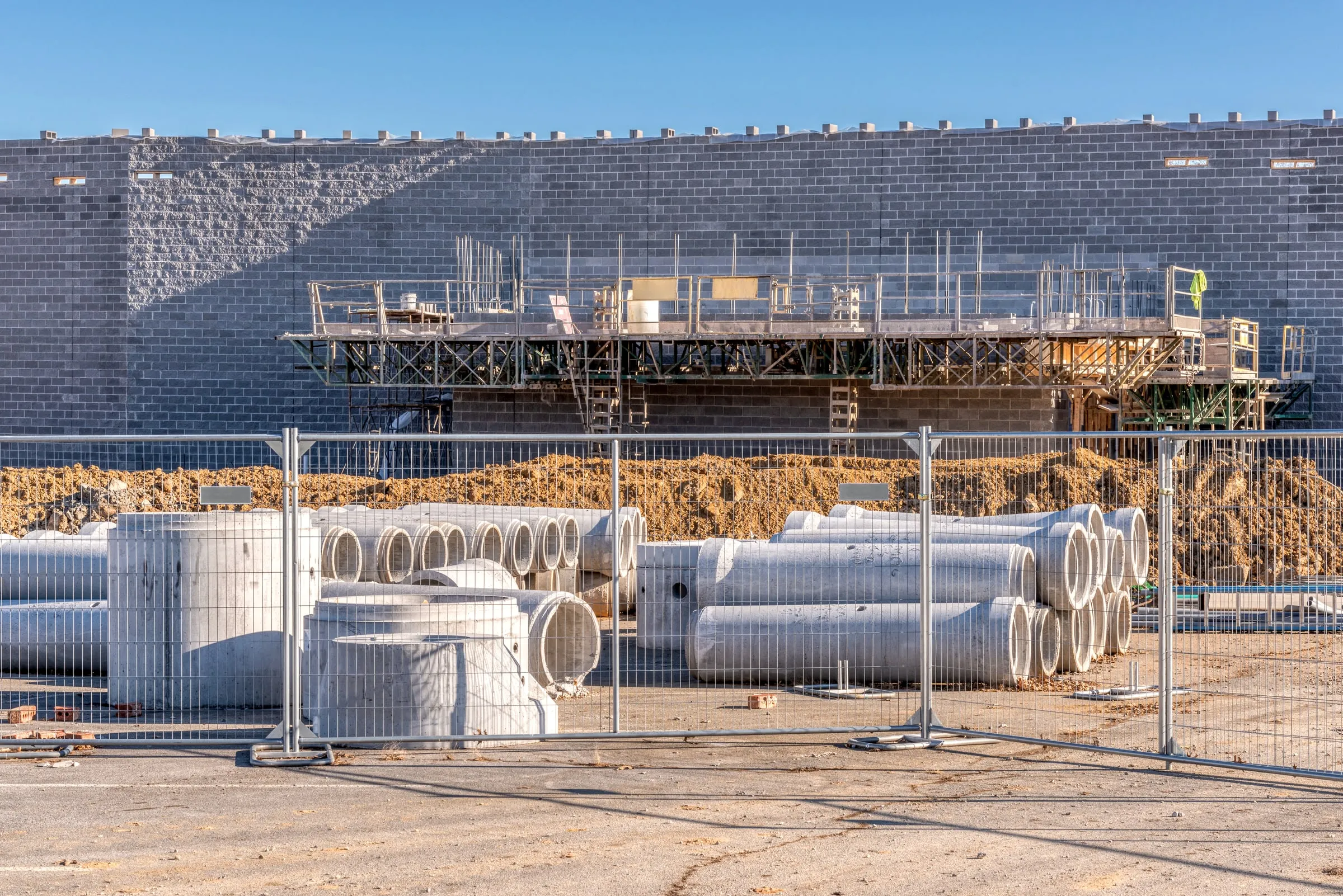
Ready means the perimeter can be closed
A site is prepared for overnight coverage the day its fence line has no gap an officer cannot see and cannot close. That sounds obvious and is the single most common reason a new post starts slower than a superintendent expects: temporary fencing goes up in sections as the site clears, and the section nobody has walked in a week is the one with a panel knocked loose by a delivery truck or a gap where a gate was never hung. Before the first shift, someone with keys needs to walk the full perimeter, not just the fence facing the road, and confirm every panel is upright, every gate has a working lock, and there is no run of open ground between the fence and a feeder road or an adjoining lot. Houston sites often back onto undeveloped land or another project’s staging area, and that shared edge is where the fence gets forgotten.
A perimeter does not need to be permanent to be ready. Temporary chain-link, wired at the joints and gated at the points of entry the crew actually uses, is enough for a patrol to work with. What defeats a patrol is a fence that looks complete from the road but has a section down at the back, because the officer’s first round finds it and every round after that is spent watching a hole that stays open until someone with authority to fix it does.
Lighting an officer can actually work by
Rounds happen in the dark, and a site that has not thought about lighting is asking the officer to search a yard with a handheld light and headlights. The gate, the laydown yard, and any trailer or storage container holding tools or copper are the three places that most need fixed light, because those are the places the officer stops, gets out, and looks closely rather than simply driving past. Temporary light towers or generator-fed fixtures cover a site before permanent power is run, and they are inexpensive against what a dark laydown costs when a reel goes missing and nobody can say for certain whether it was there at midnight.
Motion-triggered lighting at the gate and along the fence line does two things worth planning for: it gives the officer a reason to look at a specific spot, and it makes the site a less attractive target to someone driving the feeder road looking for an easy one. A site that stays fully dark all night reads, to the wrong kind of visitor, as a site nobody is watching, even when an officer is on it.
Organizing the laydown so a count means something
An officer can only tell a superintendent that something is missing if there was a way to know what was there. A laydown yard that is a pile is not countable; a laydown yard organized by type, with reels stacked together, conduit in one row and equipment parked in a consistent spot, can be checked in minutes and any change is obvious on sight. Before coverage starts, it is worth asking the site’s own crews to group materials the way the officer will need to check them, rather than leaving that organization to happen naturally over the first few weeks of patrol.
The same logic applies to equipment. A serial or unit list for anything left on site overnight, even a short one on a clipboard in the job trailer, turns “the excavator is gone” into “unit 14 left between the eleven o’clock round and the two o’clock round,” which is the difference between a police report with nothing to go on and one with a real window.
What the officer needs on day one
| To have ready | Why it matters |
|---|---|
| A site map or plan showing the fence line, gates and laydown | The officer’s route is built from it before the first shift, not learned by trial |
| A current contact who answers after hours | A found problem needs a decision that night, not a voicemail until morning |
| The delivery and sub schedule for the week | The gate log means little if the officer cannot tell a scheduled delivery from an unexpected one |
| A list of what is stored on site and where | Turns a missing item into a specific loss with a location and, where kept, a count |
| Keys or codes for gates, trailers and conex boxes the officer must check | An officer who cannot open what needs checking cannot check it |
Handing this over before the first shift, rather than assembling it during the first week, is what separates a site that gets real value from overnight coverage from one that spends its first month discovering what it forgot to prepare.
The gate is only as good as the schedule behind it
Where the post includes a staffed gate during deliveries, the officer’s log is only as useful as the schedule it is checked against. A driver arriving with a truckload of trim material means little to an officer with no delivery list; the same driver checked against a schedule that says nobody is expected until Thursday is a conversation worth having before anything is unloaded. Sites that keep the delivery schedule current with the officer, even informally through a daily text or a copy left in the trailer, get a gate log that actually protects the site rather than one that simply records who came and went.
Weekend and holiday gaps
Most theft on Houston job sites happens between the last truck out on Friday and the first one in on Monday, and the same is true around holidays when a site sits untouched for several days in a row. Preparing for that stretch means confirming, before the long weekend, that the fence and lighting are complete, the laydown is counted, and the officer has a way to reach someone if a problem is found on a Saturday rather than waiting for Monday’s huddle to hear about it. A site prepared this way turns overnight and weekend coverage into a genuine deterrent from the first shift, instead of a patrol that spends its early weeks finding problems the crew could have fixed before the gate ever needed locking.
Questions
Related questions
Do we need the fence finished before the officer starts?
No, but it needs to be continuous and closable. A fence with a gap around back is not a perimeter, it is a suggestion, and an officer patrolling it will find the same hole every night without being able to close it. A temporary panel wired shut is enough to start; a torn or missing section is not.
What if the site has no permanent power for lighting yet?
Temporary lighting on generators or a portable light tower covers the laydown and the gate until permanent power is in. The officer's own vehicle lights and a handheld light fill gaps, but they cannot replace fixed lighting over the areas that matter most, which are the gate, the laydown and any trailer or conex holding tools.
How far in advance should we call before the officer's first shift?
A same-day start is possible for most sites once the address and a contact are confirmed, but the site is better served if the fence, lighting and laydown are ready a day or two ahead, so the first shift is a working patrol rather than a walk-through of problems. Emergency starts happen after a theft, and the post improves over the following nights as the site catches up.
Does the officer help fix what is missing?
The officer reports it. A gap in the fence, a burned-out light, or a gate that will not latch goes into the daily report the morning it is found, with the location, so the superintendent can put it on the next day's punch list. Repairs are the contractor's crew; the report is what keeps the list current.
Related pages
Industries we serve
Services
Insights
Resources
Request a proposal
Request a proposal for your property.
Two short steps. Dispatch reviews every request and calls you back about coverage. For urgent unarmed coverage we can typically staff most sites within hours.
24-hour dispatch
(281) 326-9189