

Overnight Security for Construction Sites
The crew leaves at the end of the shift; the site does not close. An officer takes over the hours nobody on the job is there to watch.
Request a proposalThe situation
What happens to a site once the crew clocks out
The site is unlocked until someone locks it
Trailers, conex boxes, tool bins and gates are only as secure as the last person to leave made them. A superintendent focused on tomorrow's schedule at five in the evening is not always the person checking that every gate is chained and every trailer is locked before driving home.
Ten hours with nobody watching
Between the last worker leaving and the first one arriving is typically eight to twelve hours, longer on a site running a single day shift. That is a long, quiet window for anyone who has scouted the site during the day and knows exactly when it empties out.
Weather and equipment do not wait for the morning shift
A generator running low on fuel, a pump that fails, or a storm that lifts a tarp off staged material all happen on their own schedule, not the crew's. Without anyone on site overnight, a problem that starts at 9 p.m. is not found until 7 a.m.
The site looks different in the dark
Lighting that seemed adequate during a daytime walkthrough often leaves corners of the site unlit at night, and a route that is obvious by day is not the same route an officer needs by flashlight. The post has to be walked at night to be planned for it.
The site does not clock out with the crew
A construction site is staffed and watched for maybe ten hours a day. It exists for the other fourteen unattended, and for most projects that unattended stretch is when material is most exposed and least likely to be missed until the crew is back. Price Protection’s overnight post picks up exactly where the day crew leaves off: the last person out often starts the lockup, and the officer finishes it, then holds the site through the night on a schedule of varied rounds until the first worker returns.
The post orders for overnight coverage are written from a walkthrough done at night, not during the day, because a site looks different once the sun is down. Lighting that seemed adequate at 3 p.m. can leave a corner of the laydown dark by 9, and a route that made sense on a daytime tour is not always the one that reaches every blind spot after dark. The insight on preparing a site for overnight security covers what a superintendent can do before the post even starts, lighting, fencing and storage, that makes the officer’s job more effective from the first night.
What a round actually checks
Every round covers the same core points in a different order and at a different pace: the gates and whether they are still as the last round left them, the trailers and tool bins, staged material at the laydown, and any equipment that should not be running unattended. The variation in timing matters as much as the checking itself, because a site with rounds at the same predictable minute every hour is a site someone watching from outside can plan around. The insight on what gets stolen from Houston job sites and when describes the pattern the rounds are built to interrupt.
Weather and equipment on their own schedule
Not every overnight problem is a person at the fence. A pump can fail, a generator can run low, a storm can lift a tarp off stacked lumber, and none of it waits for daylight. An officer on site finds those problems within the hour instead of at the next morning’s walkthrough, and the post orders say who gets called for what, so a failed pump reaches the right person before it becomes a bigger repair.
Handing the night to the morning crew
The last round of the shift is timed to the crew’s actual arrival, not a fixed clock time, and it ends with the site unlocked to whatever degree that morning’s work requires. The report that follows is not a formality; it is often the first thing the superintendent reads, because it tells them what happened in the hours they were not there before they walk the site themselves.
Starting overnight coverage
To begin, dispatch needs the site address, the hours the crew is normally on and off site, the lockup routine already in place, and a superintendent’s contact for anything found during the night. An unarmed officer can typically start overnight coverage within hours of the call, with the first night’s rounds serving as the baseline walkthrough the post orders are then written around.
How we cover it
Every service, applied to this post.
- Unarmed security guards
An unarmed officer covers the site from the end of the work shift through the crew's return the next morning, taking over the lockup the superintendent started and completing it: gates chained, trailers checked, tool bins confirmed locked before the first round begins. Coverage is scheduled for the specific overnight window the site needs, which can run seven nights a week through the highest-risk phases of a project and taper as the building closes in and the theft target shrinks.
- Vehicle patrol
On a large site, a vehicle round between foot patrol stops covers ground faster and puts headlights into corners a walking round reaches less often, particularly useful on a site with a laydown yard some distance from the trailer.
- Incident reporting
The daily report covers every round through the night with the time and the areas checked, the state of the lockup at the start of the shift, equipment or weather issues found and who was called about them, and the site's condition handed to the first worker who arrives.
A typical post
What a shift looks like here.
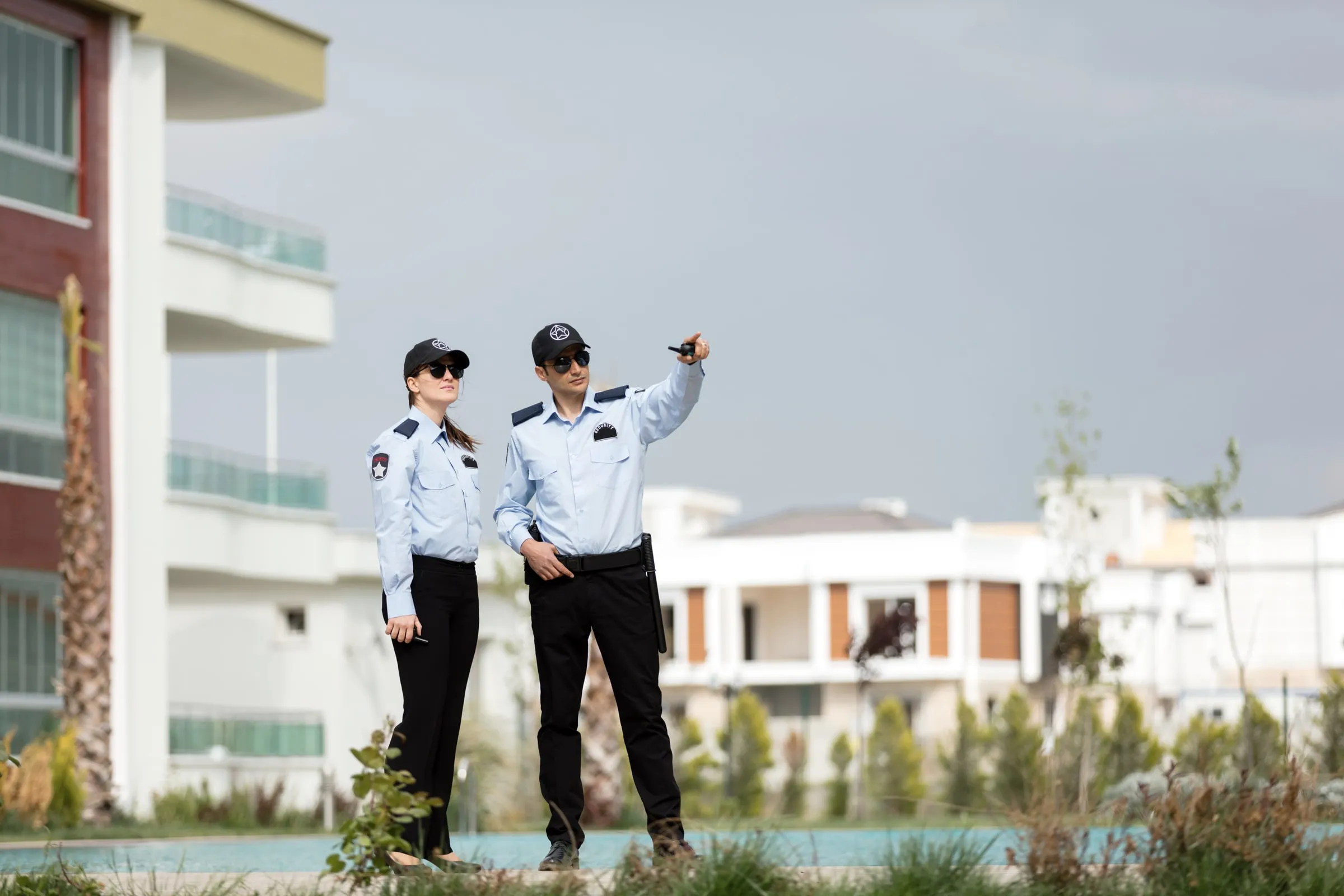
The officer arrives before the last of the day crew leaves where possible, gets a handoff on anything unusual from that day, and completes the lockup: gates, trailers, tool bins and any equipment left running that should not be. The first full round establishes what the site looks like at the start of the night.
Rounds continue through the night on a schedule that varies in timing and route so the pattern is not predictable from outside the fence. Each round checks the same core points, gates, trailers, staged material, equipment, and notes anything different from the round before it.
As the site nears the hours the crew returns, the officer does a final round, unlocks what the day's work requires unlocked, and writes the report so the superintendent has the night's activity before the first truck arrives rather than hearing about a problem secondhand.
Reporting
What the daily report covers here
Every client receives a written report each day, and officer performance is reviewed and documented daily. This is what the report records on this kind of post.
- Lockup confirmed at the start of shift: gates, trailers, tool bins
- Rounds completed through the night, with time and areas checked
- Equipment left running or found faulted, with who was called
- Weather conditions and any material or tarps found disturbed
- Anyone contacted at the fence or on site, and the outcome
- Site condition handed to the first arriving worker, with any open items
How many rounds does an officer make in a typical overnight shift?
It depends on the site's size and layout, and the schedule is written with the superintendent rather than fixed at one number. What matters more than a specific count is that the timing varies night to night, so the pattern cannot be learned by watching the site from outside for a few evenings.
Does the officer handle equipment problems, like a generator running out of fuel?
The officer notices the problem on a round and follows the post orders for it, which usually means calling the superintendent or an on-call number rather than servicing the equipment directly. What overnight coverage adds is that the problem is found and reported hours earlier than it would be otherwise.
Can overnight coverage start and stop with the project's phases?
Yes. Many sites need overnight coverage most through framing and rough-in, when material is most exposed, and less once the building is enclosed and locked. Coverage is scheduled against the phase, not fixed for the length of the project.
What is different about overnight coverage compared to a weekend-only post?
Overnight coverage runs the same few hours every night, so the officer learns the site's normal pattern quickly, deliveries, neighbors, traffic, and notices what does not fit it. Weekend coverage spans a much longer unattended stretch with no crew for the whole period; both are covered on their own pages because the risk shape is different.
Related pages
Industries we serve
Services
Insights
Glossary
Resources
Request a proposal
Request a proposal for overnight site security.
Two short steps. Dispatch reviews every request and calls you back about coverage. For urgent unarmed coverage we can typically staff most sites within hours.
24-hour dispatch
(281) 326-9189