
Security Guards for Demolition Sites
A wrecked building draws salvagers and dares kids to climb it. We keep everyone out for the short, intense weeks a teardown actually runs.
Request a proposalThe situation
Why a demolition site is a keep-out job, not a keep-safe job
The structure itself is the hazard
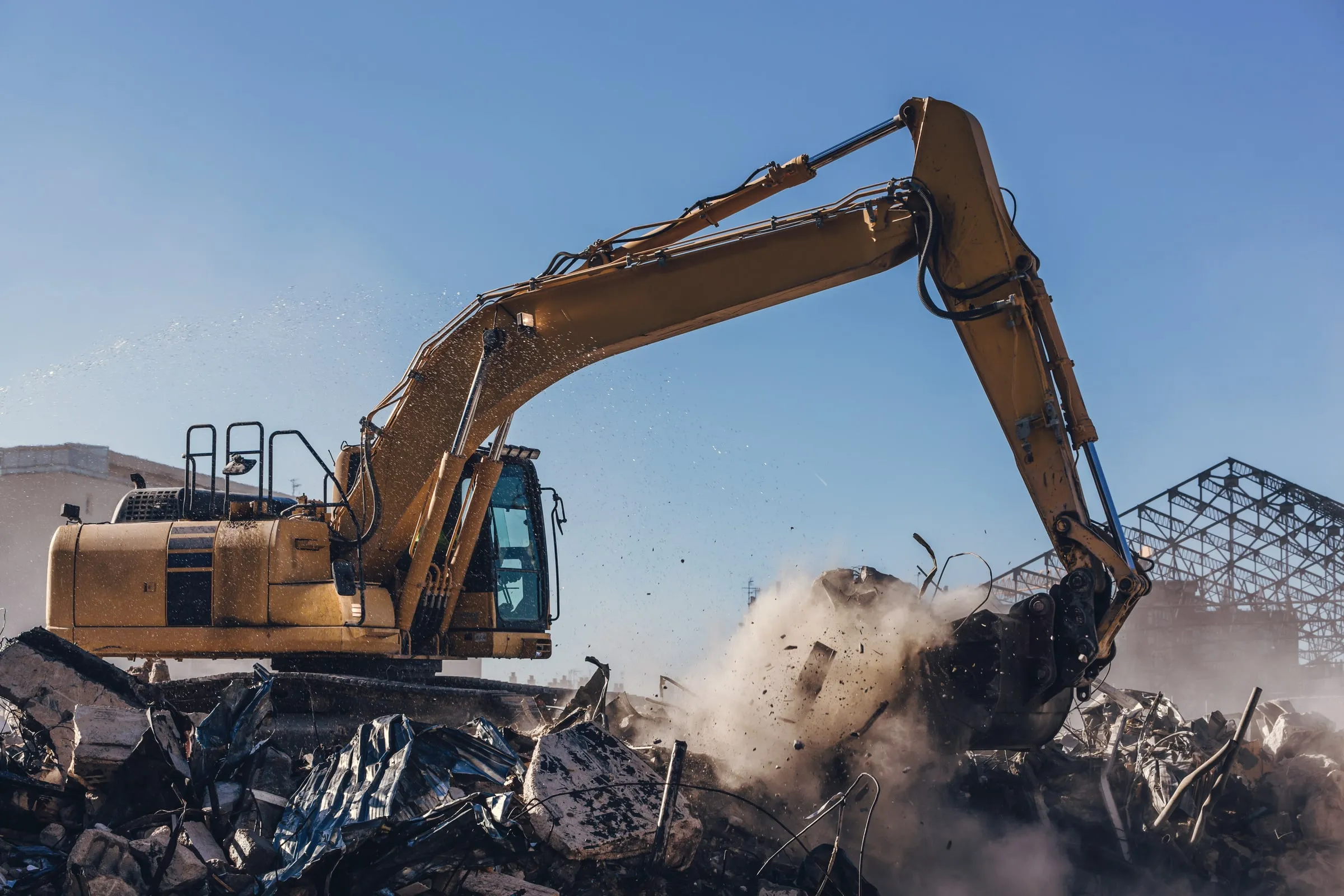
A building mid-demolition is unstable in ways a finished or a not-yet-built one is not: partial collapses, exposed rebar, unsupported floors and holes where stairs used to be. The post's first job is keeping people out, not watching over material, because the greatest risk on a demolition site is someone climbing into it.
Debris looks like scrap to someone with a truck
Metal framing, wiring, pipe and fixtures pulled out during demolition are stacked or piled on site before hauling, and to anyone driving past with a trailer, a demolition site looks like a scrap yard nobody is watching. Salvage does not need to be valuable to be worth a stop; it only needs to be unattended.
Kids and dares
A partially wrecked building is exactly the kind of place that draws teenagers looking for somewhere to explore or be photographed, particularly at night or on a weekend when the crew is gone and the fencing is the only thing standing between curiosity and a fall.
Short jobs, high intensity
A demolition project often runs a few weeks from mobilization to a cleared lot, compressed and heavy with equipment traffic the whole time. There is little ramp-up time to build a security plan, and the exposure window, short as it is, carries as much risk per day as a much longer new-construction job.
Keeping people out comes before watching material
A new construction site’s security post is built around protecting things: lumber, copper, equipment. A demolition site flips that priority. The most valuable thing to protect on a partially wrecked structure is whoever might try to get inside it, because an unstable floor, exposed rebar or a hole where a staircase used to be is dangerous in a way no amount of insurance covers well. Price Protection’s post on a demolition job starts from that priority: the fence line and the structure’s points of entry get more attention than the debris pile, because keeping people out is the job before it is anything else.
The post orders are written with the demolition contractor and cover what a new-construction site’s rarely need to: which parts of the structure are actively being worked and therefore most unstable, where the fence has been reinforced or where it has not because equipment access requires an opening, and what the officer does if someone has already gotten past the perimeter before help arrives.
Salvage looks like scrap to a stranger
Metal framing, wiring, pipe and fixtures come out of a building during demolition and sit staged for hauling, sometimes for days before the scheduled pickup. To someone driving by with a trailer, an unwatched pile of metal at a demolition site does not look different from scrap at any yard, and it does not need to be worth much to be worth a stop. The officer checks any hauler against the contractor’s salvage arrangement before letting a load leave, and the insight on documenting property damage and vandalism covers how a loss or an act of vandalism at a site like this gets recorded in a way that holds up if it needs to.
The building itself is the attraction
A partially demolished structure draws exactly the kind of attention a fenced, empty lot does not: teenagers looking for somewhere to explore, photograph or dare each other into climbing, especially at night or on a weekend when the crew has gone and the only thing between curiosity and a fall is the fence. The perimeter gets checked on every round specifically for this reason, not only for gaps a thief might use but for anywhere a person could get over, under or through it. Once demolition is complete and the lot is cleared, the property often sits as vacant land awaiting the next phase, which carries its own, calmer set of risks the post can be adjusted for.
A short, intense window
Demolition rarely takes as long as the construction that follows it, often a few weeks from mobilization to a cleared lot, and the pace inside that window is heavy: equipment moving constantly, debris hauled out daily, and little time to build a security plan gradually the way a longer project allows. Coverage on a job like this starts as soon as the fence goes up, because that is also when the site first becomes worth watching, not partway through once material has already started to disappear.
Starting a post at a demolition site
To begin, dispatch needs the site address, the demolition contractor’s schedule and expected duration, any salvage or scrap hauler arrangements already in place, and the fencing plan. An unarmed officer can typically start within hours of the call, with the perimeter check built into the very first round so the fence’s condition is documented from day one.
How we cover it
Every service, applied to this post.
- Unarmed security guards
An unarmed officer at the site overnight and on weekends checks the perimeter fencing for gaps, watches for anyone attempting to enter the structure, and turns away salvagers and curious visitors before they reach the debris pile rather than after.
- Vehicle patrol
On a larger demolition footprint, a vehicle round covers the fence line faster than foot patrol and catches a vehicle stopped at the fence with a trailer before material has actually been loaded, which is the moment the post orders call for a response.
- Access control
Salvage or scrap haulers with a legitimate arrangement with the demolition contractor are checked against a list and logged in and out; anyone without one is turned away at the fence regardless of what they say they are there for.
- Incident reporting
The daily report notes the perimeter fencing condition, any attempted entry into the structure itself, salvage material checked against what should be on site, and any vehicle or person turned away at the fence with the time and description.
A typical post
What a shift looks like here.
The officer's first round of the shift is the fence line itself, checking for gaps, cut panels or anywhere the barrier has been compromised since the last check, because a demolition site's fencing is under more stress than a standard construction fence given the debris and equipment moving inside it.
Through the shift, rounds continue along the perimeter with attention to the debris pile and any salvage material staged for hauling, and any vehicle that slows or stops near the fence is watched closely, since a legitimate hauler has a scheduled pickup and an unscheduled one does not.
At the end of the shift the officer confirms the structure itself shows no sign of attempted entry, notes the fencing condition for the morning crew, and writes the report so anything needing repair before work resumes is known before the crew arrives.

Reporting
What the daily report covers here
Every client receives a written report each day, and officer performance is reviewed and documented daily. This is what the report records on this kind of post.
- Perimeter fencing checked, with any gaps or damage found and location
- Attempted entry into the structure, with time and description
- Salvage or debris material checked against what should be present
- Vehicles or persons turned away at the fence, with plate or description
- Scheduled salvage haulers logged in and out against the contractor's list
- Equipment left on site overnight, checked and confirmed secure
Is a demolition site's security post different from a new-construction one?
Yes, in emphasis. New construction protects material and equipment that has value on its own; demolition protects mainly against people entering an unstable structure and against salvage material walking off before it is hauled, which puts the fence line and the structure's entry points at the center of the post rather than a laydown yard.
What happens if a salvage hauler shows up without being on the list?
They are turned away at the fence. Demolition contractors frequently have arrangements with specific scrap and salvage buyers, and anyone without a name on that list is treated the same as anyone else with no reason to be on site, regardless of what material they say they are there to collect.
How do you keep people out of a structure that is genuinely dangerous?
Through fencing, lighting and a visible, moving patrol rather than a fixed post at one gate, since the goal is to prevent entry anywhere along the perimeter, not just at the obvious one. The post orders describe what the officer does if someone has already gotten past the fence, which starts with getting them out safely, not confronting them inside an unstable structure.
Can coverage start on a demolition job that only runs a few weeks?
Yes. Demolition projects are typically short, and coverage is scheduled for the length of the job rather than requiring a longer commitment, with the post starting as soon as the fence goes up and mobilization begins, which is usually the point the site becomes worth watching.
Related pages
Industries we serve
Service areas
Insights
Glossary
Resources
Request a proposal
Request a proposal for demolition sites.
Two short steps. Dispatch reviews every request and calls you back about coverage. For urgent unarmed coverage we can typically staff most sites within hours.
24-hour dispatch
(281) 326-9189