
Property manager guides
Church Security Planning: A Practical Guide for Ministry Leaders
By Price Protection SecurityReviewed TX DPS Lic #B09430601
Short answer
Church security planning starts with a walk of the building on an ordinary service day, not with a policy written in a meeting room. That walk shows a ministry leader where the doors are, where children's ministry check-in happens, where the offering moves, and where a stranger could reach any of them unnoticed. From there, a plan assigns roles between volunteers and any licensed officer, decides armed or unarmed as a leadership decision, and sets what happens for the moments that are not ordinary.
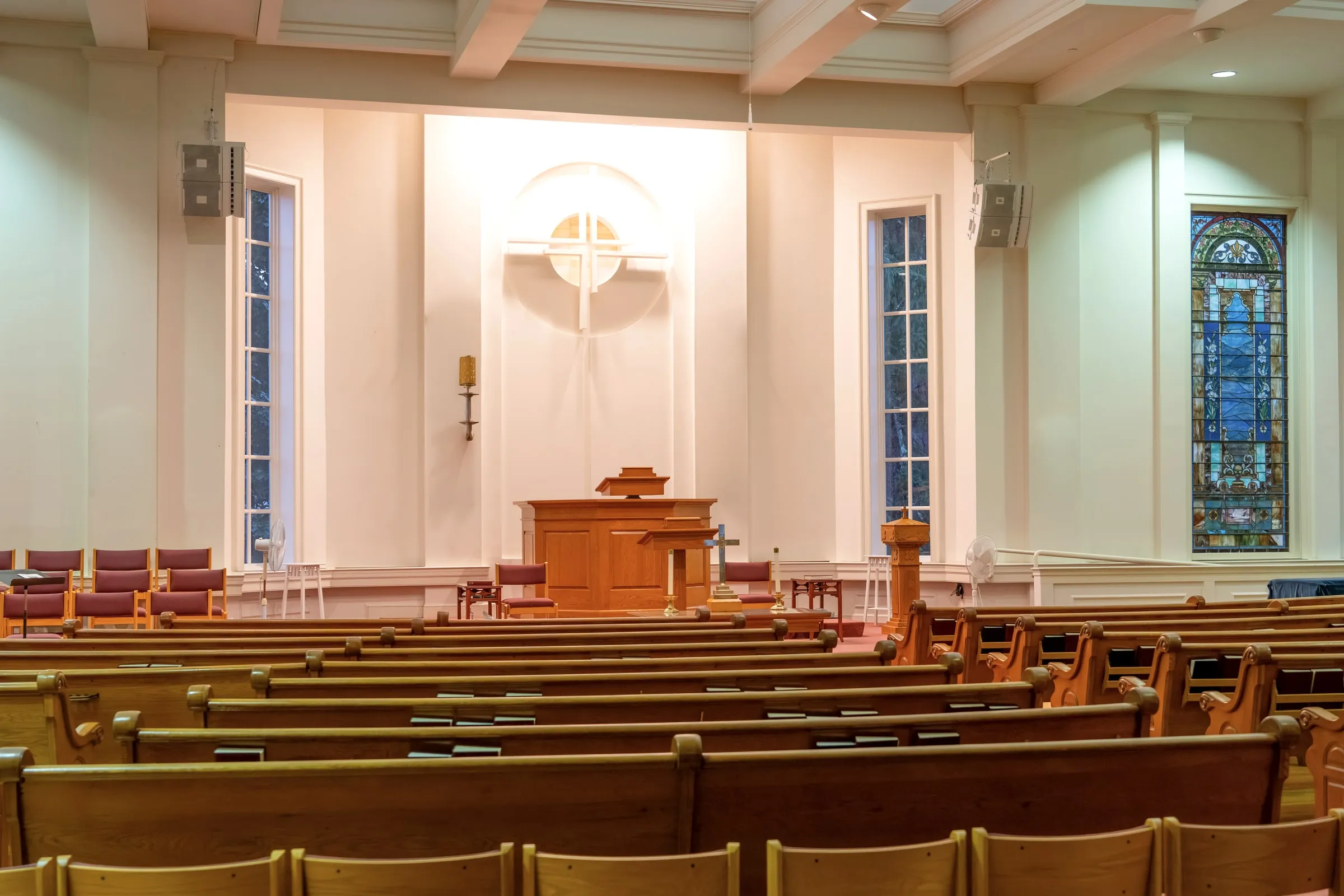
Start with a walk, not a meeting
The most common mistake in church security planning is writing a policy before anyone has actually walked the building on a service day. A meeting produces a list of concerns; a walk produces a map of where those concerns actually live. A ministry leader who traces the path a stranger could take from the parking lot to the children’s wing, or notices that the side door by the fellowship hall is propped open for airflow every Sunday, learns more in twenty minutes than a planning committee learns in a month of discussion. The walk should happen on an ordinary service day, with the building set up as it actually is, not during a quiet weekday when the doors that matter are locked and the crowd that matters is absent.
From that walk, three things usually become clear: where the doors are and which ones should lock once the service begins, where children’s ministry check-in happens and how tightly it controls who picks up which child, and where the offering moves from the sanctuary to wherever it is counted. Nearly every other planning decision follows from those three points.
Defining roles before assigning people
A congregation’s volunteer safety team, ushers and greeters already do a great deal of the work security planning tries to organize: they notice who is in the building, they watch the sanctuary during the service, and they are often the first to notice when something is wrong. A plan should build on that rather than duplicate it. The clearest approach separates roles by what they require. Greeting, ushering, and watching the sanctuary from the inside stay with volunteers, who know the congregation and are already positioned for it. The parking lot during the service, a direct conversation with someone who is agitated or disruptive, and the decision to call police fit a role that benefits from training and, where the congregation adds one, a licensed security officer. Writing this division down, and naming who fills each role, prevents the confusion that shows up when an incident happens and three people all assume someone else is handling it.
Armed or unarmed is a leadership decision, made once
Whether to add an armed presence is not a question a security plan answers on its own; it is a decision for the pastor, the deacon board or whatever body leads the congregation, made deliberately and written down rather than left as an assumption. Most congregations that use professional security choose an unarmed officer at the doors and in the lot, because the greater share of what happens at a church, a car break-in, a disruptive visitor, a medical event, does not call for one. Some congregations, often after a specific concern or as a matter of settled policy, choose a Level III commissioned officer instead. Texas law treats a security officer’s authority the same as any private person’s: Texas Code of Criminal Procedure article 14.01 allows a private person to arrest for a felony or a breach of the peace committed in their presence, and Texas Penal Code chapter 9 governs when force is justified, with section 9.31 covering self-defense and section 9.41 covering the defense of property. This is a summary, not legal advice, and the decision belongs to the congregation, made with whatever officers are on post following the post orders the congregation and the security provider write together.
Protecting the two places that need it most
Children’s ministry check-in and the offering are the two points on most church campuses that need a specific, written procedure rather than general vigilance. A check-in system that matches a child to the adult who dropped them off, with a claim tag or code checked at pickup, closes the gap that a busy hallway full of strangers otherwise leaves open. The offering, from the moment it leaves the sanctuary to the moment it is counted and secured, should have a set route and, where the congregation wants it, an escort, because a bag of cash moving informally through a crowded building after a service is the kind of predictable moment a plan can close entirely.
Planning for the moment that is not ordinary
Every congregation eventually faces something outside a normal Sunday: a person in medical distress during the sermon, someone under the influence or in crisis who becomes disruptive, severe weather during a service, or a fire alarm or sprinkler system that goes out of service during a renovation, which under the locally adopted fire code may call for a temporary fire watch until the system is restored. A plan does not need to script every scenario in detail; it needs a short, specific answer for each one that any usher or greeter can follow without waiting for a decision to be made from scratch. Who calls 911. Who has first aid training and where the kit is. What the plan is if the sanctuary needs to be cleared. Who the point of contact is if a contractor’s hot work or a system outage means a fire watch is needed for a stretch of days.
| Situation | First move | Who decides next steps |
|---|---|---|
| Medical event during a service | A trained volunteer or officer responds, 911 is called | Safety team lead or pastor on duty |
| Disruptive or agitated visitor | A calm approach, an invitation to step outside | Officer or trained volunteer, following the agreed plan |
| Severe weather | Move the congregation to the planned safe area | Facility or safety team lead |
| Fire alarm or sprinkler out of service | Notify the fire department per local code, arrange a fire watch if required | Building’s designated impairment coordinator |
Reviewing the plan, not just writing it
A security plan that is written once and never revisited drifts away from the building it describes. A new wing gets added, a door that used to lock stops being checked, a volunteer who understood the plan moves away. Reviewing the plan after any incident, after any change to the building, and at a set point each year, walking it again the way it was built the first time, is what keeps church security planning a living part of how a congregation operates rather than a document in a drawer.
Questions
Related questions
Where should a small congregation start if it has no plan at all?
With the walk, not with hiring anyone. A pastor or a safety team lead spending twenty minutes on a Sunday morning tracing how a stranger could reach the children's area, the office or the parking lot without being noticed usually finds the two or three gaps that matter most, and those gaps decide what to fix first.
Does every congregation need an armed officer?
No. Most congregation posts are unarmed, and the decision to add an armed presence belongs to leadership, made deliberately rather than by default. A congregation that has not discussed the question is not required to answer it a particular way; it is only required to have actually discussed it and written down what was decided.
How does a licensed officer fit alongside volunteer ushers and greeters?
As an addition to defined roles, not a replacement for them. Volunteers keep greeting, ushering and watching the sanctuary; a licensed officer takes on the tasks that call for training and legal authority, such as the parking lot, the difficult conversation with an agitated visitor, and the decision to call police. Writing that division down before the first Sunday avoids confusion in the moment.
Should the security plan cover weekdays too?
Yes, if the building is used on weekdays. A food pantry, a preschool, staff working alone in the office, and evening ministry programs each bring different people to the building at different hours, and a plan built only around Sunday morning leaves those hours unaddressed.
Related pages
Industries we serve
Services
Insights
Glossary
Request a proposal
Request a proposal for your property.
Two short steps. Dispatch reviews every request and calls you back about coverage. For urgent unarmed coverage we can typically staff most sites within hours.
24-hour dispatch
(281) 326-9189