
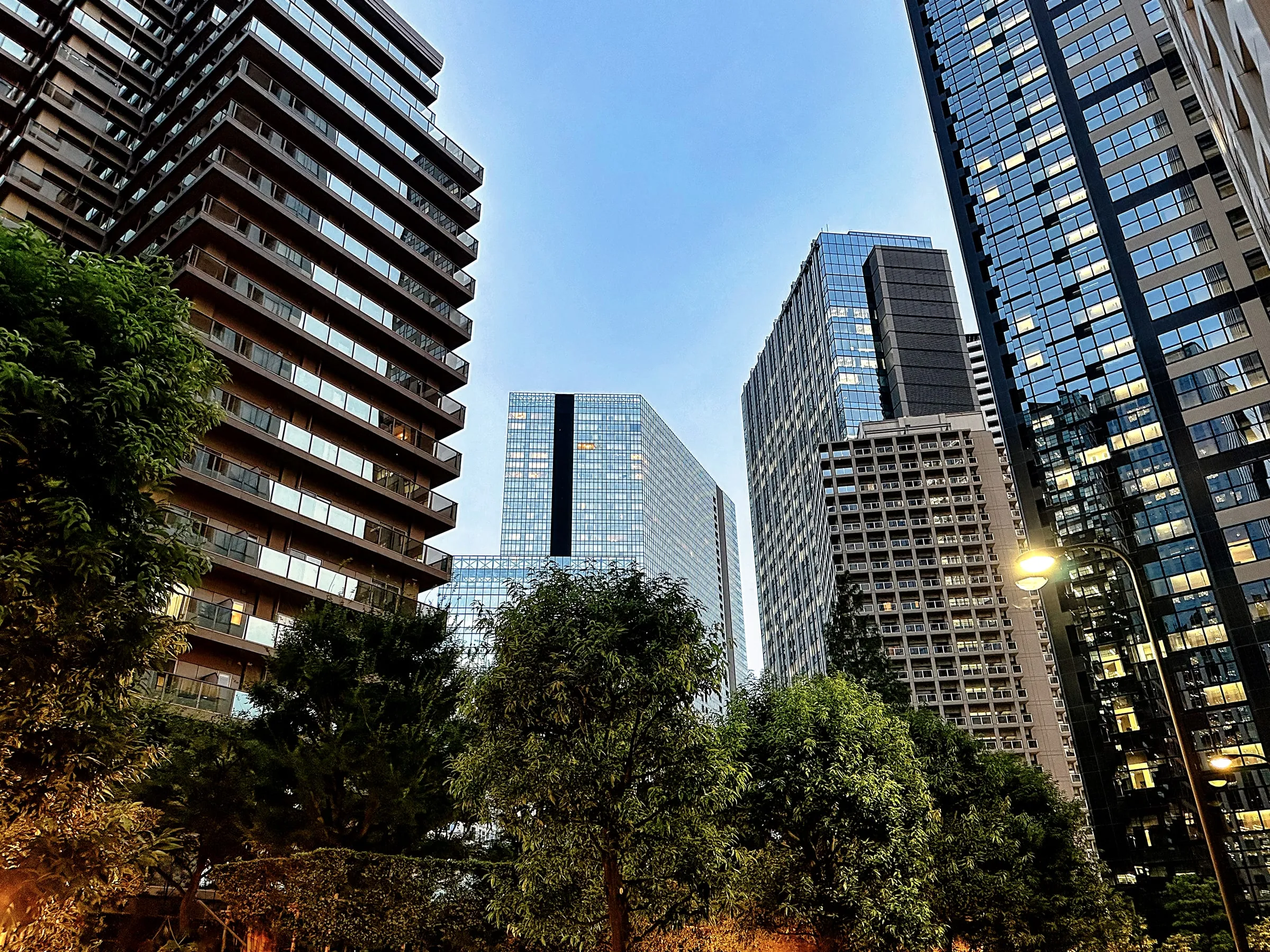
Security Guards for High-Rise and Mid-Rise Apartments
One front door, one garage and a lot of floors in between. We hold the lobby, walk the levels and put every entry, delivery and alarm in writing.
Request a proposalThe situation
What high-rise and mid-rise buildings deal with
The garage is the back door
A tower's lobby can be controlled with one desk, but the garage below it has a gate that stays up for the car behind, stair doors that open from inside and an elevator that goes straight to the residential floors. Most of what gets into a high-rise uninvited comes up from the garage, not through the front.
Stairwells and floors nobody walks
Many floors of corridor with two stairwells each is a lot of space with no natural supervision. Stairwells collect people who tailgated in, propped fire doors, smoking and sleeping, and a resident who takes the stairs at midnight has no one to call.
A lobby that is also a loading dock
Every delivery, mover, dog walker, cleaner and food courier comes through the same front door and the same elevators as the residents. Package rooms fill up, freight elevator reservations collide, and the desk is the only place where any of it gets checked.
Life safety on a vertical scale
A fire alarm in a mid-rise puts every resident into two stairwells at once, and the panel, the fire department and the residents all expect someone at the desk who knows the building. Elevator entrapments, water leaks that travel down ten floors and a stuck garage gate all land on the same post.
A building with one door
A high-rise or mid-rise apartment building concentrates everything a garden community spreads across acres into one lobby, one garage and a stack of floors. That concentration is the security advantage of the building type, and Price Protection’s post is built to use it. The officer holds the desk, which means holding the front door, the freight elevator and the pedestrian doors from the garage. Everyone who is not a resident is checked in, and everything that is not a resident’s own key is logged. The desk is a static post in the language of the trade, and it works because the building funnels through it.
Houston has these buildings in a few places: the towers along Post Oak and around the Galleria, the mid-rises of Midtown, Montrose and the Museum District, the residential high-rises near the Texas Medical Center, downtown conversions and the newer buildings in Memorial and the Heights. Their residents expect a staffed lobby and notice when it is empty.
Post orders written floor by floor
The post orders for a tower read differently from those for a patrol. They list the building’s systems and where they are: the fire panel and what the officer does when it sounds, the elevator recall, the garage gate and its manual override, the stair doors that must stay locked from the garage side, the amenity floor closing times and the roof deck. They list the people the officer will deal with: the day concierge and the handover, the on-call engineer, the property manager, the cleaning contractor and the hours it is permitted in the building, the package carriers and where each one leaves parcels. They list the building’s rules on guests, movers, pets and short-term rentals. And they set the rounds: which floors, which landings, which level of the garage, in what order and how often.
Rounds in a vertical building
Walking a high-rise is slower than driving a lot, and it finds different things. A stair landing with cigarette ends on it means someone is using the stairwell as a room. A fire door propped on a residential floor is a move that ran late. A garage stair door with tape over the latch is deliberate. The rounds officer notes each with the floor and the time, and the desk officer watches the elevator cabs and the garage on camera in between. Repeat findings go into the report with dates, which is what the manager needs to write a lease violation or to ask the engineer for a lock repair.
Alarms, entrapments and the middle of the night
Life safety is the part of a high-rise post that most distinguishes it. When the fire panel sounds, the officer does what the post orders and the building’s fire safety plan say: confirms the zone, calls or meets the fire department, manages the lobby and the elevators, and logs the event and its resolution. Elevator entrapments follow the same pattern with the elevator contractor. Leaks that travel through ceilings, a garage gate stuck open at two in the morning and a resident locked out after a night out all reach the desk first, and the post orders say who is called for each. Our answer page on how security guards handle fire alarms describes the general procedure.
Setting up the post
Dispatch needs the address and the number of floors and units, the desk hours wanted, whether the building already has day concierge staff, how the garage and the freight elevator are controlled, and a contact for the walk-through. A supervisor walks the building with the manager, the post orders are drafted from that walk, and an unarmed officer can typically be at the desk within hours when the building has a gap to fill.
How we cover it
Every service, applied to this post.
- Unarmed security guards
The core of a high-rise post is an unarmed officer at the lobby desk, in a uniform that fits the building, who knows the residents by sight, checks in everyone else and never leaves the desk unattended. Larger buildings pair the desk with a second officer on rounds so the lobby stays staffed while the floors get walked.
- Access control
The officer controls the front door, the garage pedestrian doors and the freight elevator. Visitors are announced, contractors and cleaners are checked against the day's list and given the access they were approved for, and fobs that are reported lost are flagged so the officer can see who is using them.
- Camera monitoring
High-rise buildings have cameras where the officer cannot stand: garage levels, elevator cabs, stair landings, the amenity floor and the loading dock. The desk officer watches them between check-ins, follows a tailgater from the gate to the elevator on the monitors, and sends the rounds officer or goes when the desk is relieved.
- Incident reporting
The daily report for a tower records desk activity and rounds together: visitors and vendors admitted with the unit they visited, packages and deliveries logged, freight elevator use, stairwell and garage findings by level, alarms and trouble signals, and every resident request. Managers read it as a log of the whole building.
A typical post
What a shift looks like here.
The evening officer relieves the day desk at six and takes the handover: the contractors still in the building, the freight elevator booked for a move on nine, a resident who reported a lost fob. Rush hour at the front door runs until eight, with food deliveries and dog walkers checked in, announced or sent to the package room according to the post orders.
Once the lobby quiets, the rounds officer, or the desk officer when relieved, walks the building from the top down: the amenity floor and roof deck at closing, every stair landing, the mechanical room doors, then the garage level by level, checking that the gate has dropped and that the stair doors from the garage are locked from the outside. Findings are logged by floor.
Overnight the desk handles the calls that come with a tower: a resident locked out, a leak coming through a ceiling, an elevator stopped between floors, a fire alarm that turns out to be burnt toast. Each one is handled by the post orders, the on-call engineer or manager is called where the orders say so, and the morning report is finished before the day desk arrives.

Reporting
What the daily report covers here
Every client receives a written report each day, and officer performance is reviewed and documented daily. This is what the report records on this kind of post.
- Visitors, couriers and vendors admitted at the desk, with the unit and the time
- Freight elevator reservations used, movers admitted and elevator pads checked
- Garage rounds by level: gate operation, stair doors, vehicles and anyone on foot
- Stairwell landings and fire doors checked, with anything found propped or blocked
- Fire panel alarms and trouble signals, and who was notified
- Resident lockouts, leaks, elevator calls and other after-hours requests
- Amenity floor and roof deck closing, and anyone cleared after hours
Questions
About high-rise and mid-rise apartments coverage.
Anything else? Call dispatch at (281) 326-9189.
Should the lobby desk be staffed overnight, or around the clock?
Most mid-rise and high-rise buildings staff the desk from the time the leasing staff leave until they return, seven days a week, and add a day officer where the building has heavy contractor and delivery traffic or a resident base that expects a presence at all hours. The overnight post is the floor; the rest is decided by the building's front-door volume and the manager's budget.
How does one officer cover the desk and the garage at the same time?
It cannot be done well by one person, which is why the post orders decide which comes first. In a single-officer building the desk is the post, the garage is watched on camera, and a short round is walked only when the lobby can be locked or the desk relieved. Buildings with a busy garage add a second officer for rounds.
Can the officer let a resident into their unit after hours?
Only in the way the building's own procedure allows. Some buildings keep lockout keys or fob programming at the desk with a sign-out sheet and an identity check; others route lockouts to the on-call manager. Whichever it is, the post orders state it and the officer records every lockout with the unit and the time.
Do you work alongside a concierge the building already employs?
Yes. Where the building has its own concierge or front desk staff during the day, the officer takes over the desk on their schedule and the handover is written into the post orders: what is pending, who is in the building, what the concierge wants followed up. Some buildings run both at once, with the concierge on service and the officer on access.
What happens to the roof deck and amenity floor after closing?
The officer clears them at the posted closing time, locks or arms whatever the post orders say, and checks them on every round afterward, because the roof deck is the first place a group tries once the pool downstairs is closed. Anyone found there after hours is walked out and the unit that let them in is noted.
Is a high-rise post different from a garden-style patrol?
In almost every way. A garden community needs an officer who moves across acres; a tower needs one who holds a single door and knows what is happening on every floor above it. The training is the same, but the post orders, the uniform and the officer chosen for the building are not.
Related pages
Industries we serve
Insights
Glossary
Request a proposal
Request a proposal for high-rise and mid-rise apartments.
Two short steps. Dispatch reviews every request and calls you back about coverage. For urgent unarmed coverage we can typically staff most sites within hours.
24-hour dispatch
(281) 326-9189