
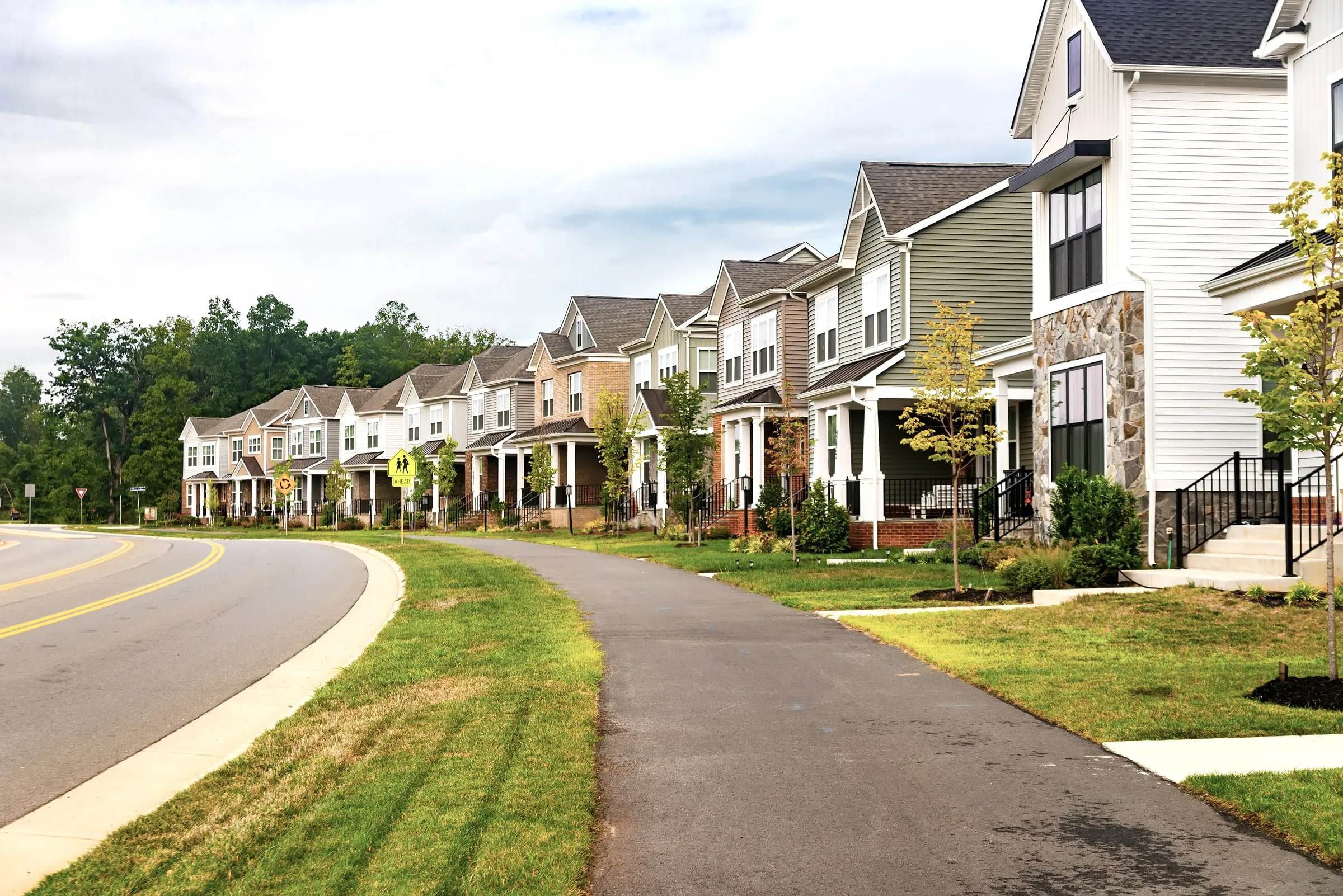
Security Guards for Build-to-Rent Communities
Houses on streets, one owner, an office that closes at six and a builder next door. We patrol it like a neighborhood and report it like a property.
Request a proposalThe situation
What build-to-rent communities are dealing with
Occupied homes next to a construction phase
Most build-to-rent communities are still being delivered when the first residents move in. Framing crews, appliance deliveries and finished homes waiting for a lease sit a street away from families, and the builder's fence line rarely matches the line between what is leased and what is not.
Vacant finished homes
A finished house waiting for its first resident has a lockbox on the door, an air conditioning condenser at the side and new appliances inside. It is the easiest target on the property, and once one is entered it can become an unofficial residence before the leasing team notices.
Driveways, garages and street parking
Cars sit on driveways and along the street, not in a lot with lighting on a pole. Work trucks with tools, catalytic converters and open garage doors at midnight are the losses, spread along streets that take a long time to walk.
A neighborhood with no HOA board
Residents treat the community as a subdivision and expect someone to deal with the loud house, the car that has not moved in a month and the group at the amenity center after closing. There is no board and no resident patrol; there is a manager whose office closed at six.
A rental community shaped like a subdivision
Build-to-rent communities are managed like apartment communities and laid out like neighborhoods. The homes are detached or attached, each with a driveway, a yard and often a garage, arranged on streets with a single entrance and an amenity center near the front. There is one owner and one leasing office. That mix is what makes them work for residents and what makes the security post different from an apartment property: the distances are longer, there are no breezeways or lobbies to control, and the losses are the losses of a subdivision, cars on driveways, garages left open and finished homes standing empty.
Price Protection covers these communities with a vehicle patrol post, staffed in the evening and overnight, with the officer on foot at the vacant homes, the amenity center and anything that needs a closer look.
Where the communities are and what that means
Most build-to-rent development around Houston is on the growth edges: west toward Katy and Fulshear, northwest through Cypress, north toward Conroe, and southwest around Richmond and Rosenberg. Those areas have long drives between properties, new roads that are still dark, and neighboring subdivisions under construction, which means the post has to be self-sufficient. The officer carries what the post needs, the after-hours line is forwarded to the vehicle, and dispatch plans the staffing from Sugar Land with the drive in mind.
Two clients on one site
Until the last phase is delivered, a build-to-rent community has a manager and a builder, and they want different things from the report. The manager wants to know what residents called about, which cars are parked where they should not be, when the pool closed and whether the mail kiosk was tampered with. The superintendent wants the fence line, the material stacks, the model homes and the finished-but-empty inventory. Post orders are written with both, the route covers both, and the report carries both without either having to read the other’s section. Our article on what gets stolen from Houston construction sites and when explains why the construction side needs its own checks.
Vacant homes and the officer’s round
A finished home waiting for a lease is checked on every round, from the outside, with the result recorded by address. Doors and windows tried, lockbox closed, garage down, condenser present, no lights, no vehicle. A home found open is not entered alone; the officer notifies the manager, calls police where the post orders say to, and waits. The leasing team learns of a problem the same night rather than at the next showing.
Starting coverage
Dispatch needs the site plan with the phases marked, the list of leased and vacant addresses and how it will be updated, the builder’s working hours and gate arrangement, the amenity hours, the community’s rules on parking and quiet hours, and contacts for the manager and the superintendent. An unarmed patrol post can usually start within hours of the request, with the route and the vacant list refined over the first week.
How we cover it
Every service, applied to this post.
- Vehicle patrol
A marked vehicle is the core of a build-to-rent post because the property is streets, not buildings. The route covers every street and cul-de-sac, the amenity center, the mail kiosk and the construction fence line, at varying times, with the officer out of the vehicle at vacant homes and at anything that looks wrong.
- Unarmed security guards
The officer is unarmed, in uniform, and chosen for the residential setting: most contacts are with residents walking a dog or coming home late. The officer answers the community's after-hours line, applies the parking and quiet-hours rules the manager has written, and knows which homes are leased and which are not.
- Access control
Where the community is gated or the construction phase has a gate of its own, the officer checks that gates close, logs contractors arriving outside the builder's hours, and turns away vehicles that have no reason to be on the construction side after dark. On open communities the officer watches the entrances on each round.
- Incident reporting
The daily report is written for two readers: the community manager, who gets the resident calls, the parking notes and the amenity checks, and the builder's superintendent, who gets the construction-side findings, the vacant home checks and any fence or gate issue, in the same document with times.
A typical post
What a shift looks like here.
The evening round starts with the vacant inventory: each finished home not yet leased gets a walk around, doors and windows tried, the lockbox checked, the condenser and the garage door noted. The officer then drives the streets while residents are still out, which is when the manager wants the marked vehicle seen.
Later the route moves to the construction phase and the fence line, with the officer stopping at the material stacks and the model homes. Calls from the after-hours line are handled between rounds: a noise complaint gets a knock, a car blocking a driveway gets a note and a photograph for the manager.
Before dawn the officer repeats the vacant home checks, drives every street once more looking for open garage doors and vehicles that were not there earlier, and writes the report in two sections, one for the manager and one for the superintendent, with the addresses and times.

Reporting
What the daily report covers here
Every client receives a written report each day, and officer performance is reviewed and documented daily. This is what the report records on this kind of post.
- Vacant finished homes checked, by address, with doors, windows and lockboxes noted
- Streets and cul-de-sacs driven on each round, with times
- Open garage doors and vehicles with tools or valuables visible, by address
- Construction phase and fence line checks, with contractors or vehicles seen outside hours
- After-hours line calls: noise, parking, amenity use, and the outcome
- Amenity center and pool closings, with the time
- Street lighting out and damage found on rounds
Can one post cover the occupied homes and the phase still under construction?
Usually, if the two sit on the same site and the route is written to include both. The officer patrols the streets and vacant homes on the leased side and the fence line, material stacks and model homes on the builder's side, with the findings reported separately. A large construction phase with heavy material on site may justify its own overnight officer.
How do you check a vacant home without a key?
From the outside. The officer walks the perimeter, tries the doors and ground-floor windows, checks that the lockbox is closed and the garage door down, looks for lights or vehicles that should not be there, and photographs anything changed since the last round. A home found open is reported to the manager and, where the post orders say so, to police.
Where do resident complaints go after the office closes?
To the officer, where the community forwards its office line after hours. A resident calling about a loud house or a blocked driveway reaches someone who can drive there, and the officer logs the call, the address and the outcome for the manager to read in the morning.
Do you report to the builder as well as our manager?
Where the community asks for it, yes. The report is split into a community section and a construction section, and the superintendent receives the construction findings so that a cut fence or a missing appliance is known before the crew arrives. Post orders name who receives what.
What changes once the community is fully leased and the builder leaves?
The route drops the construction phase and the vacant home checks and the post becomes a residential patrol of streets, driveways and the amenity center. Many communities reduce the hours at that point, and the post orders are rewritten with the manager rather than started from scratch.
Related pages
Industries we serve
Services
Service areas
Insights
Glossary
Request a proposal
Request a proposal for build-to-rent communities.
Two short steps. Dispatch reviews every request and calls you back about coverage. For urgent unarmed coverage we can typically staff most sites within hours.
24-hour dispatch
(281) 326-9189