
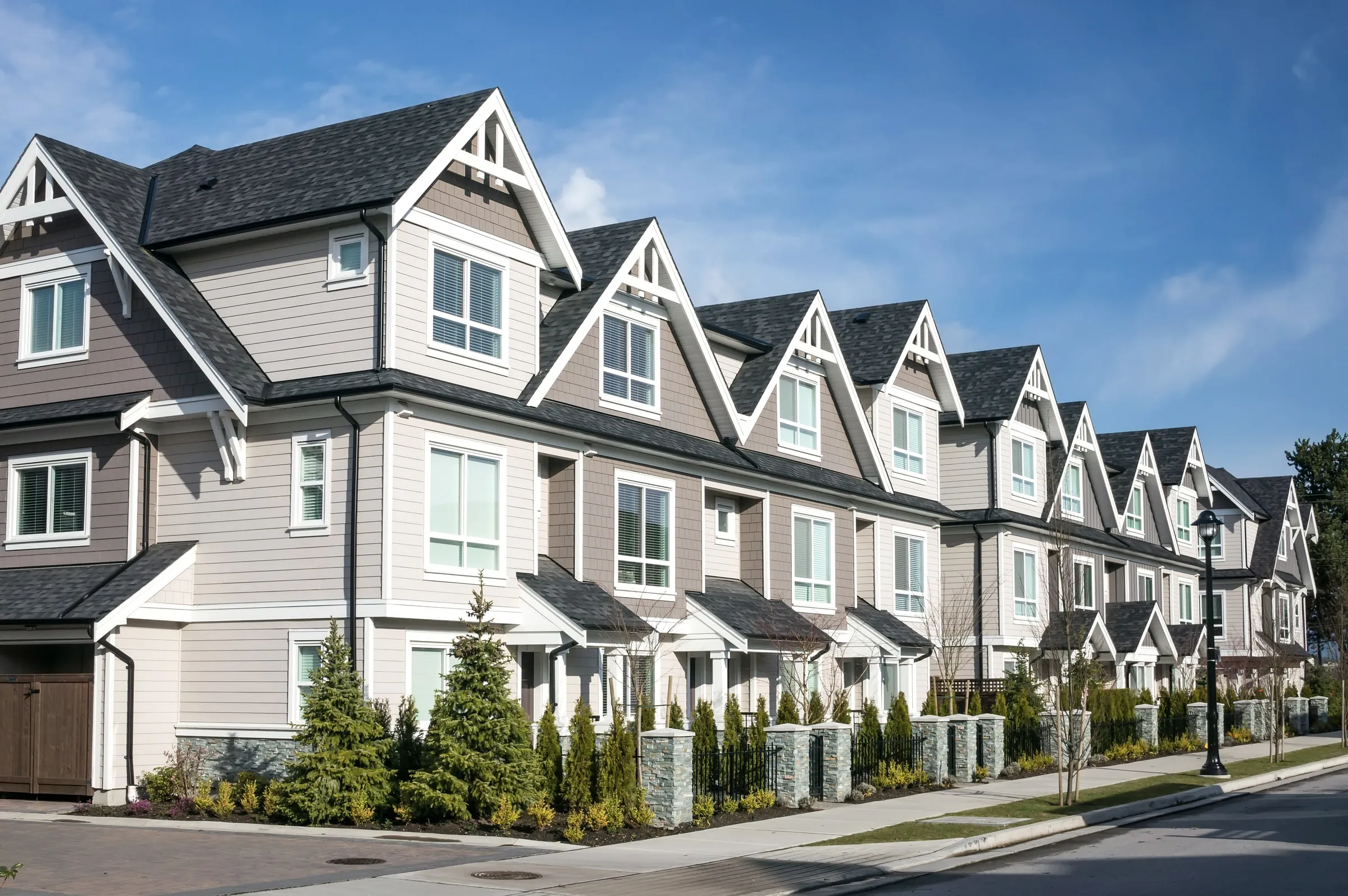
Security Guards for Townhome Communities
Coverage for the shared drives, rear alleys, garages and guest lots that a townhome community owns together, on a route written for its layout.
Request a proposalThe situation
What a townhome community deals with
Rear alleys and garage doors
Townhomes load from the back: a shared alley, a row of garage doors, trash cans and no windows facing it. An alley is the darkest, least watched part of the community and the place garages are entered.
Guest parking that fills with strangers
A townhome community has a few guest spaces and a lot of cars. Residents' second cars, contractors, visitors from the apartment complex next door and people who found a free space all compete for them, and the board's towing policy has nobody to apply it.
Density without a lobby
Dozens of front doors on shared walks and stairs, deliveries left on stoops, short-term rentals in some units. Anyone can walk the community; nobody is at a desk to notice who does not belong.
A small budget and a big perimeter
The association's dues cover landscaping, insurance and the gate if there is one. Coverage has to fit that budget, which means the right hours rather than all the hours.
Built around the alley
A townhome community’s shape is its problem. Front doors face a walk or a street; garages face a rear alley the association owns and nobody looks at. Guest parking is a strip at the entrance. The pool, if there is one, is small and close to the gate. Coverage has to be written for that shape, which is why Price Protection’s route for a townhome community puts the alleys on foot, every round, with the guest lot and the pool as the other fixed checkpoints and the front walks as the drive-by.
The post orders
The post orders restate what the association’s documents allow: guest parking rules and the towing policy word for word, pool and amenity hours, what the officer says at an open garage door, whether packages left out are logged or moved to the office, how a propped gate is handled and who is called about a light out in an alley. They list the manager’s after-hours number and the tow company’s. They say the officer does not enter units, does not tow on personal judgment and calls police for anything beyond a request to leave.
Hours that fit the budget
Townhome associations run on modest dues. A patrol on the right hours does more than a thin presence around the clock: late evening to early morning on weekends for a community with a parking and pool problem; the overnight hours through a run of garage entries; event nights when the guest lot overflows. Price Protection prices the window the board chooses, and the month’s reports show whether the window is right.
Working with the manager
The daily report is written for the manager’s morning: the parking violations with plates, the open garages, the gate that was propped, the light that is out. The manager sends the letters and calls the electrician; the board sees the pattern at the review. Over a few months the record shows whether the guest lot has settled down and whether the alleys are quieter, and the hours are adjusted accordingly.
Starting coverage
Dispatch needs the community’s plat or a map showing the alleys and the guest parking, the parking and amenity rules, the towing policy, the gate details if any and the manager’s after-hours number. The supervisor walks the community with the manager after dark, writes the post orders and the route, and the patrol starts on the agreed night.
How we cover it
Every service, applied to this post.
- Vehicle patrol
A marked patrol drives the front streets and, on foot where the vehicle cannot, walks the rear alleys and garage rows, the guest lots, the mail kiosk and the pool or park, on rounds whose order varies. The alleys are checkpoints on foot with a flashlight.
- Unarmed security guards
Where the community wants a presence for particular hours, an unarmed officer walks the community on foot: the alleys, the stairs, the guest parking, the pool. Foot posts fit dense inside-the-loop communities where a vehicle adds little.
- Access control
Communities with a coded gate get the gate checked each round for faults and tailgating, and codes that are being shared reported. A guest parking permit system is checked against the permits on the dash and violations logged for the manager.
- Incident reporting
The daily report records each round, the alleys walked, garage doors found open, guest parking violations with plates, deliveries left out, and any contact made, so the manager can act on the parking policy and the board can see the pattern.
A typical post
What a shift looks like here.
The officer starts at the guest lot at dusk, walks the row of permits on dashboards and logs the two cars without one. The first alley is next: garage doors, the gap by the dumpster enclosure, the motion light that has been out for a week. An open garage with a bicycle visible is logged and, per the post orders, the resident is told with a knock.
Later, the pool is closed at the posted hour and the gate locked. The front walks are checked for packages left on stoops after dark and the log notes the addresses. A car in the guest lot with someone asleep in it is contacted courteously and leaves. The second alley round finds the motion light still out and a gate propped with a brick; the brick is removed and the entry logged.
Before the end of the shift the officer walks the alleys once more in the other direction and writes the report: rounds, alleys, garages, parking, the propped gate, the light. The manager has the parking violations in time for the morning.

Reporting
What the daily report covers here
Every client receives a written report each day, and officer performance is reviewed and documented daily. This is what the report records on this kind of post.
- Each round with time; alleys and garage rows walked on foot
- Garage doors found open and whether the resident was notified
- Guest parking checks with plates and permit status
- Gates, pedestrian gates and fences found propped, forced or faulty
- Packages left on stoops after dark, by address
- Lighting out in alleys, walks and lots
- Contacts with non-residents and the outcome
Vehicle patrol or foot patrol for a townhome community?
It depends on the layout. A suburban community with public streets and long alleys suits a vehicle with foot checkpoints. A dense inside-the-loop community on a single drive suits an officer on foot for a set number of hours. The walk-through decides and the proposal explains.
Can the officer enforce guest parking?
The officer checks permits, logs violations with plates and times and, where the post orders and the towing policy allow, calls the association's tow company. The board sets the policy; the officer applies it exactly as written.
How do you cover the alleys?
On foot, with a flashlight, every round. Alleys are the checkpoint that matters most in a townhome community, and the report records each one walked.
What hours make sense on a small budget?
The hours when the problems happen, which the board usually knows: late evening to early morning on weekends, or the overnight hours during a run of garage entries. The proposal prices the window the board chooses and it can change at renewal.
What about short-term rental guests?
They are treated as guests of the unit. The post orders say how the officer handles parking and amenity use by guests, and problems are logged for the manager to take up with the owner.
Related pages
Industries we serve
Insights
Glossary
Request a proposal
Request a proposal for townhome communities.
Two short steps. Dispatch reviews every request and calls you back about coverage. For urgent unarmed coverage we can typically staff most sites within hours.
24-hour dispatch
(281) 326-9189