
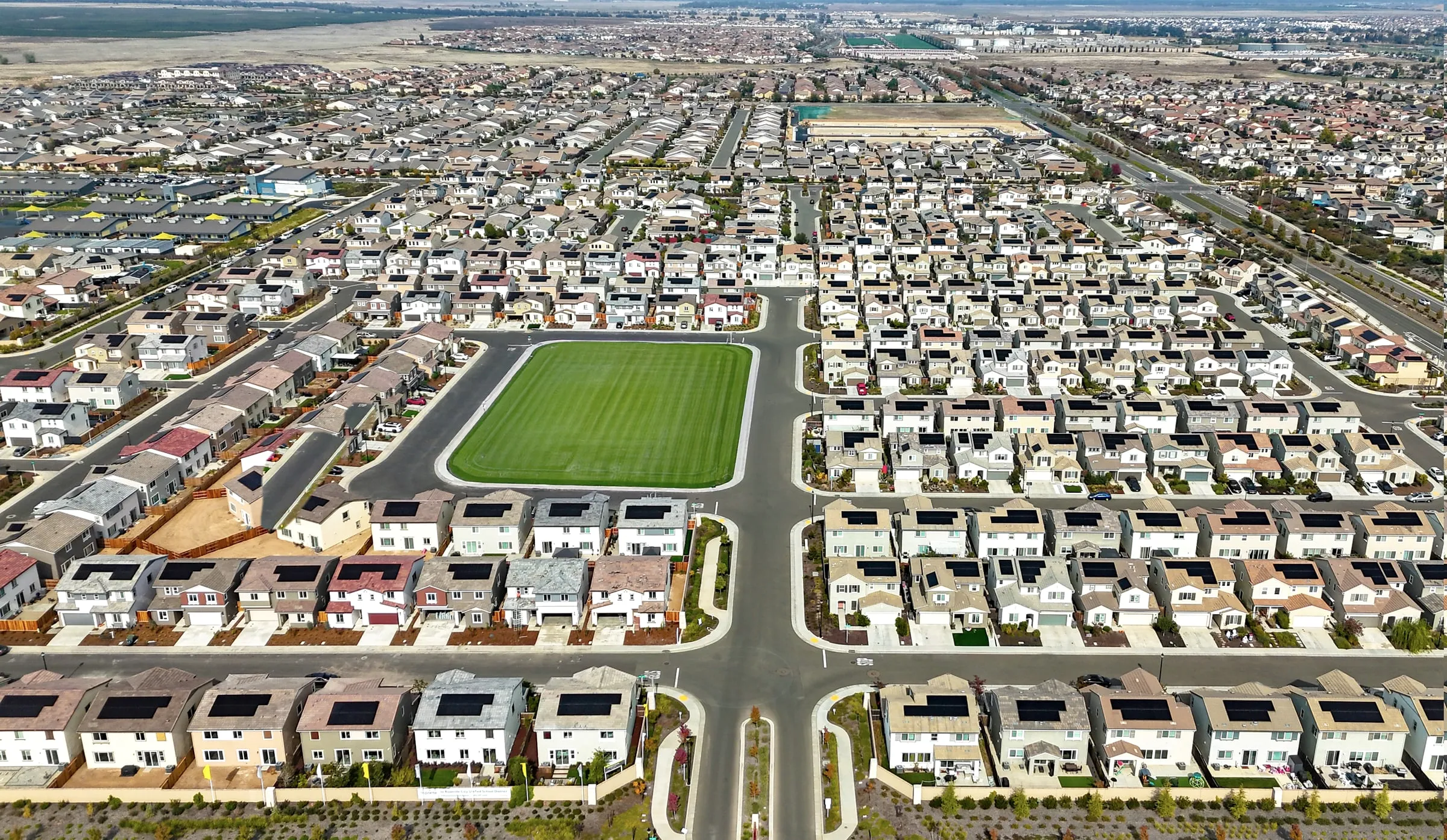
Security for Master-Planned Communities
One security program across villages, gates, amenity centers, trails and the sections still being built, reporting to the association as one client.
Request a proposalThe situation
What a master-planned community deals with across its sections
Too big for one gate
A master-planned community has entrances on several roads, some gated and some open, villages at different stages of build-out and a road network that connects them all. Anyone can get in somewhere; what matters is what is watched once they are inside.
Amenity centers that draw the whole region
The lazy river, the lake, the trail system and the sports fields are the reason people buy, and they are known far beyond the community. After hours, and on summer weekends, they draw people the association does not know and cannot easily keep out.
Construction sections next to occupied ones
New sections mean model homes, lumber, appliances, copper and equipment sitting a street away from families. Theft from construction spills into the occupied streets, and contractors' trucks come and go at all hours.
Many parties, one reputation
The developer, the community association, the village associations, the amenity operator and the builders each own a piece. When something happens on a trail at night, residents blame the community, and the community needs a record of who was where.
One community, many parts
The master-planned communities around Houston, in Katy, Richmond, Cypress, Kingwood, Conroe and Pearland, are small towns: thousands of homes across villages, several entrances, amenity centers that anchor the sales pitch, lakes and trails, schools inside the boundary and new sections under construction for a decade. Security for one is not a gate and not a single post. It is a program that covers the whole of it and reports to the association as one client. Price Protection builds that program as a patrol route across the community, fixed posts where the association wants a presence, gate coverage where villages have gates and a single sectioned report.
The route across the villages
The route is drawn on the community’s map with the manager after dark: every village’s streets, every entrance whether gated or open, the amenity centers, the lake and trail-head lots, the school edge and the construction sections with their containers and equipment yards. The post orders state the minimum rounds per shift and the checkpoints that are on foot. As sections open, the route is rebalanced at a phase review so the interval does not stretch. The patrol is dedicated to the community; it does not share its shift with other clients.
Gates, amenity centers and construction
Villages with gates get whatever gate coverage their village association has chosen: a staffed guardhouse for the hours the board buys, or a patrol check of a coded gate each round with faults and tailgating logged. Amenity centers are the community’s public face and the place after-hours problems concentrate; most associations add a fixed officer there on summer weekends and event nights. Construction sections are patrolled for the association’s benefit as well as the builders’: theft from a section spills into the occupied streets, and the report records contractor traffic after hours with plates.
Reporting to several boards
The daily report is written for the community manager and sectioned by village and amenity, so the manager can forward each part to the village board or the amenity operator it concerns. The monthly review brings the pattern: which trail head draws cars after closing, which entrance’s arm keeps failing, which section is losing material. Price Protection’s supervisor attends the review, adjusts the route and re-dates the post orders.
Starting a program
Dispatch needs the community map with villages, entrances and amenities marked, the hours wanted, the amenity hours, the construction sections and the builders’ contacts, the gate details for gated villages and the manager’s after-hours number. The supervisor drives the community with the manager, writes the post orders and starts the patrol on the agreed night. Fixed posts and gate coverage are added as the association decides.
How we cover it
Every service, applied to this post.
- Vehicle patrol
A marked patrol covers the whole community on a written route: every village, every entrance, the amenity centers, the lake and trail heads, the school edge and the construction sections. Rounds vary in order and the route is rebalanced each phase as sections open.
- Unarmed security guards
Fixed unarmed posts where the association wants a presence: an amenity center on summer weekends, a lake pavilion on event nights, a gated village's guardhouse. Officers are assigned to the community so residents see the same faces.
- Access control
Gated villages get the guardhouse or gate check their village association has chosen; the patrol checks ungated entrances and the construction gates, logs contractor traffic after hours and reports codes that are being shared.
- Camera monitoring
The association's cameras at the amenity centers, gates and trail heads are watched from the post or reviewed by the patrol officer on the phone between rounds, and the clip is pulled when the manager asks.
- Incident reporting
One daily report to the community manager, sectioned by village and amenity, with every round, contact, gate fault, construction incident and rule matter, so each village association gets its portion without a separate contract.
A typical post
What a shift looks like here.
The evening patrol starts at the amenity center, where the pool is closing and the officer helps the attendant clear the deck. From there the route runs through the villages in an order the officer chooses: the gated village's entrance where the arm has been sticking, the ungated section by the school, the lake pavilion with its parking lot, the construction section where the lumber packages went in this week.
In the construction section the officer drives the streets slowly, checks the padlock on the material container and the gate on the equipment yard, and logs a pickup parked by the model homes with its plate. On the trail head lot two cars after closing are contacted and leave. A resident on the collector road flags the officer down about a car that has circled twice; the officer takes the description and adds it to the round.
Later rounds are shorter, in a different order, with the amenity center, the construction section and the trail heads repeated. The report is sectioned by village and amenity so the manager can forward each part to the village board it concerns.

Reporting
What the daily report covers here
Every client receives a written report each day, and officer performance is reviewed and documented daily. This is what the report records on this kind of post.
- Rounds by village and amenity, with times
- Amenity center closings, after-hours contacts and rule matters
- Gate and entrance checks: faults, tailgating, shared codes
- Construction sections: containers, equipment, contractor traffic after hours, plates
- Trail heads and lake lots after closing, with contacts made
- Resident reports taken on the round and what was done
- Calls to police and the fire department, with times
On the client wall
Communities and businesses in this category that Price Protection protects.
- SYNC at Kingsland Ranch
- Park Lakes
Can one program cover villages that have their own associations?
Yes. The community association contracts for the program and the reporting is sectioned by village, so each village board gets the record for its streets. A village that wants its own staffed gate adds it as a post under the same program.
How is the route changed as sections open?
At each phase review the supervisor and the manager add the new streets, the new construction section and any new amenity to the route, and rebalance the rounds so the interval stays reasonable. The post orders are re-dated.
Does the patrol cover the builders' construction sections?
It covers the streets, the material containers and the equipment yards the association and the developer ask it to. A builder who wants a dedicated post on a section contracts for that separately, and the two posts share the report.
What about the amenity centers in summer?
Most communities add a fixed officer at the main amenity center on summer weekends and event nights, in addition to the patrol. The officer helps the attendant with closings and rules, and the patrol keeps its route.
How do residents report something to the patrol?
Through the community manager during the day and through dispatch at night, at the number the association publishes. Residents are asked not to flag down the patrol for emergencies; those go to 911.
Related pages
Industries we serve
Service areas
Insights
Glossary
Request a proposal
Request a proposal for master-planned communities.
Two short steps. Dispatch reviews every request and calls you back about coverage. For urgent unarmed coverage we can typically staff most sites within hours.
24-hour dispatch
(281) 326-9189