
Choosing your coverage
Vehicle Patrol vs Static Guard Posts
By Price Protection SecurityReviewed TX DPS Lic #B09430601
Short answer
A vehicle patrol moves, covering several checkpoints across a large property or several properties on a written, varied route. A static post stays, holding one fixed position, a gatehouse, a lobby desk or an entrance, for the whole shift. The choice depends on whether the property has one point that matters more than the rest, or ground too large for one person to watch from a single spot.
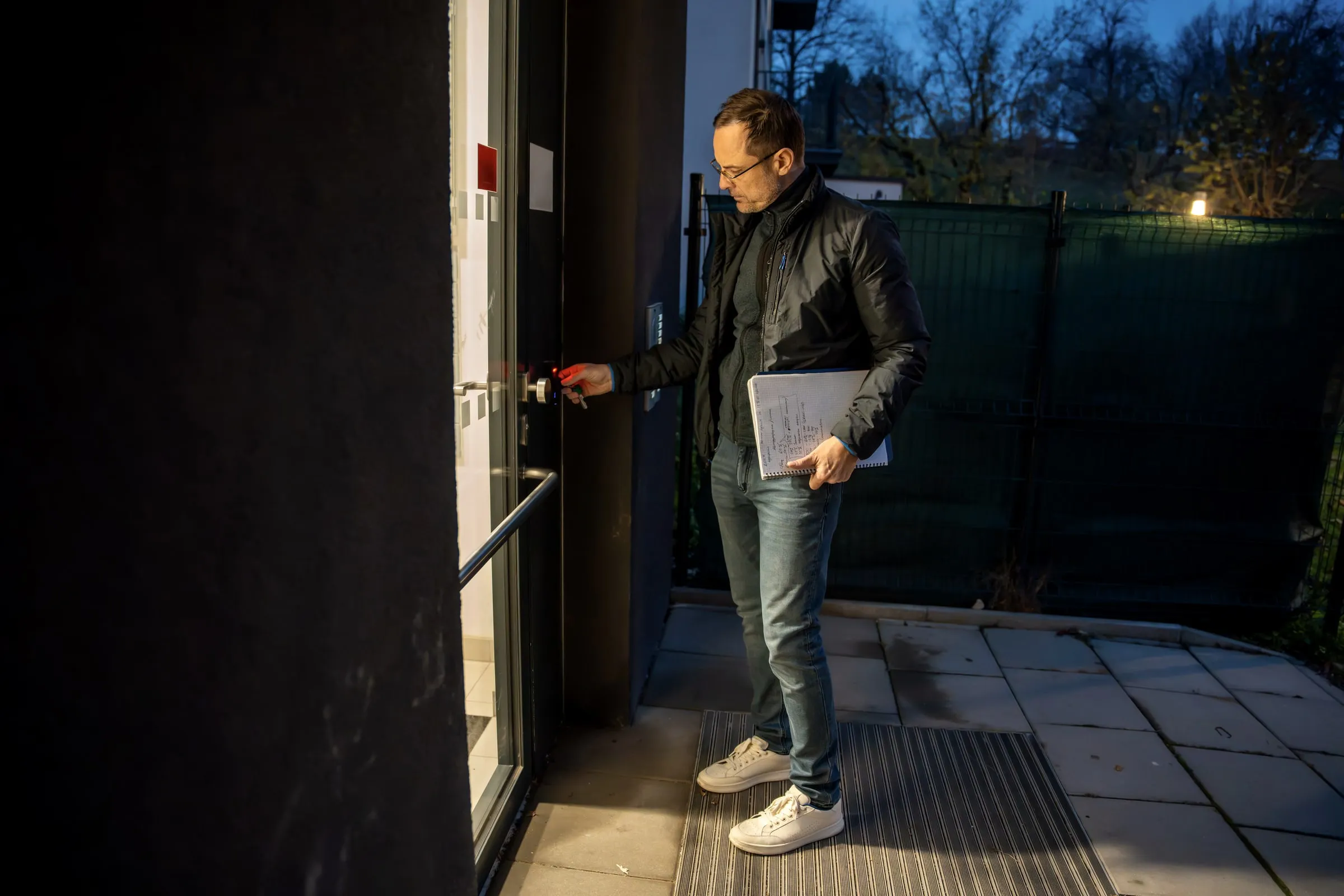
The property decides, not a preference
A vehicle patrol and a static post are answers to two different geometry problems, not two grades of the same service. A static post is right when one specific point, an entrance, a gate, a lobby desk, matters more than everything around it and needs someone there without interruption. A vehicle patrol is right when the property is too large, or spread across too many buildings or lots, for a single fixed position to see or reach what matters. Reading the property’s own layout, not a general preference for one type of coverage, is what decides between them.
What a static post actually holds
A static post is a fixed position an officer holds for the entire shift: a gatehouse controlling vehicle entry, a lobby desk announcing visitors, a construction entrance checking subcontractors, a loading dock watching trailers. The value is that the point is never unattended. Every vehicle at a staffed gate is checked at every hour; every visitor at a staffed lobby is announced; nothing passes the point without the officer seeing it happen. The post orders for a static post describe admission rules, what gets logged and how far, if at all, the officer may step away without leaving the point uncovered. The tradeoff is coverage: whatever is not visible from that point gets no attention from this post at all.
What a vehicle patrol actually covers
A vehicle patrol is coverage that moves: a licensed officer drives a written route through a property, or several properties, stopping at checkpoints chosen on the walk-through, checking doors, gates and locks by hand, and logging every round with a time. A garden apartment community on twenty acres, a truck yard with a mile of fence, or three small vacant lots along one corridor are all better served by a vehicle covering the ground several times a shift than by one person standing at any single spot on any of them. The interval between visits to the same checkpoint, and the order the officer follows, both vary round to round so the pattern cannot be timed by someone watching from outside. The tradeoff is that no single point gets constant attention; a gate on a patrol route is checked periodically, not staffed.
Side by side
| Static post | Vehicle patrol | |
|---|---|---|
| What it covers | One fixed point, without interruption | Multiple checkpoints across a property or several properties |
| Right for | A gate, lobby, dock or entrance that matters more than the rest of the site | Large acreage, multiple buildings, a route across several small sites |
| What is logged | Every admission, refusal and event at the point | Every round, with the time and what was checked |
| What it does not do | Watch anywhere outside the point | Hold a constant presence at any single spot |
| Typical use | Gated communities, office lobbies, construction gates, docks | Garden apartment communities, truck yards, business parks, multi-property routes |
When a property needs both
Many properties are not purely one shape or the other. A community with a staffed entrance and a large area of surface lots behind it needs the gate held as a fixed position and the lots checked on a driven round, because the officer at the gate cannot also be watching the back fence line. A distribution center with a guarded shipping office and a large yard of parked trailers has the same split. Running both under one contract means one supervisor, one set of post orders covering each position, and one daily report that combines what each officer found, rather than treating the fixed point and the moving route as separate arrangements.
What each type of post asks of an officer
The two posts also suit different habits, which is worth knowing when a client asks whether the same officer can rotate between them. A static post rewards patience and attention to detail at close range: recognizing a resident’s regular guest, noticing that a badge has expired, catching the second person following a vehicle through a gate before it closes. A vehicle patrol rewards observation across distance and memory for a route: noticing that a light that was on last round is off now, that a car in the far lot has been there three nights running, that a gate latch feels different from how it felt an hour ago. Officers trained for one adapt to the other without difficulty, since both draw on the same core training in security protocols, reporting and de-escalation, but a property that has run one type of post for years sometimes finds the switch to the other changes what the daily report actually captures, simply because the officer is now looking at different things.
Working out which a property needs
Start by marking, on a site plan or just in a sentence, whether there is one point where almost everything of concern passes through, a gate, a lobby, a single vehicle entrance. If there is, and if staffing it changes what gets in and out, a static post is doing real work there. Then look at what is left: parking areas, secondary buildings, a perimeter fence, an amenity that closes late. If any of that ground is large enough that walking it would take longer than the risk can wait, a patrol covers it better than a second static post would. Most properties land on one primary answer with the other added where the numbers say so, and the walk-through with a Price Protection supervisor is where that gets worked out against the property’s actual layout rather than guessed at from a floor plan.
Questions
Related questions
Can one contract include both a vehicle patrol and a static post?
Yes, and it is common on larger properties. A gate or lobby is staffed as a fixed position while a separate patrol officer covers the parking areas, the perimeter and any secondary buildings on a driven route. The two officers coordinate by radio during the shift and their findings go into one combined report.
How is a vehicle patrol route decided?
From a walk-through of the property: the checkpoints the client cares about, the interval between visits, and an order that changes round to round so the timing cannot be predicted from outside. The route is written into the post orders before the first shift.
Does a static post ever include rounds?
Often a short one. A gate officer or lobby officer may walk a limited loop, checking a nearby door or amenity, without leaving the fixed point uncovered for more than a few minutes. The post orders set how far the officer may go and for how long.
Which costs less, a patrol or a static post?
It depends on how many properties or checkpoints the patrol covers and how many hours the static post runs, not on which type of post it is. A single-property patrol and a single fixed post covering similar hours are usually close; a patrol that covers several small properties on one route spreads that cost across all of them.
Related pages
Insights
Answers
Glossary
Request a proposal
Request a proposal for your property.
Two short steps. Dispatch reviews every request and calls you back about coverage. For urgent unarmed coverage we can typically staff most sites within hours.
24-hour dispatch
(281) 326-9189