
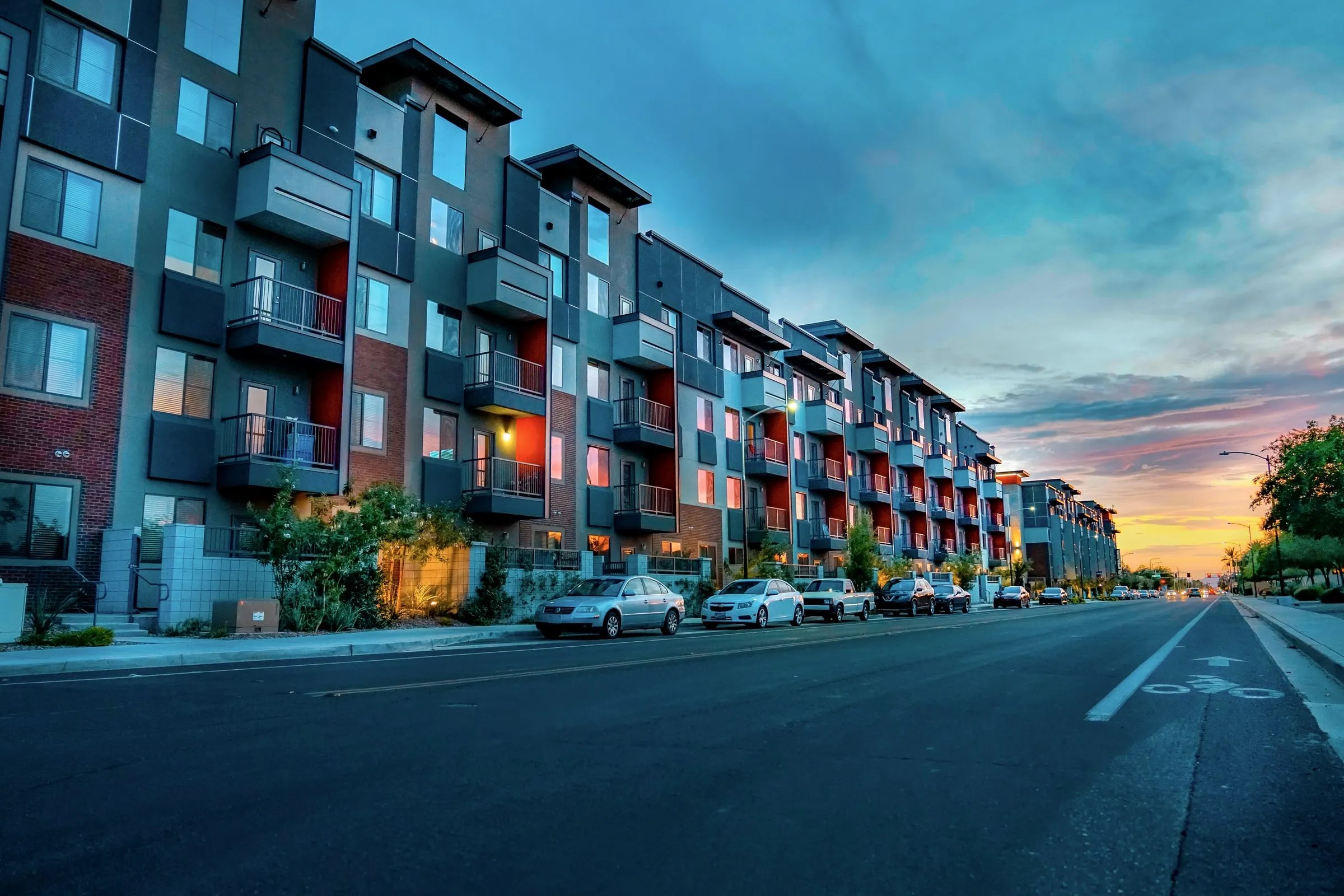
After-Hours Patrol for Apartment Communities
From the moment the office locks up until it opens again, the officer on patrol is the only representative of management on the property. We make that count.
Request a proposalThe situation
What the property looks like once the office closes
The office closes and the property does not
On a weekday the office closes in the early evening and opens the next morning; on a weekend the gap runs from Saturday afternoon to Monday. During that window the only person who can answer a resident, check a report of a prowler or notice that the pool gate is open is whoever the community has put on the property.
Calls that go to a voicemail
Noise, a car alarm that will not stop, a stranger trying doors in a breezeway, a resident locked out: each one rings the office line after hours and gets a recording. Residents stop calling, or they call the police for things the community should have handled itself.
Rounds that cannot be proved
A property can pay for patrol and have no idea whether anyone walked it. Without checkpoint scans and a timed report, the manager is told that the rounds were done and has no way to see that the far parking run was checked at two rather than driven past at ten.
Findings that never reach the office
A leak in a breezeway, a light out in a lot, a gate stuck open, a car with a broken window: each is small at midnight and expensive by the time the office learns of it on its own. The patrol is only useful if what it finds lands on the manager's desk in the morning.
Patrol is a pattern, not a place
A static post covers a door. After-hours patrol covers the whole community in the hours it is unstaffed, which on most properties is the larger share of the week. Price Protection writes an after-hours post as a route rather than a position: a list of the buildings, lots, gates and amenity areas to be covered on each round, the order to vary, the places that get a hand on the door rather than a look from the vehicle, and the after-hours line that rings the officer. The manager sees the route on a site plan before the first shift and changes it when the property changes.
Building the route with the manager
The route starts with the community’s own history. Which lot has had vehicles broken into, which building’s breezeway door will not latch, which pool gate gets climbed, where the noise complaints come from and which entrance the tailgaters use. Those places go on every round; the rest of the property is covered in an order that changes night to night. Checkpoints, where the community wants them, go at the places the manager most wants proof of, and the report shows them in sequence with times. Our guide to how vehicle patrol routes are planned walks through the method.
What the officer does between rounds
After-hours patrol includes answering the community. The after-hours line is forwarded to the officer, and a noise complaint, a parking dispute or a report of a stranger gets a same-night response and a written outcome rather than a voicemail for the morning. Between calls the officer checks the cameras if there is a view, watches the lot with the most history, and walks the amenity gates again, because the pool gate that was locked at ten is the one a group tests at midnight.
What arrives in the morning
The value of an after-hours post is measured by what the office knows when it opens. The report gives the manager each round with times and route, every call and how it ended, every gate or door found open, every vehicle of note, and a maintenance list with locations. Repeat units and repeat visitors are named, which is what lease enforcement and trespass warnings need. Serious events have an incident report of their own, written the same night, with police case numbers where police attended. Managers who want to see how the two coverage types differ can read static post versus patrol.
Setting up an after-hours post
Dispatch needs the address and site plan, the office hours, the number of buildings and lots, whether there are gates and secured breezeways, the after-hours line arrangement, the policies the officer is expected to apply, and the on-call manager’s number. Where a community has had an incident and needs coverage that night, an unarmed patrol officer can usually be on the property within hours, with the route drawn properly over the first few shifts.
How we cover it
Every service, applied to this post.
- Unarmed security guards
After-hours patrol is normally an unarmed officer in a marked uniform, on foot and in a vehicle, working a route across the whole property between the office's closing and opening times. The officer answers the community's after-hours line and is the person residents see when they come home late.
- Vehicle patrol
The vehicle carries the officer between buildings, lots and gates on a community too large to walk in one pass, and it is visible from the street, which is part of the point. Rounds are timed and ordered differently each night so that the route cannot be predicted from a window.
- Access control
Vehicle gates, pedestrian gates and secured breezeway doors are checked closed on each round, and the officer holds a gate that is stuck open until maintenance or the manager decides what to do. Visitors who arrive after hours at a staffed entrance are logged.
- Camera monitoring
If the community's cameras can be viewed from the leasing office or a patrol vehicle, the officer checks them between rounds and after any call, and uses them to confirm a report before driving to it. The cameras do not replace the round; they tell the officer where to take it.
- Incident reporting
The patrol report is written round by round with times, checkpoint scans where the community uses them, calls received and how each ended, and maintenance items, and it is in the manager's inbox before the office opens. Anything serious gets its own incident report the same night.
A typical post
What a shift looks like here.
The first round starts as the office staff leave and covers the whole property while there is still light: lots, gates, amenity areas and the buildings that have had complaints. The officer confirms the pool and clubhouse are closed on time and notes anything the day shift left in the log for follow-up.
Through the evening the rounds alternate between the vehicle and foot, with the after-hours line forwarded to the officer. A noise call gets a knock and a reminder of the policy; a report of someone trying doors gets the officer on the building within the round and a call to police if the person is still there.
In the last hours the officer drives the perimeter and the far lots where cars are broken into, walks the mail area and the amenity gates once more, and finishes the report with each round's time and route, the calls, and the list of items for maintenance, ready for the manager's first look.

Reporting
What the daily report covers here
Every client receives a written report each day, and officer performance is reviewed and documented daily. This is what the report records on this kind of post.
- Each round with its start and end time, route and the areas covered
- Checkpoint scans by location, where the community uses them
- After-hours line calls with the unit, the reason and how it was resolved
- Gates, secured doors and amenity gates found open, with the round they were found on
- Vehicles of interest: broken windows, expired permits, cars parked in fire lanes
- Maintenance items: lighting out, leaks, gate faults, damage found on rounds
- Police or EMS called, with the time and the reason
Which hours count as after-hours for patrol?
Whatever hours the office is closed. For most communities that is a weekday evening and overnight window from office close to office open, plus the full weekend from Saturday afternoon. Some communities cover only the overnight hours on weekdays and the whole of the weekend; the post orders set the window and dispatch staffs it.
How can we tell the rounds were actually done?
Two ways. The report records each round with a start time, an end time and the route, and where the community wants it, checkpoint tags are fixed at buildings, gates and lots and scanned on every round, so the report shows the sequence with times. Officer performance is reviewed against that report every day.
Can the officer let a locked-out resident into their unit?
Only if the community's policy allows it and the post orders describe the process, usually with identification checked against the resident list and the entry logged. Many communities prefer the officer to stay with the resident while a locksmith or the on-call manager is called. The officer never forces a door.
What does the officer do if something is happening when they arrive at a building?
Observe from a safe distance, call police, notify the manager on the after-hours line and keep the people involved in view. Officers deter, report and hand off; they do not chase or confront. When police arrive the officer walks them to the location and provides the description and the times.
Can one officer cover two communities that are close together?
Sometimes. Where two properties under the same management are minutes apart, a shared vehicle patrol can alternate between them on a written schedule, with each community's rounds and calls reported separately. It suits smaller communities; a large property with a busy after-hours line needs its own officer.
Related pages
Industries we serve
Services
Insights
Glossary
Request a proposal
Request a proposal for after-hours patrol.
Two short steps. Dispatch reviews every request and calls you back about coverage. For urgent unarmed coverage we can typically staff most sites within hours.
24-hour dispatch
(281) 326-9189