
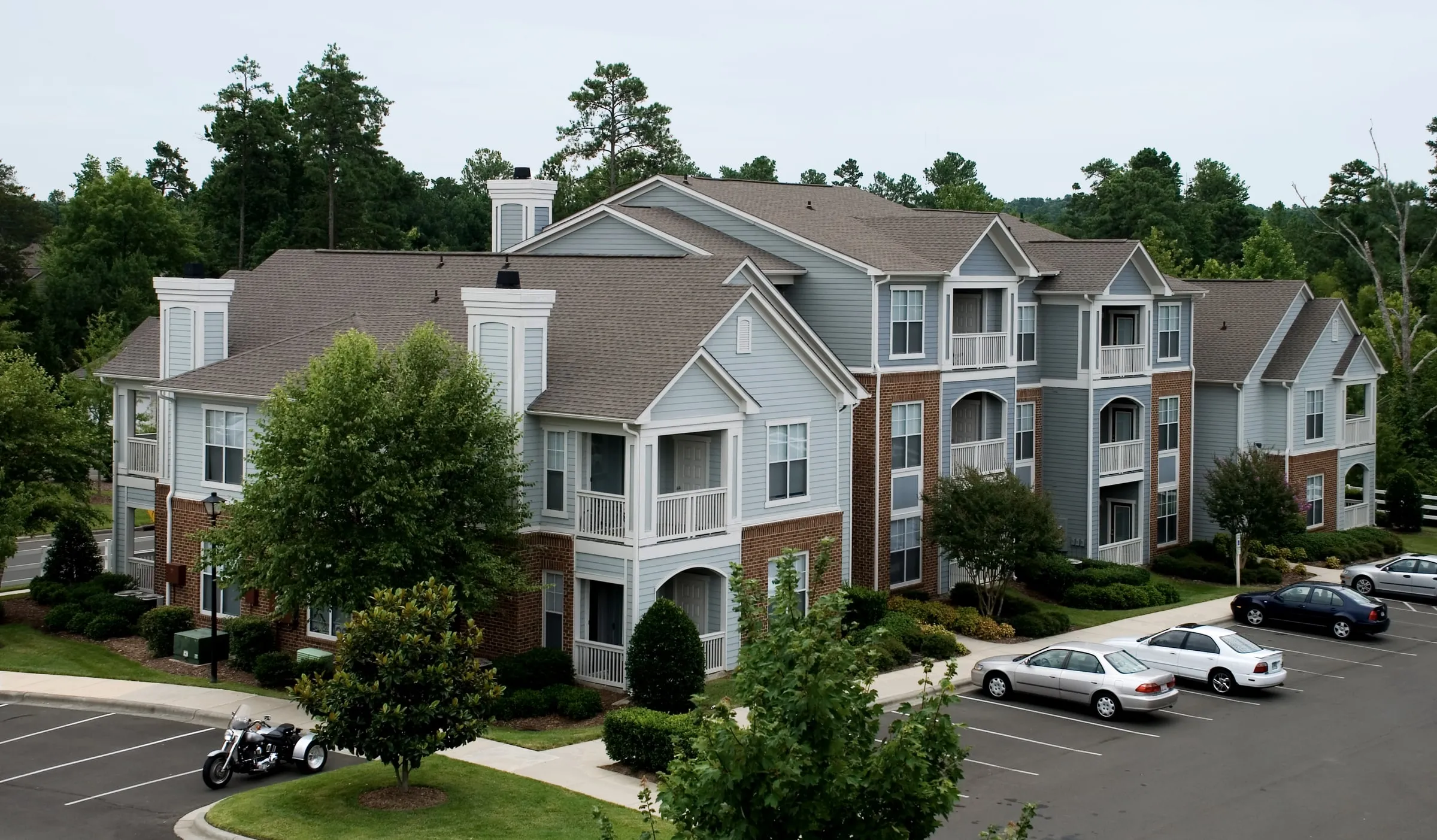
Parking Garage Security for Apartment Communities
A structured garage is the one part of the property residents walk through alone at night. We put an officer on the levels, the gate and the stairwells.
Request a proposalThe situation
What apartment garages are dealing with
The gate arm is not a door
A garage gate arm opens for every fob and stays up long enough for a second car to follow. Once a vehicle is inside, every level, stairwell and elevator lobby is open to whoever is in it, and the pedestrian door into the building is usually held open by the next resident coming home.
Upper levels after midnight
Break-ins cluster on the top levels and in the corners farthest from the elevator, where a car sits for hours with nobody walking past. Windows are broken for bags left on seats, catalytic converters are cut from trucks, and wheels come off cars parked against a wall.
Stairwells nobody uses
Garage stairwells are the quietest spaces on the property. They collect people sleeping, people smoking, and people waiting for a resident to badge the door, and the fire doors at the bottom are the ones most often found propped to the street.
Nobody sees it until morning
A resident finds the glass on the concrete at seven and calls the office. Without an officer on the levels overnight, the office has no time for the incident, no description of a vehicle, and nothing to give police beyond a camera clip that may or may not show the right lane.
Why a garage needs its own round
A parking garage on an apartment community is a building inside the building. It has its own entrances, its own stairwells and its own lighting, and it is the only part of the property where a resident walks alone in the dark every night. Most of what goes wrong on a mid-rise or a wrap community goes wrong in the garage, and most of it is over in a few minutes. A camera records it. An officer on the level interrupts it, and the possibility that an officer is on the level is what stops the next one.
Price Protection sets up garage coverage as a foot post with a written round. The round is drawn on the garage plan with the manager: which ramp goes up, which stairwell comes down, where the officer stands during the evening arrival rush, and which corners have had losses. The order changes every round so that nobody watching from a parked car can time the gaps.
Post orders written for the structure
Before the first shift the post orders record what the garage actually has: the gate arm and how it fails, which levels are reserved and which are visitor, whether the pedestrian doors are fobbed on every level or only at the lobby, where the cameras look and where they do not, and the community’s rules on tandem spaces, motorcycles and vehicles left for weeks. They also record what the officer is authorized to do: whether to note plates of unregistered vehicles, when a tow can be called and by whom, and which after-hours number to use when a car is found damaged. The orders are updated when the garage changes, for example when a new access system goes in and the old fobs stop working, which is a week when tailgating rises because residents hold the door for each other.
The hours that matter in a garage
The evening arrival window and the small hours are different problems. From five to eight the garage is full of movement and the risk is who comes in behind a resident. From midnight to five it is empty and the risk is whoever is already inside. The post is usually staffed to cover both, starting before the evening rush and ending after the morning departures. Communities that have had a run of break-ins on the top level sometimes add a second officer for a few weeks, one on the gate and one on the levels, and then drop back to one once the pattern stops.
Working with the office, maintenance and police
The morning report is the manager’s first look at the garage. Lights out on a level, a gate arm that stayed up, a fob reader that let everyone in, a stairwell door that will not latch: each goes to maintenance with the level and the location. Vehicles found damaged go to the office with a time window, which is what an owner needs for an insurance claim and what police need to pull the right clip. Officers hand off to police for enforcement and do not detain or pursue. Our note on lighting, locks and perimeter checks on a patrol round describes what the officer is looking at on each level.
Starting garage coverage
To set up a garage post, dispatch needs the address, the number of levels and spaces, the gate and door hardware, whether there is a camera view the officer can use, the hours wanted, and the manager’s after-hours contact. When a community needs an officer quickly after a run of incidents, an unarmed post can usually be on the levels within hours, and the round is refined on the garage plan over the first week.
How we cover it
Every service, applied to this post.
- Unarmed security guards
The standard post is an unarmed officer in uniform who walks the garage on foot, level by level, and covers the building's other entrances on the same round. In a garage the value is presence on the ramps and in the stairwells at the hours when nobody else is there.
- Access control
During the evening rush the officer stands where the gate arm can be watched, notes vehicles that follow another car through, and asks anyone on foot at the vehicle entrance who they are visiting. Fob doors from the garage into the building are checked closed and latched on every level.
- Camera monitoring
Where the community's cameras cover the gate lane, the elevator lobbies and the ramps, the officer watches them from the post between rounds and uses a person on a level with no car to decide where the next round starts. A vehicle sitting at the gate with its lights off gets a walk-down, not a recording.
- Vehicle patrol
Communities with a garage and a surface lot or a street frontage add a vehicle round for the outside, so the officer is not walking away from the garage to check a car at the curb. Inside the garage the round stays on foot, because a car cannot see into a stairwell.
- Incident reporting
The daily report lists each level round with the time, vehicles with damage or open doors found on it, gate arm faults, stairwell doors found propped, people asked to leave and any incident, in a form the manager can hand to police or the community's insurer without rewriting it.
A typical post
What a shift looks like here.
The evening officer starts at the gate lane as residents come home from work, watching for the second car under the arm and for anyone walking in through the vehicle entrance. Between arrivals the officer checks that the fob door on the ground level closes on its own and that the intercom at the gate works.
After ten the rounds move to foot: up the ramp on one side, across the top level, down the stairwell on the other side, with the order changed each time. On every level the officer looks for glass on the deck, a door ajar on a parked car, a light out, and anyone on foot without keys in hand.
In the small hours the officer sits in the camera view for a while, watches the gate and the elevator lobbies, and picks the next round from what the screens show. Before handover the top level and the stairwells get a final walk, and the report is finished with the levels, the times and anything found.

Reporting
What the daily report covers here
Every client receives a written report each day, and officer performance is reviewed and documented daily. This is what the report records on this kind of post.
- Level-by-level foot rounds with the time each level was walked
- Vehicles found with broken glass, open doors or missing parts, by level and space
- Tailgating observed at the gate arm and vehicles that entered behind another car
- Stairwell and fob doors found propped, wedged or failing to latch
- People in the garage without a vehicle or a resident, and how each contact ended
- Gate arm, intercom and lighting faults reported to maintenance
- Reserved and visitor spaces occupied by unauthorized vehicles
Can one officer cover the garage and the rest of the building?
On most mid-rise and wrap communities, yes, when the round is written so the garage gets walked on every pass and the lobby and amenity checks fit between. A garage with several hundred spaces on five or more levels, or one shared with retail, usually needs its own officer with the building covered separately.
Do officers stop cars at the gate arm?
No. The officer does not block the lane or demand identification from drivers. The officer watches the arm, notes the plate and description of a vehicle that follows another through, checks the garage for it on the next round and records it. Persistent tailgaters go to the manager with dates and times for a letter or a fob review.
What happens when the officer finds a car that has been broken into?
The officer photographs the vehicle and the space, notes the time it was found and the time of the previous round on that level, checks the rest of the level, and notifies the manager on the after-hours line. If the community's post orders say to, the officer tries to reach the owner through the office's vehicle list, and the incident report is ready for the owner and police in the morning.
How do you handle people sleeping in the stairwells?
The officer wakes the person, explains that the garage is private property, asks them to leave and stays until they have. Anyone who has been warned before is documented as a repeat, and where the manager has authorized it the officer gives a trespass warning and calls police if they return. Officers do not use force to remove anyone.
Can you scan checkpoints so we know every level was walked?
Yes. Where the community wants it, checkpoint tags are placed on each level and in each stairwell and the officer scans them on every round, so the report shows the levels in order with times rather than a single line saying the garage was checked.
Related pages
Industries we serve
Service areas
Insights
Answers
Glossary
Request a proposal
Request a proposal for apartment parking garages.
Two short steps. Dispatch reviews every request and calls you back about coverage. For urgent unarmed coverage we can typically staff most sites within hours.
24-hour dispatch
(281) 326-9189