
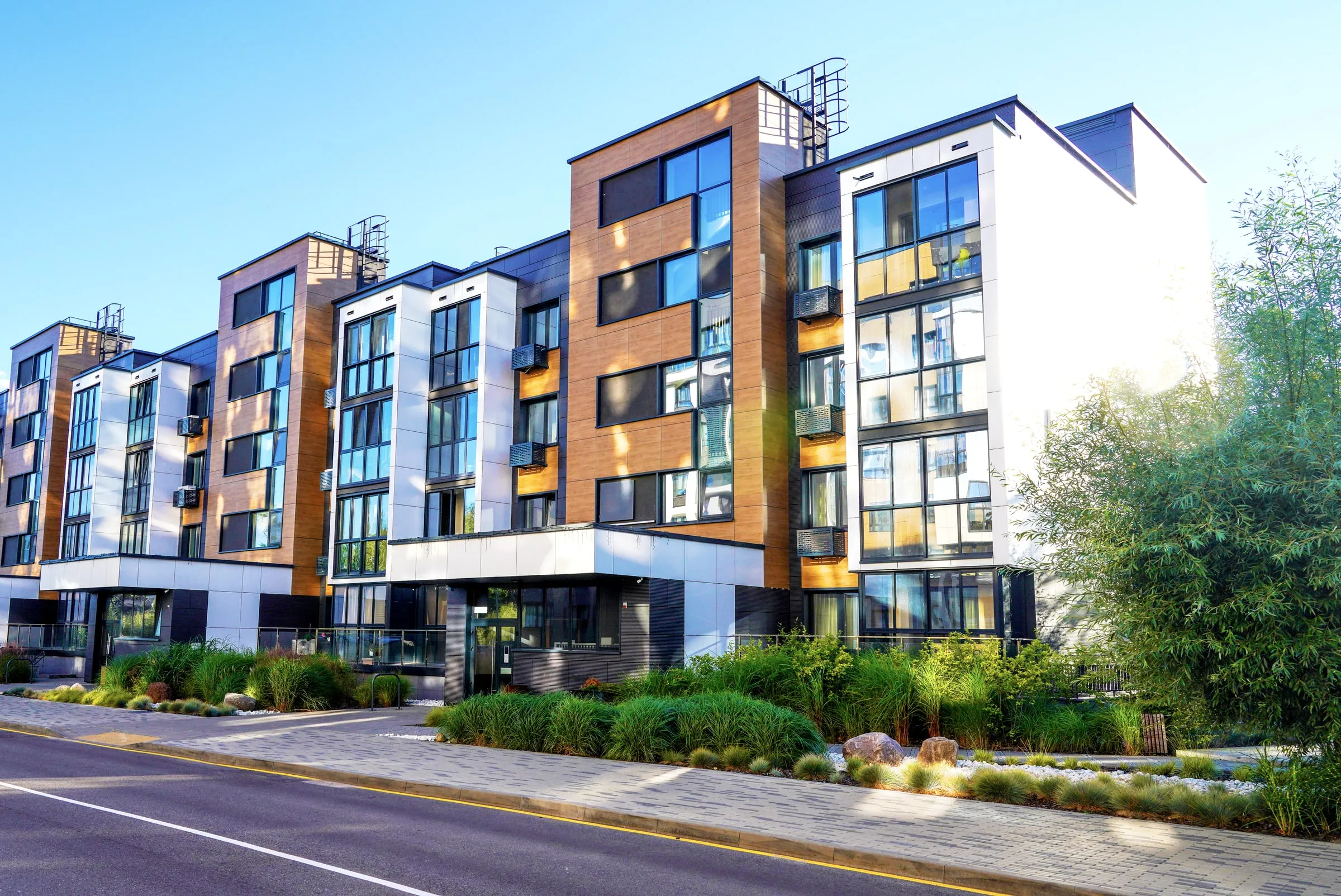
Security for Lease-Up and Newly Opened Communities
Half construction site, half home. We cover the vacant buildings, the model units and the first residents at once, and the post changes with each occupancy.
Request a proposalThe situation
What a community in lease-up deals with
Vacant units full of new appliances
Every delivered unit holds a refrigerator, a range, a washer and dryer, a water heater and a thermostat, and until it is leased nobody sleeps next to them. Condensers sit on pads behind buildings that have no residents yet. A lease-up is the only time an apartment community looks like a warehouse from the outside.
Trades and residents on the same sidewalks
The general contractor is still finishing the last buildings while the first ones fill. Subcontractors, punch-list crews and delivery trucks share the drive aisles with movers and new residents, doors are propped for both, and no one is sure who is supposed to be on the property after five.
Systems that are not switched on yet
The gate arms are installed but not programmed, the cameras are mounted but not recording, the fob readers are waiting on the integrator and the pool is fenced but not permitted. The features that will secure the community at stabilization are not working during the months it is most exposed.
The leasing office is the target
A lease-up office is open late and on weekends, staffed by a small team, full of tablets and monitors, and next to furnished model units with televisions and art. It is the most visible building on the property and the one with the most traffic from people who do not live there.
Two properties on one site
A community in lease-up is two properties sharing an address. One is a construction site with a general contractor, a fence, a laydown yard and buildings still being finished. The other is an apartment community with a leasing office open seven days, furnished models, residents moving in and a manager working toward a stabilization date. Neither is fully secured by the arrangements made for the other. The contractor’s security, where there is any, watches the work and leaves when the work is done for the day. The community’s own gates, cameras and fob readers are usually the last things commissioned. Price Protection covers the gap between the two, from the first delivered building to the last, with a post that is rewritten as each phase turns over.
Houston’s lease-ups are concentrated in the growth corridors: Katy and the Grand Parkway, Cypress, Richmond and Rosenberg, Conroe and the north side, Pearland, and the infill wraps inside the Loop. Most are garden or wrap communities delivered building by building over several months, which is what makes the post a moving target.
What gets taken, and from where
The losses during lease-up follow the delivery schedule. Appliances leave vacant units through ground-floor patio doors on buildings with no residents. Condensers leave the pads behind them. Copper, tools and materials leave the laydown yard and the buildings still under construction. Televisions and furniture leave the model units and the office. Later, once residents move in, the losses shift to the ones every community has: vehicles in the lots and packages at doors. The vehicle round is drawn around that sequence, with the vacant buildings getting the most attention early and the occupied ones taking over as the property fills. Our article on what gets stolen from Houston construction sites and when covers the construction side in more detail.
Post orders with a version number
The post orders for a lease-up carry a date and are reissued whenever the property changes. Each version lists the buildings by status, the units that are vacant with appliances, the gate and camera systems and whether they are live, the contractor’s working hours and who from the contractor can authorize a crew to stay late, the model units and the office alarm procedure, the pool status, and the move-ins scheduled for the coming week. The officer reads the current version at the start of every shift. When the manager sends the next delivery date, dispatch issues the next version ahead of it.
Working with the manager and the contractor
During lease-up the officer’s report often has three readers: the manager, who wants the vacant unit checks and the office status; the developer, who wants to know the asset is being watched; and the general contractor, who wants to hear about trades on site after hours, a fence panel down or a truck that should not have been there. We write the report so each can find their part, and where a hazard sits between the construction area and an occupied building, an open trench or a stack of material by a breezeway, it goes to both the manager and the contractor the same morning.
Starting before the first key is cut
To set up a lease-up post, dispatch needs the site address, the delivery schedule by building, the office hours, the status of the gate and cameras, the contractor’s contact and working hours, and the date the first appliances arrive. Coverage usually begins as a temporary post on that date and becomes the community’s regular evening and overnight post as it stabilizes. Where the first building is already delivered and unwatched, an unarmed officer can typically be on the property within hours.
How we cover it
Every service, applied to this post.
- Unarmed security guards
The lease-up post is an unarmed officer on evenings and overnight, added as soon as the first building has appliances in it and kept through stabilization. The officer's hours and route are reset each time a building is delivered, and the post orders are versioned so the officer knows which buildings are occupied, which are vacant and which are still the contractor's.
- Vehicle patrol
A marked vehicle is the right tool for a lease-up because the property is spread out, half of it is unlit and the perimeter is often still temporary fencing. Rounds cover the occupied buildings, the vacant buildings, the condenser pads, the construction laydown area and the office, with the officer out of the vehicle at each vacant building to check doors and ground-floor windows.
- Access control
Where the gate is not yet operating, the officer becomes it after hours: checking who is coming onto the property, turning away vehicles with no reason to be there, and logging the trades who are working late with the contractor's permission. Once the gate and fobs are live, the post shifts to checking that they work.
- Camera monitoring
As cameras come online the officer uses them to cover the parts of the property the route cannot reach often enough, and reports the ones that are not yet recording or are aimed at a building that no longer needs watching, so the integrator's punch list gets finished.
- Incident reporting
The daily report during lease-up is read by the manager and often by the developer and the general contractor as well: vacant unit checks by building and unit number, doors and windows found open, trades on site after hours, deliveries received at the office, and anything that looks like a construction defect or a safety hazard, like an unfenced excavation next to an occupied building.
A typical post
What a shift looks like here.
The officer arrives as the leasing team locks up, usually after eight during lease-up, takes the day's list of which units were delivered, which were leased and which have move-ins scheduled, and walks the office and the model units to confirm they are locked, alarmed and dark. The first vehicle round covers the fence line and the contractor's laydown yard before the last trades leave.
Overnight the route alternates between the occupied buildings, where the officer checks breezeway doors and speaks to any resident still outside, and the vacant buildings, where every ground-floor door and window is tried by hand and the condenser pads are counted. A truck on the property with no lights on is approached, its plate recorded and its reason for being there asked for.
Before the leasing staff return, the officer walks the office and models again, notes anything the construction crew left that a prospect will see on a tour, checks that the pool fence gate is chained where the pool is not yet open, and completes the report with the vacant unit checks listed by number so the manager can reconcile it with the delivery schedule.

Reporting
What the daily report covers here
Every client receives a written report each day, and officer performance is reviewed and documented daily. This is what the report records on this kind of post.
- Vacant building and unit checks, by building and unit number, with doors and windows tried
- Condenser pads counted and construction materials observed on each round
- Trades, deliveries and vehicles on the property after hours, with plates and reasons given
- Leasing office and model units locked, alarmed and checked at open and close
- Gate, camera and fob systems tested where live, and faults reported
- First-week move-ins observed, doors propped and residents assisted
- Hazards between the construction area and occupied buildings, for the manager and the contractor
When should security start on a new community, before or after the first move-in?
Before. The window of highest exposure opens when appliances go into the first building and closes when the last building is occupied and the gates and cameras are live. Many developers begin coverage at the first appliance delivery, sometimes taking over from the contractor's site security, and keep it through stabilization.
Can the post change as buildings are delivered?
It is expected to. The post orders are rewritten at each certificate of occupancy: which buildings are occupied, which are vacant with appliances, which are still the contractor's, where the pool and amenities stand. Hours and the vehicle route move with them. Dispatch asks the manager for the delivery schedule and updates the orders ahead of it.
Does the general contractor's security cover the occupied buildings?
Usually not, and the two arrangements should not overlap by accident. Construction site security answers to the contractor and covers the work; the community's post answers to the manager and covers the residents, the vacant delivered units and the office. Where both are on the property the post orders record who covers what and how they hand off.
What about the appliances and fixtures in the vacant units?
They are the reason for the post. Vacant delivered units are checked by number on every round, with ground-floor doors and windows tried, and the condenser pads counted. The report lists each check so the manager can see that every vacant building was visited every night, and can show it if a loss claim is ever made.
Can the officer support self-guided tours or late leasing hours?
Yes. Where the community offers self-guided tours, the officer checks the tour units are locked and undisturbed at the end of the day and notes any that were entered. Where the leasing team works late during lease-up, the officer's start time is set so someone is on the property when the last leasing agent walks to the car.
Related pages
Industries we serve
Services
Service areas
Insights
Answers
Glossary
Resources
Request a proposal
Request a proposal for lease-up communities.
Two short steps. Dispatch reviews every request and calls you back about coverage. For urgent unarmed coverage we can typically staff most sites within hours.
24-hour dispatch
(281) 326-9189