
Security Guards for Banks and Credit Unions
A uniformed presence during teller hours and a second set of eyes at the two moments a branch is most exposed: opening the vault and closing it.
Request a proposalThe situation
What a branch deals with beyond its posted teller hours
Opening and closing are the exposed hours
A branch is at its most predictable, and its most watched, during the hours customers are inside. The minutes before opening and after closing, when staff arrive alone or leave with the day's cash counted, are the hours with the fewest eyes on the door.
A lobby is calm until it is not
Most branch visits are routine, which is exactly why an armed robbery or a disturbance is disorienting for staff who have never had to respond to one, and a trained presence changes both the deterrent value of the lobby and how quickly the right response happens.
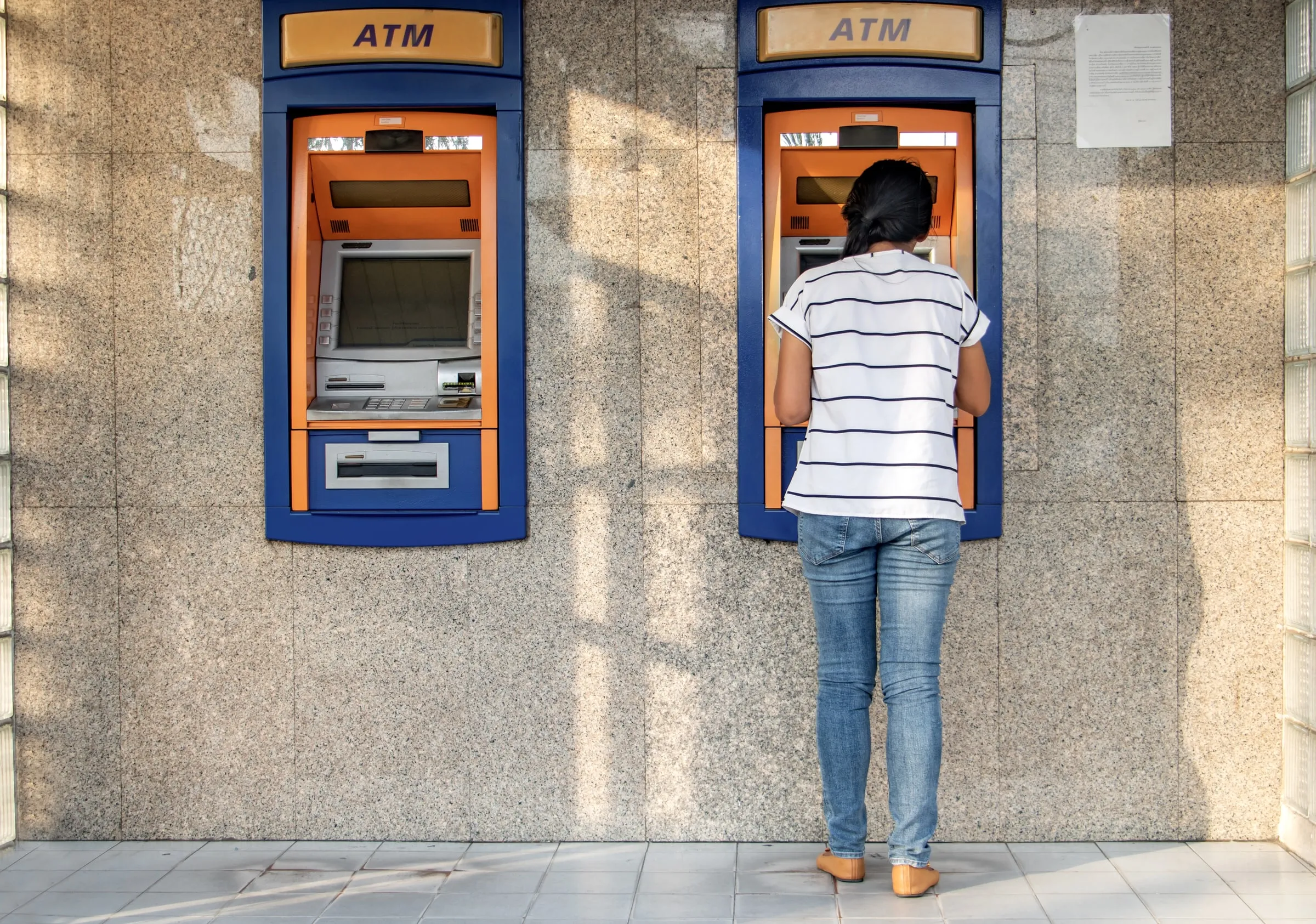
ATM vestibules operate outside teller hours
A walk-up or drive-through ATM serves customers before the branch opens, after it closes and on days it is not staffed at all, and a vestibule with no camera monitoring or periodic check is unwatched for more hours than the branch itself is open.
Cash pickups are a scheduled, known event
An armored transport pickup happens at a predictable time and location outside the branch, and coordinating a security presence with that window is a different task than general lobby coverage, one that depends on knowing the schedule in advance.
Opening and closing are the exposed hours
A branch’s busiest hours are also its most watched, with staff, customers and cameras all present at once. The minutes before the doors open and after they close are different: a smaller number of staff, a completed cash count, and fewer people around to notice if something goes wrong. Price Protection builds the post around covering exactly those minutes, with an officer present as staff arrive to begin the count and present again as the last person leaves after closing, rather than treating the branch’s exposure as evenly spread across the day.
The lobby during business hours
Most branch visits are entirely routine, which is part of why staff are rarely practiced at responding to the rare one that is not. A visible officer in the lobby changes two things: it is a deterrent simply by being present at the entrance and the teller line, and it gives staff a trained response available immediately if a customer dispute, a disturbance or something more serious happens at the counter. The post orders are written with the branch manager and follow the institution’s own escalation policy rather than an independent script.
ATM vestibules and cash pickups
A walk-up or drive-through ATM operates on its own schedule, serving customers before the branch opens, after it closes, and on days the lobby is not staffed at all, which means it is unwatched for more hours than the teller line ever is. Camera monitoring of the vestibule can extend past business hours where the branch wants it, with unusual activity flagged to management rather than sitting in footage no one reviews until asked. A scheduled cash pickup is handled as its own event: the officer observes the transport’s arrival and departure and logs the time, supporting the branch’s own procedure without stepping into the armored crew’s process.
Working with branch management
The daily report gives branch or regional management a record of opening and closing observations, lobby incidents and vestibule activity, distinct from the transaction and cash records the branch already keeps internally. Where an institution manages several branches, that same reporting format can be used across locations, giving a regional coordinator a consistent record to compare rather than a different account from each branch’s own staff.
Starting a post
To begin, dispatch needs the branch address, the hours coverage is wanted, whether an armed or unarmed post fits the institution’s policy, and the branch manager’s contact for opening and closing coordination. An unarmed officer can typically start within hours of a signed proposal, with post orders confirmed against the branch’s own security policy before the first shift.
How we cover it
Every service, applied to this post.
- Unarmed security guards
An unarmed officer in the lobby during business hours is a visible presence at the entrance and the teller line, watching for a disturbance or a person behaving unusually before it reaches the counter, and available to assist staff who flag a concern.
- Armed security guards
Where the branch or the institution's policy calls for an armed presence, a commissioned officer works the lobby or entrance under post orders that keep observe, report and deter as the default response, positioned as the branch prefers.
- Camera monitoring
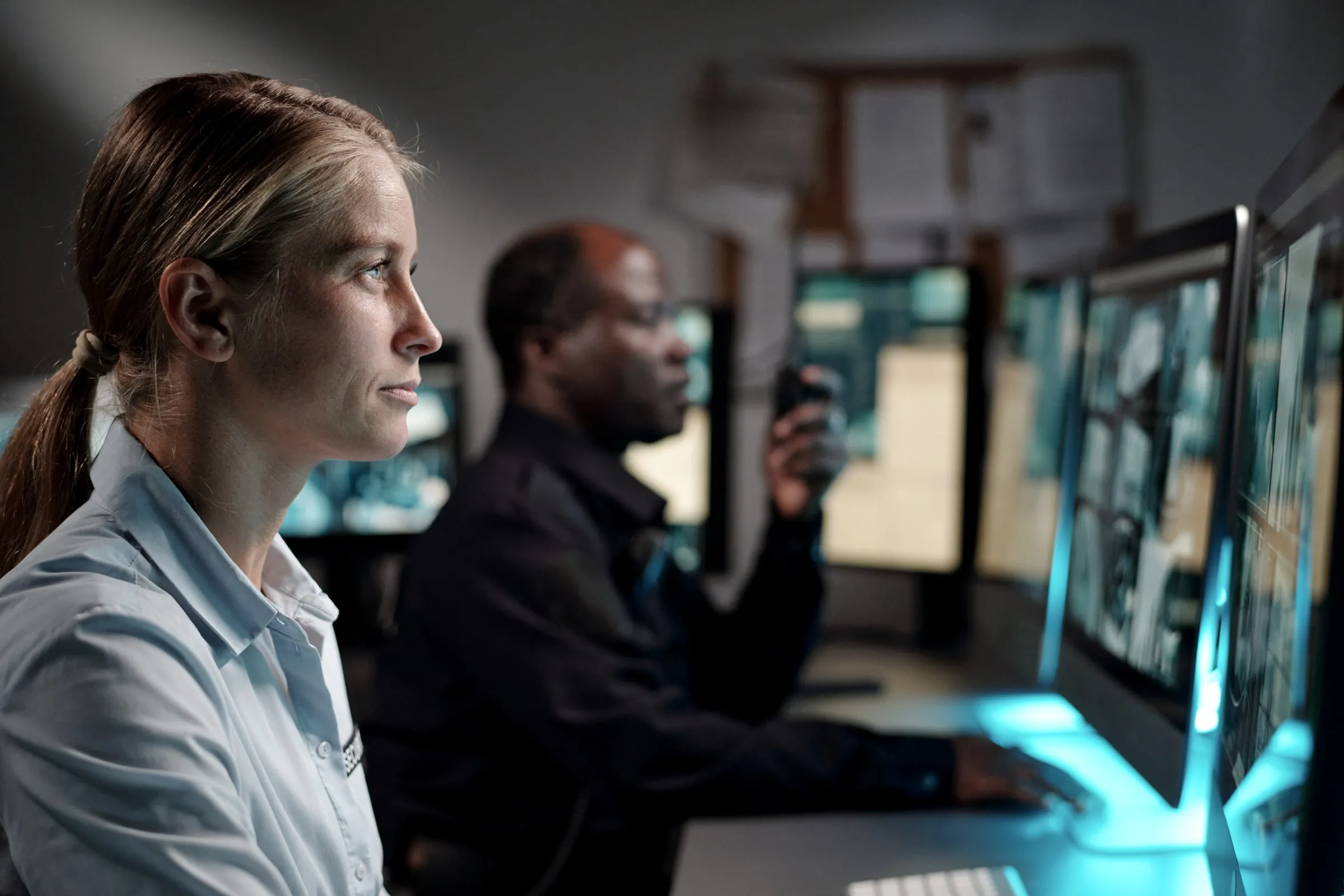
The officer monitors the branch's own lobby and ATM vestibule cameras during the post and can flag unusual ATM vestibule activity outside teller hours to branch management rather than leaving that footage unreviewed until requested.
- Access control
Opening and closing procedures often call for a second person present as staff enter or leave with keys and cash counts; the officer can fill that role under the branch's own dual-control procedure rather than a manager relying on a coworker alone.
- Incident reporting
The daily report covers lobby activity, any incident at the teller line or the ATM vestibule, opening and closing observations, and cash pickup coordination, delivered to branch or regional management.
A typical post
What a shift looks like here.
The opening officer arrives ahead of staff, checks the exterior and the ATM vestibule for anything unusual overnight, and is present as the branch manager and teller staff enter and begin the count, since this window has the fewest people on site and the least room for error to go unnoticed.
During business hours the officer works the lobby, present at the entrance and visible from the teller line, watching the ATM vestibule traffic on the branch's own cameras between customer interactions and stepping in calmly if a customer dispute at the counter starts to escalate.
A scheduled cash pickup is treated as its own event within the shift: the officer is positioned to observe the transport arrival and departure without interfering with the armored crew's own procedure, and the pickup is logged in the report with its time.
Closing follows the same logic as opening in reverse: the officer stays through the final count and the last staff member leaving, checks that the vault and exterior doors are secured, and the report closes the day with anything the branch manager needs to know before the next morning.
Reporting
What the daily report covers here
Every client receives a written report each day, and officer performance is reviewed and documented daily. This is what the report records on this kind of post.
- Opening and closing observed, with staff arrival and departure times
- Lobby incidents or disputes, with the outcome
- ATM vestibule activity outside teller hours, from camera review
- Cash pickup coordination, with the transport arrival and departure time
- Suspicious activity at the entrance or in the parking area
- Camera or alarm system issues found and reported to branch management
Armed or unarmed for a bank branch?
Most branches start with an unarmed officer whose role is visible presence, deterrence and calm response, while some institutions specify an armed post as part of their own security policy. The company staffs to whichever the branch or the institution decides.
Can an officer be present specifically for opening and closing?
Yes. Some branches only need coverage for the highest-exposure minutes around opening and closing rather than a full lobby post through the day, and the proposal is priced to whichever hours the branch chooses to cover.
Do you coordinate directly with the armored transport crew?
The officer observes the scheduled pickup and is positioned to support the branch's own procedure, but does not direct or interfere with the transport crew's process, which follows its own protocol independent of the branch's security post.
How do you handle a customer dispute that is escalating?
The officer approaches calmly, separates the parties if needed, and asks the disruptive party to step aside or leave rather than raising the tension further. Police are called if the person will not de-escalate or leave when asked.
Can you monitor the ATM vestibule during hours the branch is closed?
Camera monitoring of the vestibule can extend to hours the lobby is closed where the branch wants that coverage, and unusual activity found on review is flagged to branch management rather than left in unreviewed footage.
Related pages
Industries we serve
Service areas
Insights
Answers
Glossary
Request a proposal
Request a proposal for banks and credit unions.
Two short steps. Dispatch reviews every request and calls you back about coverage. For urgent unarmed coverage we can typically staff most sites within hours.
24-hour dispatch
(281) 326-9189