
Fire watch and compliance
Fire Watch for Hospitals and Healthcare Facilities
By Price Protection SecurityReviewed TX DPS Lic #B09430601
Short answer
A hospital fire watch is staffed around the reality that most patients cannot be quickly moved: the officer walks the specific smoke compartment or zone the impairment affects, on the interval the fire marshal or the facility's own life safety plan sets, and reports to both facilities engineering and the nursing supervisor on that unit. Watches often run for the full length of the impairment because a hospital never closes, in shifts with a handover recorded at every change.
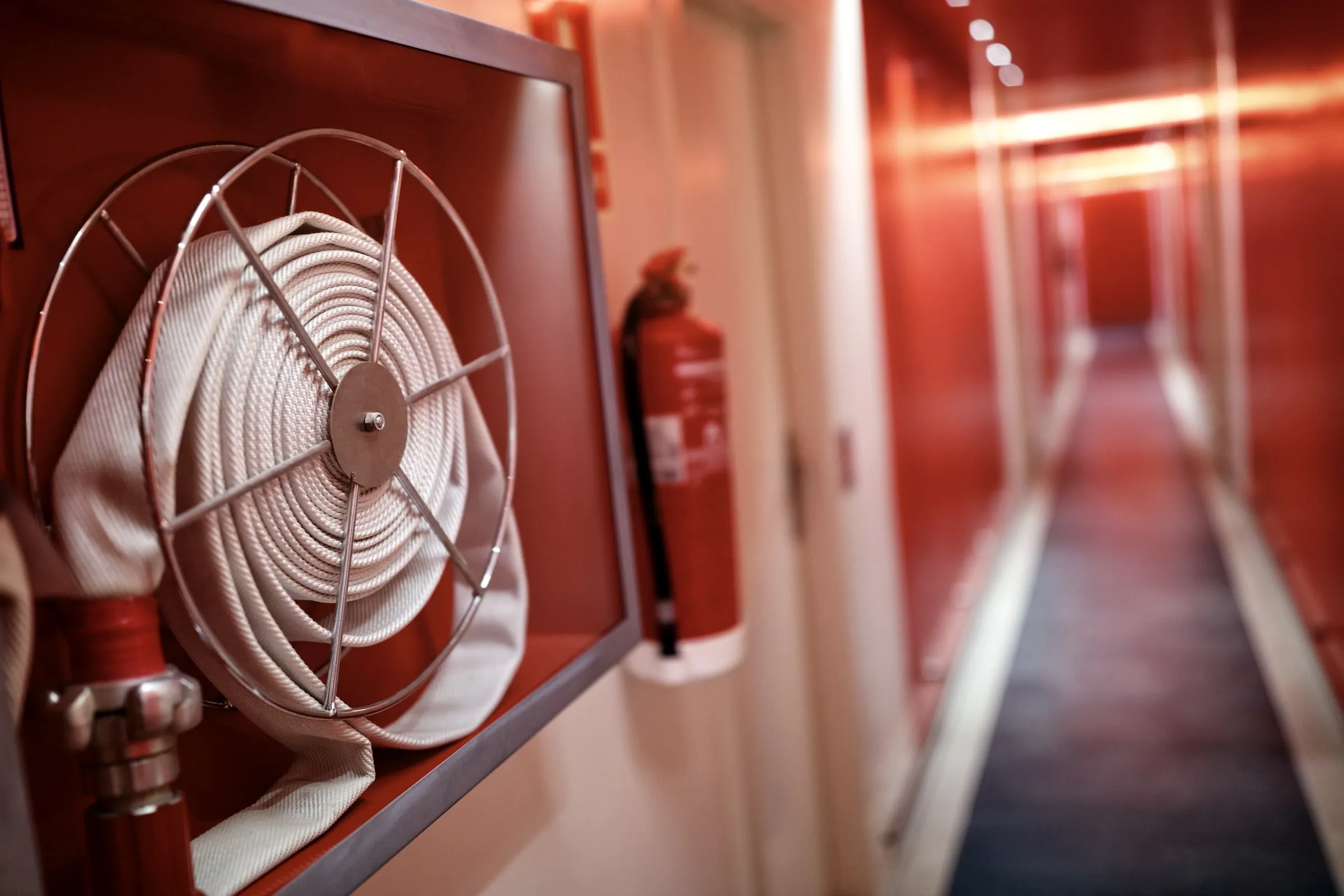
A hospital cannot answer a fire protection outage the way an office building does: turn everyone out to the parking lot and wait for the contractor. A patient on a ventilator, a person two hours out of surgery or an infant in a bassinet cannot be marched down a stairwell on short notice, and the building’s own life safety planning is built around moving people the shortest distance to safety within the building rather than out of it. A fire watch on a hospital or clinic has to fit that reality, and it changes almost every practical detail of how the watch is staffed and run.
The watch follows the zone, not the floor
Hospitals are built and operated in smoke compartments, sections separated by fire and smoke doors so that a fire or a lost system in one section does not require emptying the whole floor, let alone the building. When a sprinkler valve or an alarm zone goes out of service, the affected area is usually one or two of these compartments, not an entire wing, and the fire watch route is built to match: the corridors, patient rooms, nurses’ station, soiled utility and equipment rooms inside the affected compartment, and the doors that separate it from the rest of the floor. IFC 901.7, as Houston applies it, still requires notification to the fire department and the fire code official and, where the fire code official requires it, an approved watch until the system is restored; what changes in a hospital is how narrowly “the building” is interpreted for the purpose of the watch. This is a summary, not legal advice.
Two people to report to, not one
On most buildings, the fire watch officer answers to a single impairment coordinator. In a hospital, the officer usually has two: facilities or plant operations, who manages the mechanical side of the impairment and the vendor’s schedule, and the nursing supervisor or charge nurse on the affected unit, who knows the patient census and can tell the officer where the round would disturb care and where it will not. Before the first round, the officer walks the compartment with both, agrees on a route that keeps clear of active procedures, and confirms how the officer reaches each of them if something is found. Badge access, hand hygiene expectations and infection control zones are part of that walk-through, because a fire watch officer who cannot get through a locked door or does not know to sanitize before entering a unit is not actually covering it.
Restricted areas the officer does not enter
Operating rooms, sterile processing, isolation rooms and some behavioral health units are areas the fire watch officer typically does not enter directly. The round instead covers the corridor and doors around them, and the department’s own staff are briefed on what a fire or smoke condition would look like and who to call, with the officer’s number and the alarm method posted where staff will see it. This is not a gap in the watch; it is the same principle that shapes the whole hospital approach, moving the smallest number of people the shortest distance, applied to the fire watch’s own footprint.
| Area type | What the round typically covers | Notification if a fire is found |
|---|---|---|
| General patient floor | Corridors, nurses’ station, equipment and soiled utility rooms | Unit staff alerted directly, then the method in the post orders |
| ICU or surgical suite | Corridor and doors around the restricted area, not the suite itself | Charge nurse or circulating staff inside alerted first |
| Ancillary areas (labs, pharmacy, kitchen) | Full walk-through, similar to a commercial occupancy | Department staff and the post orders’ general alarm method |
| Administrative and public areas | Full walk-through on the standard interval | Standard post-orders alarm method |
Watches that run for days because the building never closes
A hospital does not have an off-season or a quiet week. An impairment that starts on a Tuesday afternoon can run through a weekend while parts are shipped, and the watch runs in shifts for the whole time, with a face-to-face handover at every change recorded in the log. The officer coming on duty walks the last round with the one going off, confirms nothing has changed in the compartment’s boundary, and continues on the same interval. A supervisor checks in with facilities during the watch, both to confirm the vendor’s timeline and to catch a boundary change early, since a hospital impairment can expand or shrink as the contractor works through the system.
Ending the watch without disrupting care
Restoration in a hospital usually means more than a valve reopening: the fire alarm or sprinkler contractor tests the system with facilities engineering, and the coordinator confirms it with whoever the hospital’s own life safety officer designates before the watch stands down. The log’s closing entry records that confirmation, and the completed log goes to facilities for the building’s file, since it may be reviewed during an accreditation survey as evidence the interim measures were followed for the length of the impairment. Nursing staff on the affected unit are told the watch has ended at the same time the posted notice, if one was used, comes down.
Behavioral health and locked units
A locked behavioral health unit adds a layer the rest of the hospital does not have: doors that stay locked for patient safety even during a fire watch, and a population that may react to an unfamiliar officer walking the corridor. The route on these units is usually escorted by unit staff rather than walked independently, and the alarm method is coordinated with the unit’s own emergency plan so that a knock or a horn does not itself become the incident. Facilities and the unit’s nursing leadership set these terms before the first round, and the officer follows them exactly rather than defaulting to the standard route used elsewhere in the building.
Clinics and outpatient facilities are simpler, but not casual
An outpatient clinic or urgent care center without overnight patients has an easier watch in one respect: the building empties at closing, and a watch that starts after hours can walk a full, unrestricted route without working around active patient care. But the trigger is the same as a hospital’s, an impaired sprinkler or alarm system under IFC 901.7, and the same notification and log requirements apply. Clinics that run a hot-work project, a renovated exam wing or a torch-applied roof, add the OSHA and NFPA 51B hot-work trigger on top of any impairment, and the two watches, if both are running, are logged separately even when the same officer covers both.
Starting a watch for a hospital or clinic
Call dispatch with the address, the system and the specific unit or department affected, and contacts for both facilities and the nursing supervisor on that unit. A supervisor drafts post orders that name the compartment boundary and the restricted areas before the officer arrives, and the officer is briefed on badge access and infection control expectations before the first round. The sprinkler impairment fire watch and 24-hour fire watch pages describe how a multi-day watch is staffed in shifts.
Questions
Related questions
Can hospital staff perform the watch instead of contracted officers?
Sometimes for a short daytime impairment on a low-acuity area, with the fire marshal's and the facility's agreement. Overnight, multi-day and ICU or surgical-area watches are usually contracted, because facilities staff have other duties and cannot be continuously present on one zone for days.
Does every floor need a watch, or only the zone that lost protection?
Only the zone the impairment actually affects, which is why hospitals build watches around smoke compartments rather than whole floors. A sectional valve closed for one wing does not require covering an unrelated department on the same level; the coordinator and the fire marshal define the boundary.
How does the watch cover an area we cannot enter, like an active OR?
The officer's round checks the corridor, the doors and the spaces immediately around a restricted suite rather than entering it, and staff inside the restricted area are briefed on what to watch for and who to call. The post orders set the boundary with the department's manager before the first round.
What happens if the impairment runs through a nursing shift change?
The fire watch's own handover, officer to officer with a signed log entry, runs independently of the unit's staffing changes. A new charge nurse coming on duty is briefed by facilities or by the outgoing charge nurse, and the watch officer continues without a break in the interval.
Related pages
Industries we serve
Insights
- Fire Watch for Hotels During Sprinkler Repairs
- How Fire Watch Rounds Work: Intervals, Routes and Checkpoints
- Impairment Coordinators: The Role Every Building Should Assign
- Fire Alarm Outages: When a Fire Watch Is Required
- Fire Extinguisher Checks During a Fire Watch
- Fire Watch After a Fire: Securing a Damaged Building
Answers
Request a proposal
Request a proposal for your property.
Two short steps. Dispatch reviews every request and calls you back about coverage. For urgent unarmed coverage we can typically staff most sites within hours.
24-hour dispatch
(281) 326-9189