
Fire watch
Sprinkler System Impairment Fire Watch
From the moment the control valve closes to the moment the contractor opens it again, an officer walks the floors the sprinklers no longer protect.
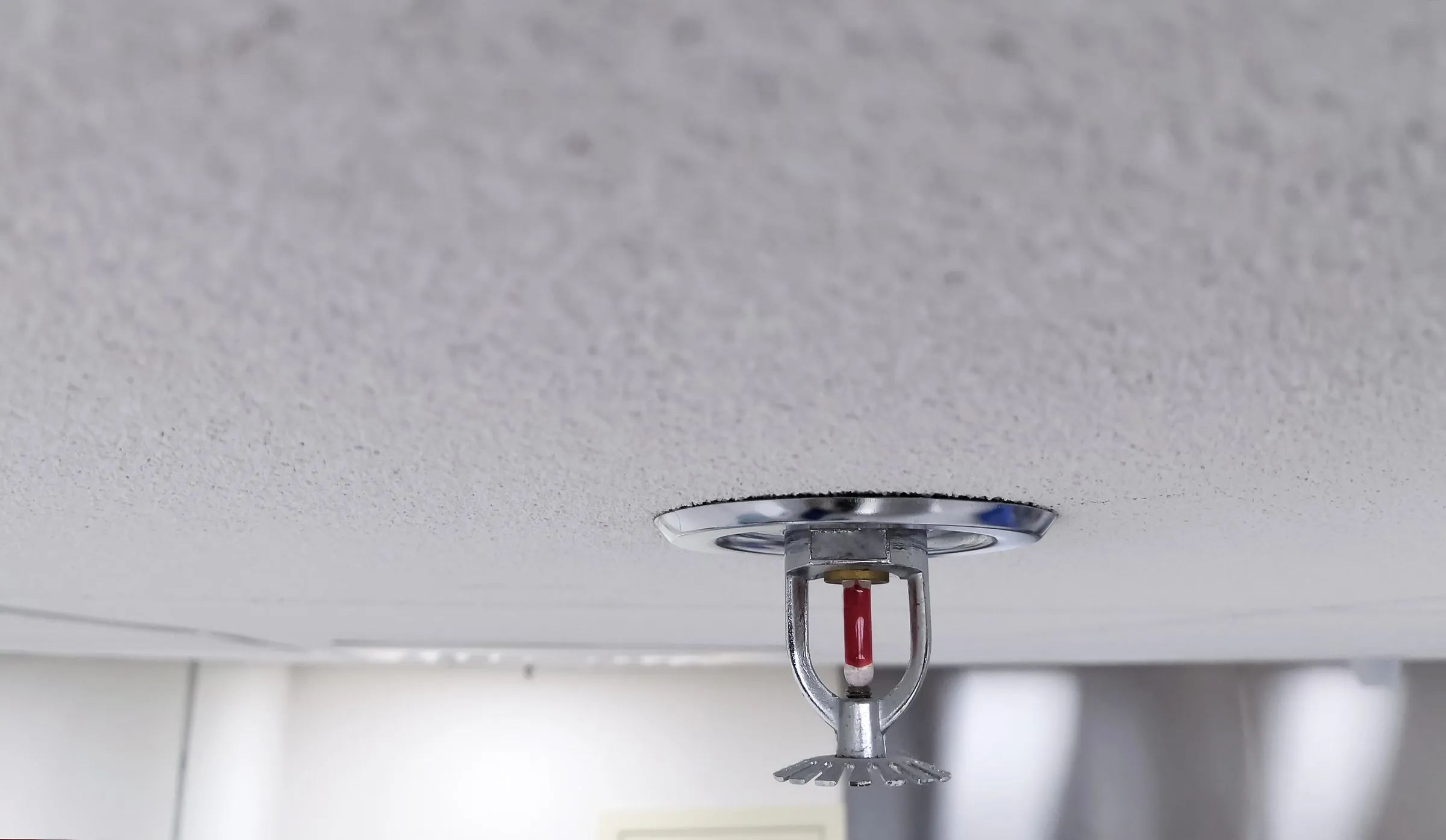
A sprinkler impairment fire watch is the trained presence a building keeps on its floors while a sprinkler system, or part of one, is out of service: an officer who walks the unprotected areas on a set interval, looks and smells for fire, keeps a log and raises the alarm by hand because the system that would have done it is shut off. Price Protection staffs these watches for hotels, apartment towers, warehouses, hospitals and offices across Greater Houston, from the closing of the valve until its reopening.
What sets the watch in motion
The impairment itself. The International Fire Code, in section 901.7, treats a sprinkler system that is out of service as a condition to be reported at once to the fire department and the fire code official, and it gives the official two choices: empty the building or accept an approved fire watch until the system is back. Houston applies that code with its own amendments, and the Houston Fire Marshal’s Office makes the call for a specific building. In practice the sequence is: the valve closes, the coordinator notifies, the Fire Marshal’s Office says what it wants, and we put an officer on the floor. Shutdowns that are booked in advance follow the same rule and are covered on the temporary fire watch page. This is a summary, not legal advice.
The rounds when the sprinklers are off
The route covers every space that lost coverage, which is rarely just the room with the leak. A closed sectional valve on the sixth floor of a hotel takes out the corridor, the guest rooms, the linen closet with the dryer lint and the electrical room on that floor. The officer walks all of it on the interval set by the Fire Marshal or the coordinator, checks that the impairment tag is still on the valve, that the extinguishers along the route are in their cabinets, that nothing has been stacked in front of an exit, and that no one has started hot work on the impaired floor. Each round ends with a line in the log. Between rounds the officer stays on the floor, not in the lobby.
Working with the impairment coordinator
The owner designates an impairment coordinator, and that person is the officer’s counterpart for the length of the watch. Before the first round the two walk the riser room and the affected floors together, agree on the interval, the alarm method, the escalation list and the point at which the watch ends. During the watch the coordinator gets a call for anything the officer cannot resolve on the floor: a propped fire door that keeps reopening, a contractor who has extended the shutdown, a resident cooking on a hot plate in a unit with no sprinklers. At the end, the coordinator confirms restoration and signs the last page.
Where Houston sprinkler impairments happen
Hotels near the Galleria and the Medical Center, where a corridor leak means a valve shut over occupied rooms. High-rise and mid-rise apartments downtown and in Midtown, where a single riser feeds many floors. Warehouses along the Beltway and near the Ship Channel, where a fire pump repair impairs the whole building at once. Hospitals and clinics, where evacuation is not a practical answer and the watch is the only one left. Each of these has a different route, and each is walked with the coordinator before the first round.
Restoring the system and closing the watch
The watch ends when the contractor opens the valve, the system is back on and the coordinator, and where required the Fire Marshal’s Office, confirm it. The officer records the time and the name of the person confirming, and leaves. The client receives the complete log with the daily report. If the repair runs into a second day, the watch simply continues, and dispatch schedules the relief so there is no gap on the floor. To start a watch, call dispatch with the valve, the floors and the coordinator’s number; an officer can usually be on site within hours.
When you need it
When sprinkler impairment fire watch is the right call.
A control valve is closed for repair
A head knocked off by a forklift, a corroded riser, a leaking fitting above a hotel corridor. The contractor shuts the valve to work on it, and from that moment the floors fed by that riser have no automatic protection until it reopens.
The fire pump or the water supply is down
A pump that fails its test, a city main break on the street, a backflow preventer waiting on a part. The heads are intact but nothing will reach them, which is an impairment of the whole system, not one zone.
The damage was not planned
A hard freeze splits a pipe in an unheated stairwell, a vehicle hits the riser at the loading dock, a crew cuts the wrong line during a build-out. Unplanned impairments start at the worst hour, and the watch has to start with them.
The Fire Marshal has chosen a watch over evacuation
Where a required system is out of service, the fire code official can order the building emptied or accept an approved fire watch until repairs are done. For a hotel, an apartment tower or a hospital wing, the watch is the option that keeps people in their beds.
Starting coverage
What dispatch needs to start.
- Which valve is closed, which floors or zones it feeds, and whether the fire alarm is still in service
- The impairment coordinator's name and number, and the contractor's estimate for restoration
- Whether the fire department and the Houston Fire Marshal's Office have been notified, and what interval they asked for
- How occupied the building is overnight, and how residents or guests are being told
- Keys, fobs or elevator access the officer needs to reach every affected floor and the riser room

What the code says
- IFC 901.7
- Under the International Fire Code's section on systems out of service, when a required fire protection system is impaired the fire department and the fire code official are notified immediately, and where the fire code official requires it the building is evacuated or an approved fire watch is kept until the system returns to service. The building owner designates an impairment coordinator to manage the process.
- Source: International Fire Code section 901.7, iccsafe.org
- City of Houston adoption
- Houston adopts the International Fire Code with local amendments, and the Houston Fire Marshal's Office is the authority having jurisdiction that decides whether a watch is required for a given impairment and on what terms.
- Source: City of Houston, houstontx.gov
Summaries for planning, not legal advice. The authority having jurisdiction, in Houston the Fire Marshal's Office, decides what applies to a specific building.
Does a partial shutdown, one floor or one zone, still need a watch?
Often, yes. The Fire Marshal's Office looks at what lost protection and who is above and below it. A single-zone impairment in a high-rise still leaves occupied floors without sprinklers, and the watch covers those floors. The decision is the fire code official's, and we staff whatever they require.
What does the officer do if the contractor finishes at two in the morning?
Stays until the coordinator confirms the valve is open, the system is back in service and the impairment tag has come off. The closing time goes in the log with the coordinator's name. If the Fire Marshal wants the watch held until an inspection, the officer holds it.
Do you need to know where the shut valves are?
Yes, and where the open ones are. The officer walks the riser room and the sectional valves with the coordinator before the first round so that, if a fire starts on a floor that still has coverage, nobody wastes time finding the right valve or closing the wrong one.
What happens to guests or residents during the watch?
They stay unless the fire code official orders otherwise. Telling them about the impairment is the owner's responsibility; our officers can hand out or post the notice the manager writes, answer questions on the rounds, and explain what to do if they see or smell smoke.
How many officers does a high-rise impairment take?
As many as it takes to walk every affected floor inside the interval the Fire Marshal sets. A supervisor times the route on the first round. If one officer cannot complete it in time, a second is added and the floors are split, and the log shows both routes.
Related pages
Industries we serve
Insights
Answers
Resources
Where we are
Sprinkler impairment fire watch across Greater Houston.
Every area below is staffed and supervised from our Sugar Land headquarters. Open an area to see the property types, neighborhoods and questions we hear there.
24-hour dispatch
(281) 326-9189Fort Bend County
Sugar Land and its neighbors, closest to our headquarters.
Houston
Neighborhoods and business districts inside the city.
North and west
Katy and Cypress up to The Woodlands and Conroe.
South and east
Pearland and Clear Lake across to Pasadena and Baytown.
Request a proposal
Request a proposal for sprinkler impairment fire watch.
Two short steps. Dispatch reviews every request and calls you back about coverage. For urgent unarmed coverage we can typically staff most sites within hours.
24-hour dispatch
(281) 326-9189