
Fire watch and compliance
IFC 901.7: What Happens When a Sprinkler System Is Out of Service
By Price Protection SecurityReviewed TX DPS Lic #B09430601
Short answer
Section 901.7 of the International Fire Code, which Houston and most Texas jurisdictions adopt with local amendments, sets the sequence for a sprinkler outage: notify the fire department and the fire code official immediately, designate an impairment coordinator, tag the impaired equipment, and, where the official requires it, evacuate the building or keep an approved fire watch until the system is restored and tested. The official decides what an approved watch looks like.
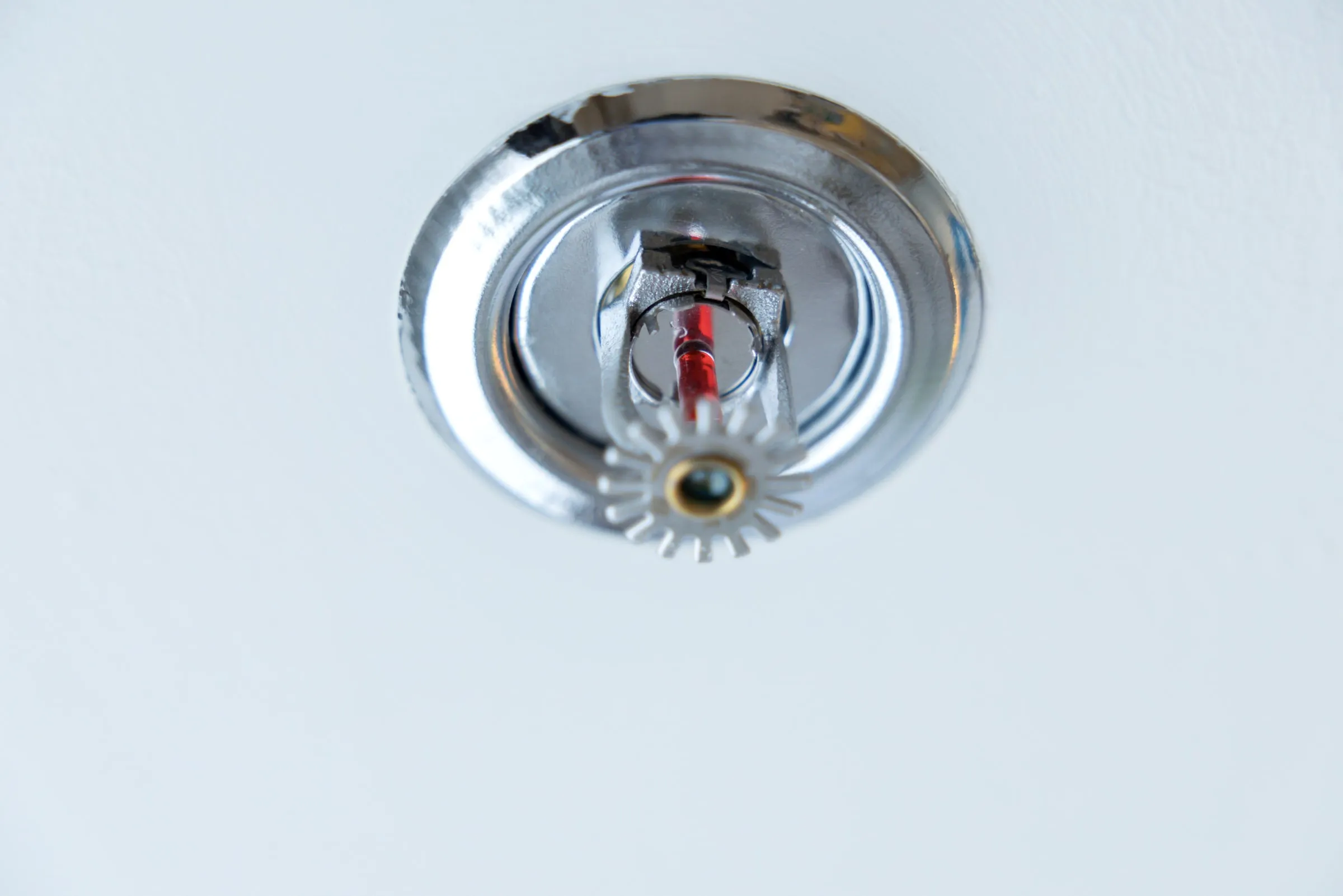
The section that governs every sprinkler outage
Section 901.7 of the International Fire Code, titled “Systems out of service,” is the provision that decides what happens the moment a required sprinkler system stops working, whether that is a burst pipe on a Sunday or a planned shutdown for a tenant build-out. It applies to sprinklers directly and, by the same logic, to a standpipe or a fire pump that serves the sprinkler system, since any of them being down leaves a building without the protection its occupancy permit assumes. Houston, like most Texas jurisdictions, adopts the International Fire Code with local amendments, and the Houston Fire Marshal’s Office administers it as the authority having jurisdiction, deciding case by case what a specific building must do.
The four things the section requires
Immediate notification. The fire department and the fire code official are told as soon as the impairment is known, not after the cause is diagnosed or a repair estimate is in hand. In Houston that notification goes to the Fire Marshal’s Office.
An impairment coordinator. The building owner designates a specific person responsible for managing the outage from start to finish: making the notifications, tagging the equipment, arranging the fire watch if one is required, and confirming restoration. Many properties name this role in advance rather than scrambling to assign it during an actual outage, since the code expects the coordinator’s name to be available immediately.
Tagged equipment. The impaired valve, riser or pump is physically tagged so nobody assumes it is working and nobody restores it without the coordinator’s knowledge. The tag typically names the coordinator, the date and the reason.
Evacuation or an approved fire watch. This is the decision that falls to the fire code official, not to the building. Where the official requires it, the building is either emptied for the duration of the outage or kept occupied under a fire watch that meets the official’s terms: who performs it, how often the affected areas are walked, how the alarm is raised if a fire is found, and how it is logged.
| Step | What it involves | Who is responsible |
|---|---|---|
| Notify | Fire department and fire code official, immediately | The building owner or their coordinator |
| Designate | Name an impairment coordinator | The building owner |
| Tag | Mark the impaired equipment | The coordinator or the contractor |
| Decide | Evacuate or approve a fire watch | The fire code official |
Why an occupied building usually chooses the fire watch
Evacuating a leasing office, a hotel, a hospital wing or an apartment building for the length of a sprinkler repair is rarely practical, and it is not what most fire code officials require for a bounded, monitored outage. An approved fire watch lets the building keep functioning: residents stay in their units, guests keep their rooms, patients are not moved, while a trained person walks the areas the sprinklers would have protected, on the interval the official sets, watching for exactly the kind of early-stage fire the sprinklers exist to control. The watch is, in effect, a manual substitute for the automatic one, for as long as the automatic one is down.
How long the section’s requirements apply
Until the system is restored, and restoration means tested and confirmed working, not simply reconnected. A contractor closing a valve for two hours to replace a section of pipe creates a two-hour impairment; a system waiting on a specialized part can run for days or longer. The requirements in 901.7, the notification, the coordinator, the tag and the watch, apply for the full length regardless of how long that turns out to be, and the coordinator is the one who tells everyone, including the fire watch officers, when the outage is finally over.
What the section leaves to the fire code official
IFC 901.7 sets the sequence, notify, name a coordinator, tag the equipment, evacuate or watch, but it does not fix a single interval, alarm method or log format that applies to every building. Those specifics are left to the fire code official reviewing the particular property, which is why two buildings with a similar outage can end up with somewhat different watch terms: a small office suite with a simple layout might get a straightforward hourly round, while a large mixed-use building with several occupancy types might get a more detailed plan covering different areas on different intervals. Property owners sometimes expect a fixed, published standard the way OSHA’s 35-foot rule works for hot work, and are surprised to learn that 901.7 instead routes the decision through a local official who knows the specific building. Calling the fire code official early, rather than assuming a generic answer, is usually what shortens the time between an outage starting and a watch being approved.
When more than one system is impaired at once
A single event, a fire, a hurricane, a major construction accident, can take out sprinklers and the fire alarm together, and 901.7 applies to each system independently even when they fail for the same reason. The coordinator manages both impairments under one incident but keeps them separately documented, since restoration of one system does not restore the other, and a fire code official may set different terms for the fire watch depending on which protection is actually missing at a given point in the repair timeline. Buildings recovering from storm or fire damage often see this in practice: the sprinkler contractor finishes first, the alarm technician finishes later, and the watch narrows in scope rather than ending all at once.
What happens at restoration
The contractor tests the repaired system, typically with the sprinkler contractor and sometimes the fire marshal’s inspector present, and once it passes, the coordinator notifies the fire department and the fire code official that the system is back in service, removes the tags, and closes out the fire watch. The log from the watch, along with the restoration test records, becomes part of the building’s own documentation, useful if an insurer or an inspector asks about the outage later. This is a summary, not legal advice. The fire code official for a specific building has the final word on what that building’s impairment must look like.
Questions
Related questions
Does a sectional valve closed for a small repair count as an impairment?
Yes. IFC 901.7 does not distinguish between a whole-building shutdown and a single zone taken offline for a repair or a tenant build-out. Any part of a required system that is out of service is an impairment, and the notification and tagging steps apply to it the same way.
Who actually calls the fire department when a sprinkler system goes down?
Whoever discovers the outage first, in practice usually the building engineer, the monitoring company or the contractor doing the work, though the responsibility belongs to the building owner. Waiting to confirm the cause before calling is a common mistake; the notification is immediate, and details can follow.
Can a building keep operating normally while the fire watch is in place?
Within the terms the fire code official sets, yes. A fire watch is precisely the mechanism that lets an occupied building stay open during an impairment instead of being evacuated, provided the watch covers the areas the system would have protected and is kept continuous for the whole outage.
Related pages
Insights
- Impairment Coordinators: The Role Every Building Should Assign
- Planned Impairments: Scheduling Fire Watch Around System Testing
- Fire Alarm Outages: When a Fire Watch Is Required
- Fire Extinguisher Checks During a Fire Watch
- Fire Watch After a Fire: Securing a Damaged Building
- Fire Watch Costs: The Factors That Set the Price
Answers
Resources
Request a proposal
Request a proposal for your property.
Two short steps. Dispatch reviews every request and calls you back about coverage. For urgent unarmed coverage we can typically staff most sites within hours.
24-hour dispatch
(281) 326-9189