
Security Guards for Malls
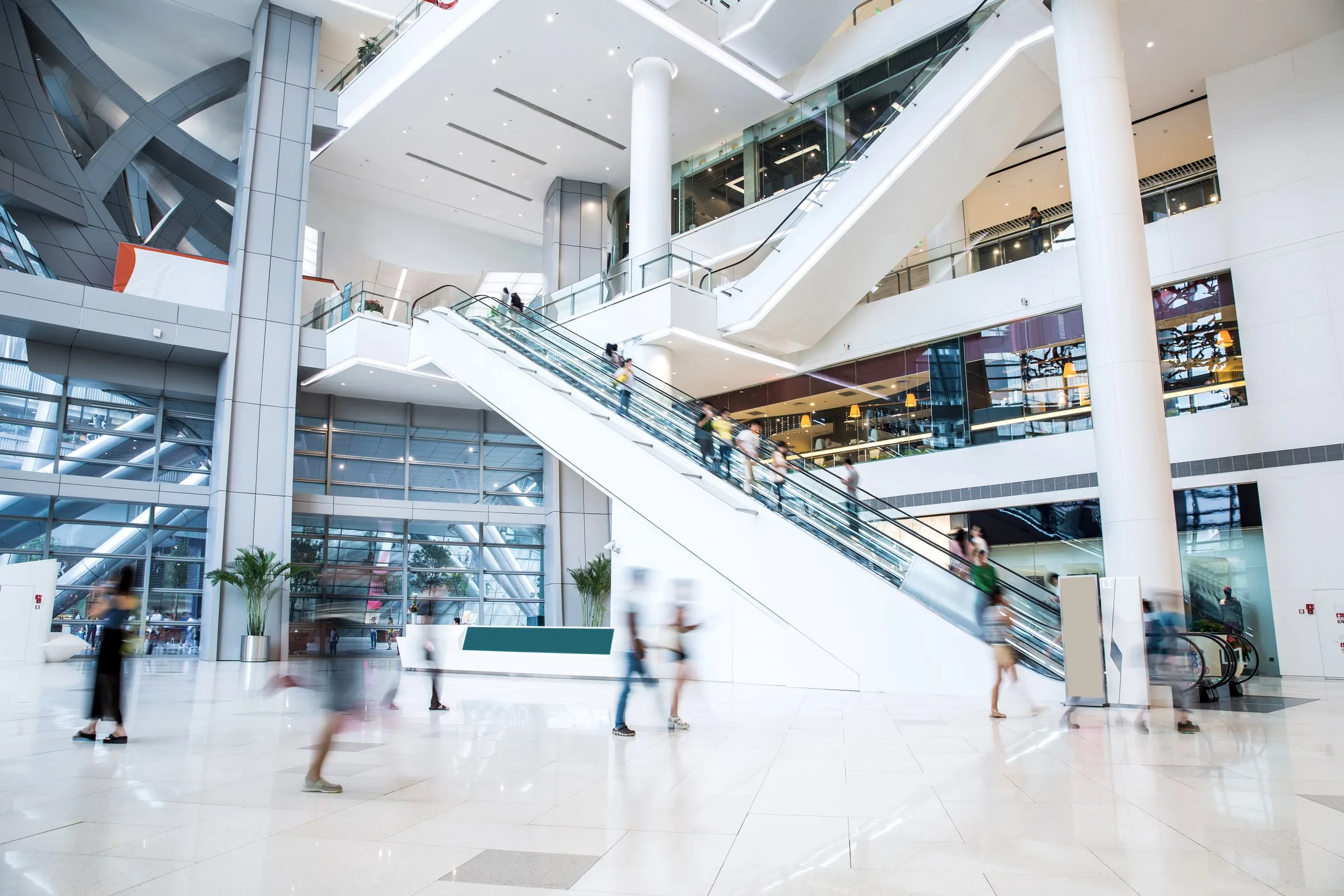
A team, not a single post: a dispatch desk, foot officers on the concourse and a vehicle in the garage, all writing to the same report.
Request a proposalThe situation
What mall operations teams deal with
Juveniles and the code of conduct
Weekend afternoons bring groups of teenagers with nowhere else to gather, and the mall's code of conduct on group size, hoods and unaccompanied minors after a set hour only works if someone applies it politely, consistently and in writing every single time.
Many doors, one perimeter
An enclosed mall has anchor entrances, concourse doors, food court doors, service corridors and a garage, and each is a route in for a grab-and-run crew and a route out for a lost child. The officer count and the round plan decide which doors are watched at which hours.
Tenant theft is the tenant's, the concourse is yours
A department store has its own loss prevention team; the kiosk operator and the small in-line tenant do not. When a theft spills into the concourse, the mall's officers are the response, and the line between tenant policy and mall policy has to be settled before it is tested.
Medical calls, lost children and falls
The most common radio calls on a mall shift are not crimes. A shopper collapses in the food court, a child is separated from a parent at the carousel, a spill on the terrazzo becomes a fall, and every one of them needs a trained response and an incident report the mall's insurer will later read.
A mall is a small town with a security office
An enclosed mall runs more like a municipality than a store: a management office, a dispatch desk, a fleet of radios, a public with a right to walk the concourse and a code of conduct that stands in for the law inside the doors. Price Protection sets a mall post up as a team under one set of post orders: a desk officer on the cameras and the radio, foot officers on the concourse and a vehicle in the garage, each with a defined territory and a shared report. Houston’s malls sit in Uptown, along the Katy Freeway, in Sugar Land, Humble and Clear Lake, and each has its own mix of anchors, entertainment tenants and outdoor dining that shapes the post.
Doors, hours and the garage
The post orders start with a door schedule. Every public entrance, service corridor and dock gate is listed with the hour it opens and locks, and the officer count per shift is built from that list rather than from square footage alone. The garage is treated as its own post: it is where vehicle break-ins happen, where a shopper walking to a car at closing needs to see a marked vehicle, and where the ring road and the dock bring trucks in after hours. The vehicle officer also covers the surface lots, the bus stop and the outparcels, and reports lighting and gate faults to engineering.
Conduct, not enforcement
Most of what a mall officer does all day is conversation: directions, a lost phone, a group asked to keep to the code of conduct, a shopper who has had too much at the restaurant on the patio. Officers are chosen for malls because they can hold those conversations calmly, and the training in de-escalation is used more often than anything else on the belt. Where a situation needs enforcement, the officer calls police and holds the position; a mall officer has the powers of any private person and no more, and the post orders say so plainly.
Working with the tenants
Anchors bring their own loss prevention teams and their own rules, and the mall’s officers work beside them rather than over them. Kiosks and small in-line tenants have nobody, and for them the mall officer is the first call. The post orders record what the mall does when a tenant reports a theft, a threatening customer or a medical emergency inside the store, and the daily report tells the operations director what each tenant asked for and what was done. Restock nights, when service corridors fill with pallets and propped doors, get their own checklist.
Getting a mall post started
Dispatch needs the mall’s floor plan with entrances and service corridors, the trading hours and holiday calendar, the code of conduct and youth policy, the camera and radio systems in use, and the operations director who will approve the post orders. Coverage is planned from a walk-through with the current security team if there is one, and the transition happens on a date the mall sets, so a shift is never uncovered. Request a proposal and we will schedule the walk.
How we cover it
Every service, applied to this post.
- Unarmed security guards
Foot officers in uniform work the concourses, the food court and the entrances on overlapping rounds, applying the code of conduct and answering the wayfinding questions that make up most of the day. They are trained in customer service and de-escalation because the mall is a public place first.
- Vehicle patrol
A marked vehicle covers the garage levels, the surface lots, the ring road and the loading docks, where vehicle break-ins and after-hours dumping happen. The vehicle also carries an officer to the far anchor faster than the concourse does.
- Camera monitoring
A dispatch desk in the mall's security office watches the mall's own cameras, takes the radio traffic and the tenant calls, and steers foot officers toward what the cameras show. The desk keeps the log that becomes the daily report.
- Access control
Service corridors, the management office and the dock gates are controlled: contractors sign in, deliveries are logged after hours, and doors propped by tenants during restocks are closed and noted with the suite number.
- Incident reporting
Every radio call, code of conduct contact, medical response, lost child, trespass warning and garage incident is recorded with the time and the officer, and the daily report reaches the general manager and the operations director each morning.
A typical post
What a shift looks like here.
The day team opens with a walk of every entrance and service corridor before the doors unlock, checking that overnight contractors have left, dock gates are closed and no door has been left propped by an early tenant restock. The desk officer brings up the cameras and reads the overnight log.
Through the afternoon, foot officers rotate between the food court, the concourse ends and the anchor entrances while the vehicle works the garage. A group of teenagers at the fountain gets a calm conversation about the code of conduct; a child separated from a parent gets an officer at each exit until the desk confirms the reunion.
At closing the team walks tenants out, watches the last shoppers to their cars, sweeps the restrooms and the family lounge, and locks the concourse doors on the schedule. The overnight officer takes the desk, runs the garage and the ring road, and finishes the report before the day team returns.
Reporting
What the daily report covers here
Every client receives a written report each day, and officer performance is reviewed and documented daily. This is what the report records on this kind of post.
- Concourse, food court and entrance rounds by officer and time
- Code of conduct contacts, with the location and how each was resolved
- Medical responses, with the time EMS was called and the mall staff notified
- Lost children and reunions, with the exits covered
- Garage and surface lot rounds, vehicle break-ins found and plates logged
- Service corridor and dock checks, propped doors by suite
- Trespass warnings issued under the mall's policy
How many officers does a mall need per shift?
It depends on the square footage, the number of entrances, the hours and whether the garage is staffed separately. A workable pattern is a desk officer, two or more foot officers and a vehicle during trading hours, thinning to a desk and a vehicle overnight, with more on weekend afternoons and through the holidays. The walk-through settles the count.
Do your officers enforce a youth escort or curfew policy?
Yes, as the mall writes it. The post orders state the hours, the age line and the wording officers use, and every contact is logged. Officers ask, explain, and give the group the chance to comply; a refusal becomes a trespass warning under the mall's policy and, if needed, a call to police.
Can you take over an existing mall security office?
Yes. We staff the dispatch desk, the foot posts and the vehicle from the mall's existing security office, using the mall's cameras, radios and access system. Post orders are written from the mall's current procedures and the transition is planned around a walk-through with the operations director.
What happens when a tenant's loss prevention team detains someone?
Mall officers support as the post orders allow: they hold a position on the concourse, keep bystanders back, and call police when the tenant asks. The detention is the tenant's, under the shopkeeper's privilege and its own policy; our officers do not take custody of the person. This is a summary, not legal advice.
Are mall posts different during the holidays?
Extended hours, added foot officers on the concourse, a second vehicle in the garage on peak weekends and an earlier start for the desk. The holiday appendix to the post orders is written in October so the schedule is set before the first sale weekend.
Related pages
Industries we serve
Service areas
Insights
Answers
Glossary
Request a proposal
Request a proposal for malls.
Two short steps. Dispatch reviews every request and calls you back about coverage. For urgent unarmed coverage we can typically staff most sites within hours.
24-hour dispatch
(281) 326-9189