
Security Guards for Big-Box Stores
A footprint this large needs a route, not a stand: the lot, the returns counter, the outside garden or seasonal department, and every exit.
Request a proposalThe situation
What a big-box store deals with
The parking field is its own neighborhood
A big-box lot can hold hundreds of spaces, several outparcel restaurants and a fuel kiosk, all sharing one perimeter. A car break-in at the far end of the field is invisible from the entrance, and it is the customer's first impression of the store's safety.
Organized crews work in groups
A theft crew that targets big-box retail rarely sends one person. One member fills a cart while a second blocks a sightline and a third waits at a door with a vehicle running. The pattern is coordinated, and a single greeter at the front cannot see all three at once.
The return desk sees the other half of the risk
Fraudulent returns, receipt manipulation and merchandise brought in from outside the store cluster at the returns counter, usually near the front doors where the officer's position already puts an extra set of eyes.
Seasonal departments open and close with the calendar
A garden center, an outdoor lawn and patio section, or a holiday seasonal aisle adds square footage, its own exterior doors and its own gaps in coverage for part of the year, on top of the store the rest of the building already has to watch.
A parking field the size of a small development
Large-format retail is built around a lot, not just a store, and the lot is where a customer forms an opinion about safety before they reach the doors. Several hundred spaces, an outparcel restaurant row and sometimes a fuel kiosk share one perimeter with no natural boundary between them. A car broken into at the far end of the field is out of sight of the entrance and often out of sight of any camera the store owns. Price Protection builds the parking field into the post orders as its own zone, with a route timed to opening, closing and the hours the outparcels stay busiest.
Where organized theft shows up first
A theft crew working a big-box store rarely sends one person. The pattern is usually a group working different roles at once: someone filling a cart, someone positioned to block a clerk’s line of sight, someone waiting near an exit with a vehicle already running. It reads as ordinary shopping until the group moves toward the doors together. A single greeter cannot track three people in three aisles, which is why the officer’s position and the store’s own camera coverage work together rather than one replacing the other: the officer watches the doors and the lot, the cameras cover the aisles, and a pattern gets reported before it reaches the parking field.
The return desk carries its own risk
Large stores process a high volume of returns, and fraud tends to concentrate there: a receipt reused, merchandise brought in from another retailer, an item returned that was never purchased at all. The officer’s position near the front of the store puts an extra set of eyes on the returns line without turning the officer into part of the transaction. Decisions about a return stay with store staff; the officer’s job is presence and, where something looks off, a note to a manager the same shift.
Working with the store’s own team
Most stores this size already run their own loss prevention staff, in plainclothes, working the sales floor. The officer’s role does not compete with that work; it covers what plainclothes staff cannot be everywhere for at once, mainly the parking field, the entrance and the exterior doors on a seasonal department. The two report into the same file, so a pattern noticed by one shows up for the other.
Starting coverage
To set up a post at a big-box location, dispatch needs the store’s footprint including any seasonal or garden department, the size and layout of the parking field, whether the store runs its own loss prevention staff, and the hours of any outparcel that shares the lot. Coverage can typically start within hours for stores that need it right away, and the route is refined over the first weeks as the officer learns which corners of the lot and which aisles draw the most activity.
How we cover it
Every service, applied to this post.
- Unarmed security guards
A uniformed Level II officer holds a position near the entrance and the return desk, the two points that see the most customer contact and the most policy questions, and is the first visible presence a customer or a theft crew notices.
- Vehicle patrol
A marked vehicle covers the parking field on a rotation, checking the rows furthest from the entrance, the fuel kiosk if the site has one, and the outparcels that share the lot but not the store's own staff.
- Camera monitoring
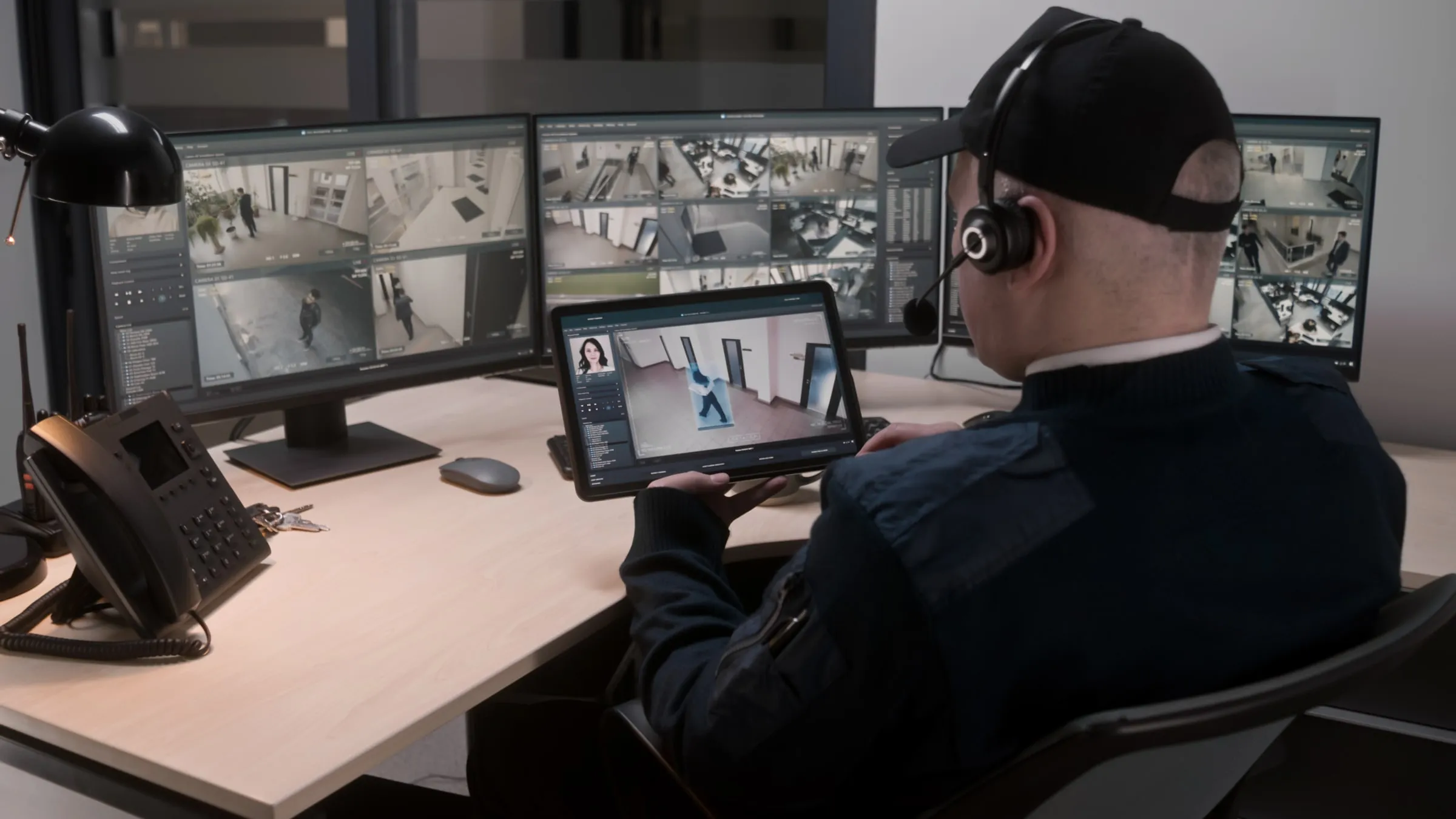
The officer works the store's camera wall alongside its own loss prevention staff where one exists, watching the exits and the departments with the highest per-square-foot value rather than trying to cover the whole floor at once.
- Access control
Garden center gates, lumber yard exits and any door that is not the main entrance get checked on the route and locked down outside their operating hours, closing off the gaps a large footprint creates.
- Incident reporting
The daily report lists lot incidents separately from sales-floor incidents, notes any crew activity by description and vehicle, and records return-desk referrals so the store's own loss prevention lead has a single document to work from.
A typical post
What a shift looks like here.
The shift opens with a full loop of the parking field while the lot is still quiet, noting overnight vehicles, lighting that is out and any damage from the night before. The officer is at the entrance when the doors unlock, since the first hour draws the customers who were waiting outside.
Through the day the officer splits time between the entrance and a rotation past the return desk, the electronics or high-value department and any seasonal section that is open. A theft crew is usually noticed first by pattern, not by a single act: the same three people circling different aisles, a cart left half-loaded near an exit.
Evenings bring the parking field back into focus as the outparcel restaurants stay open later than the store. The officer's last rounds check the garden center and any secondary doors before they are locked, and the report is finished before the last car leaves the lot.
Reporting
What the daily report covers here
Every client receives a written report each day, and officer performance is reviewed and documented daily. This is what the report records on this kind of post.
- Parking field rounds by section, with vehicles and lighting noted
- Return desk referrals and the outcome of each
- Crew or group activity observed, with descriptions and vehicles
- Seasonal or secondary doors checked and locked outside operating hours
- Camera flags reviewed with the store's own loss prevention staff
- Trespass warnings and move-alongs issued in the parking field
How does the officer handle a theft crew working in a group?
By pattern first: noting the group, the roles they appear to be playing and their vehicle, and alerting store management or loss prevention rather than approaching alone. Whether the officer detains anyone follows the store's own policy under the shopkeeper's privilege; many large retailers choose observe, report and let staff decide. This is a summary, not legal advice.
Do you patrol the whole parking field or just the entrance?
Both, on a rotation. A single fixed position at the doors misses the far rows of a large lot, so most big-box posts pair a front-of-store officer with a patrol vehicle covering the field, timed more heavily around opening, closing and shift changes at nearby outparcels.
Can the officer work alongside our own loss prevention team?
Yes, and most stores this size already have one. The officer's role is the uniformed, visible presence and the parking field; plainclothes loss prevention staff continue their own work inside, and the two share what each one sees through the daily report.
What happens at the return desk if you notice something off?
The officer flags it to a manager rather than intervening at the counter, since return policy and fraud decisions belong to the store. A pattern worth watching, such as the same receipt used more than once, goes in the report the same day.
Do seasonal departments need separate coverage?
They need their own line in the post orders. A garden center or an outdoor seasonal aisle adds exterior doors and its own hours, and the route is adjusted to include it for as long as it is open rather than treated as part of the main floor.
Related pages
Industries we serve
Service areas
Insights
Glossary
Request a proposal
Request a proposal for big-box stores.
Two short steps. Dispatch reviews every request and calls you back about coverage. For urgent unarmed coverage we can typically staff most sites within hours.
24-hour dispatch
(281) 326-9189