
Security Guards for Cell Phone Stores
A small floor holding a lot of value on tethered demo units gets one officer near the door, watching the whole store at once.
Request a proposalThe situation
What a cell phone store deals with
A small footprint, a high dollar count
A cell phone store rarely runs more than a few thousand square feet, but the demo units on the counter and the stock in the back room carry more value per square foot than most of the retail around it. The size of the store has nothing to do with the size of the risk.
Demo units are built to be handled, and taken
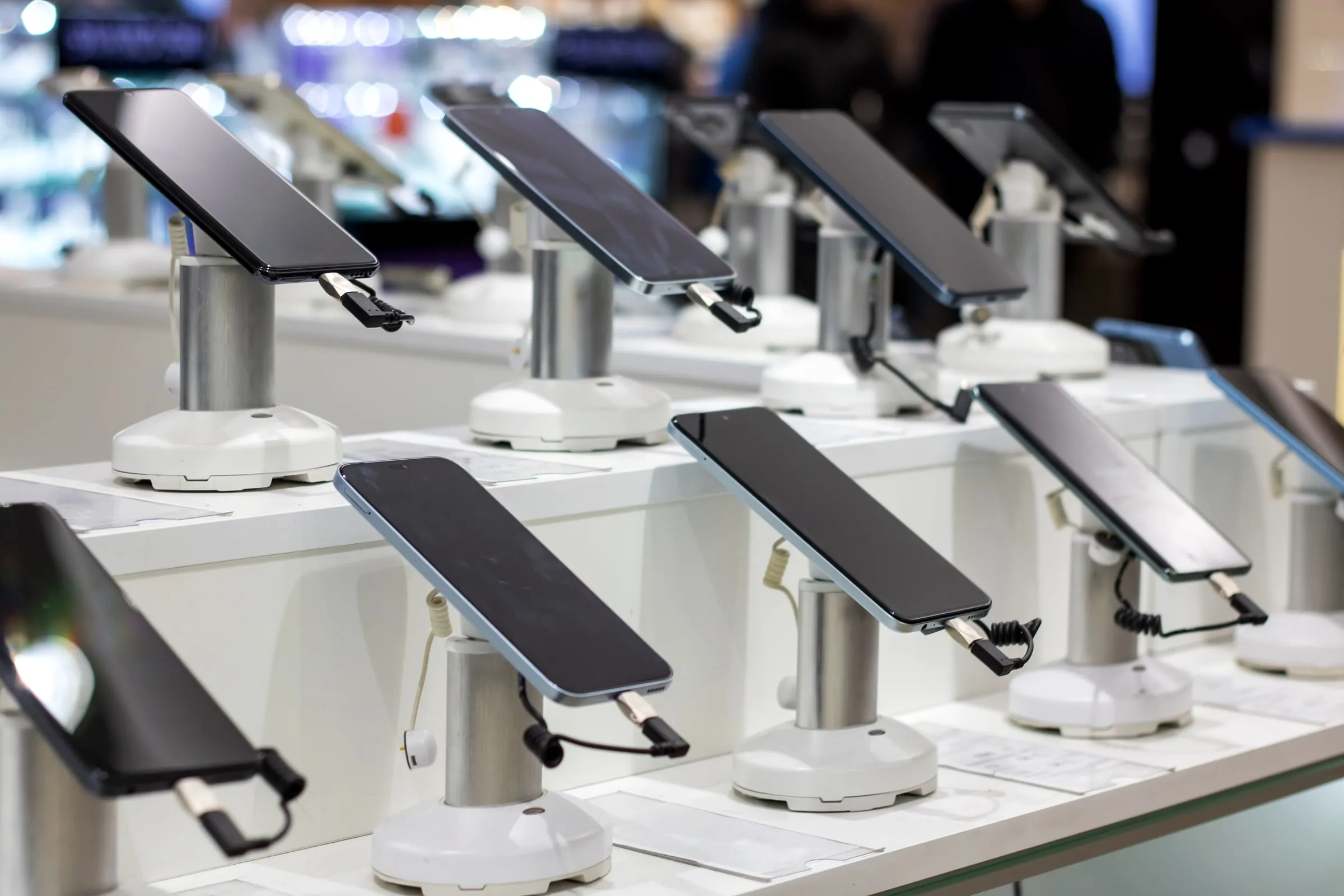
Every phone on the floor sits on a security tether or a locking stand so a customer can pick it up and try it. A tether slows a grab; it does not stop one, and a fast pull that snaps a cable and clears the door in seconds is the store's most common loss.
One or two employees run the whole floor
Many cell phone stores staff a single associate for long stretches, especially on weekday mornings or a mall kiosk's early shift. One person watching the counter, running transactions and helping a customer at the same time has no spare attention for the door.
Closing alone in a mall or a strip center
The last associate out is often carrying a cash drawer or a deposit to a car in a lot that has mostly emptied, whether the store sits in a mall corridor after other shops have gone dark or in a strip center with a shared, unlit lot.
A small floor holding an outsized value
A cell phone store rarely covers more square footage than a large living room, but what sits on the counter is worth more per square foot than most of the retail around it. The size of the space has nothing to do with the size of the risk, which is why a store this small still asks for a dedicated officer rather than assuming its footprint is easy to watch on its own. The counter, not the register or the storeroom, is where the officer’s attention stays.
Tethers slow a grab, they do not stop one
Every demo phone on the floor sits on a security stand with a coiled tether so a customer can pick it up, test the camera, feel the weight of it. That same design makes a fast grab-and-run simple: a hard pull snaps the cable, and the door is only a few steps away. An officer positioned near the counter with a sightline to the entrance changes the calculation before the pull happens, because the deterrent is a person, not a cable.
One employee, a full shift, no spare attention
Many cell phone stores run a single associate for long stretches, particularly the opening shift on a weekday or a kiosk’s slow morning hours. That associate is running transactions, answering questions and watching the floor at the same time, which in practice means the floor gets the least attention of the three. An officer at the door restores the coverage a second employee would otherwise provide, without adding a second employee to the payroll.
Closing alone in a quiet corridor
The last person out of a cell phone store is often carrying a cash drawer or a deposit bag to a car, sometimes through a mall corridor that has mostly gone dark once other stores have closed, sometimes across a strip center lot shared with businesses that closed hours earlier. It is a short walk that carries a disproportionate amount of the day’s risk, and it is the reason a closing walk-out is written into the post orders for stores that close alone.
Starting coverage
To set up a post at a cell phone store, dispatch needs the store’s hours, whether it is a standalone location or a mall kiosk, how many demo units are on the counter, and whether the closing shift runs with one employee or two. Coverage for a store that needs it right away can typically begin within hours, and post orders are refined over the first week or two as the officer learns which hours draw browsing and which draw buyers.
How we cover it
Every service, applied to this post.
- Unarmed security guards
A uniformed Level II officer holds a position near the entrance, in view of the demo counter, and is present for the hours a single associate would otherwise be working the floor alone.
- Camera monitoring
The officer uses the store's own camera coverage to watch the counter from an angle the associate cannot hold while helping a customer, and flags any tether tampering before a device is pulled.
- Access control
For stores with a back room holding boxed inventory, the officer checks that the storage door stays closed during business hours and logs any courier or activation-kit delivery against the store's schedule.
- Incident reporting
The daily report notes any tether or stand tampering, foot traffic that felt like casing rather than shopping, and the closing walk to the car when the post orders include one.
A typical post
What a shift looks like here.
The officer arrives ahead of the associate on shifts where the store opens with a single employee, walking the storefront and the immediate lot before unlocking, then holding a position near the demo counter once the doors are open.
Through the day the officer's attention stays on the counter rather than the register, since the highest-value moment in a cell phone store is a customer holding a device, not a customer paying for one. A group that splits up to handle several demo units at once gets a second look.
At close, the officer stays until the associate has counted the drawer, secured any boxed stock in the back, and locked the storefront, then walks the associate to a car if the lot is empty or the store sits in a mall corridor after other shops have gone dark.
Reporting
What the daily report covers here
Every client receives a written report each day, and officer performance is reviewed and documented daily. This is what the report records on this kind of post.
- Demo unit tampering or tether issues, by device
- Foot traffic patterns that looked like casing rather than shopping
- Courier and activation-kit deliveries logged
- Closing walk to the car, when the post orders include one
- Any group activity involving more than one person at once
What happens if someone grabs a demo phone and runs?
The tether is meant to slow that, not stop it, so the officer's role is to observe, get a description and a direction of travel, and notify police rather than chase into the mall corridor or the parking lot. Store policy sets whether staff pursue at all; most carriers instruct against it.
Can one officer really watch a whole store this size?
Yes, because the size of the floor is not the issue; the value sitting on the counter is. One officer positioned near the demo units, with a clear line to the door, covers a small store more completely than the same officer could cover a much larger one.
Do you cover mall kiosks as well as standalone stores?
Yes, though the post looks different: a kiosk post is timed to the mall's own hours and often pairs with a walk to the employee's car through the mall's common area after other stores have closed, coordinated with the mall's own security where one exists.
Is coverage different for a single-employee shift?
That is usually when a store first asks for coverage. A single associate has no one to watch the door while helping a customer, and an officer fills exactly that gap rather than adding a second layer where two employees already cover each other.
Can the officer help with an unruly customer over a warranty or repair dispute?
Yes. Disputes over a repair, a trade-in value or a warranty claim can get loud at a small counter with nowhere for other customers to step around it. The officer keeps the exchange calm and gives staff room to hold the store's policy without being crowded.
Related pages
Industries we serve
Service areas
Insights
Glossary
Request a proposal
Request a proposal for cell phone stores.
Two short steps. Dispatch reviews every request and calls you back about coverage. For urgent unarmed coverage we can typically staff most sites within hours.
24-hour dispatch
(281) 326-9189