
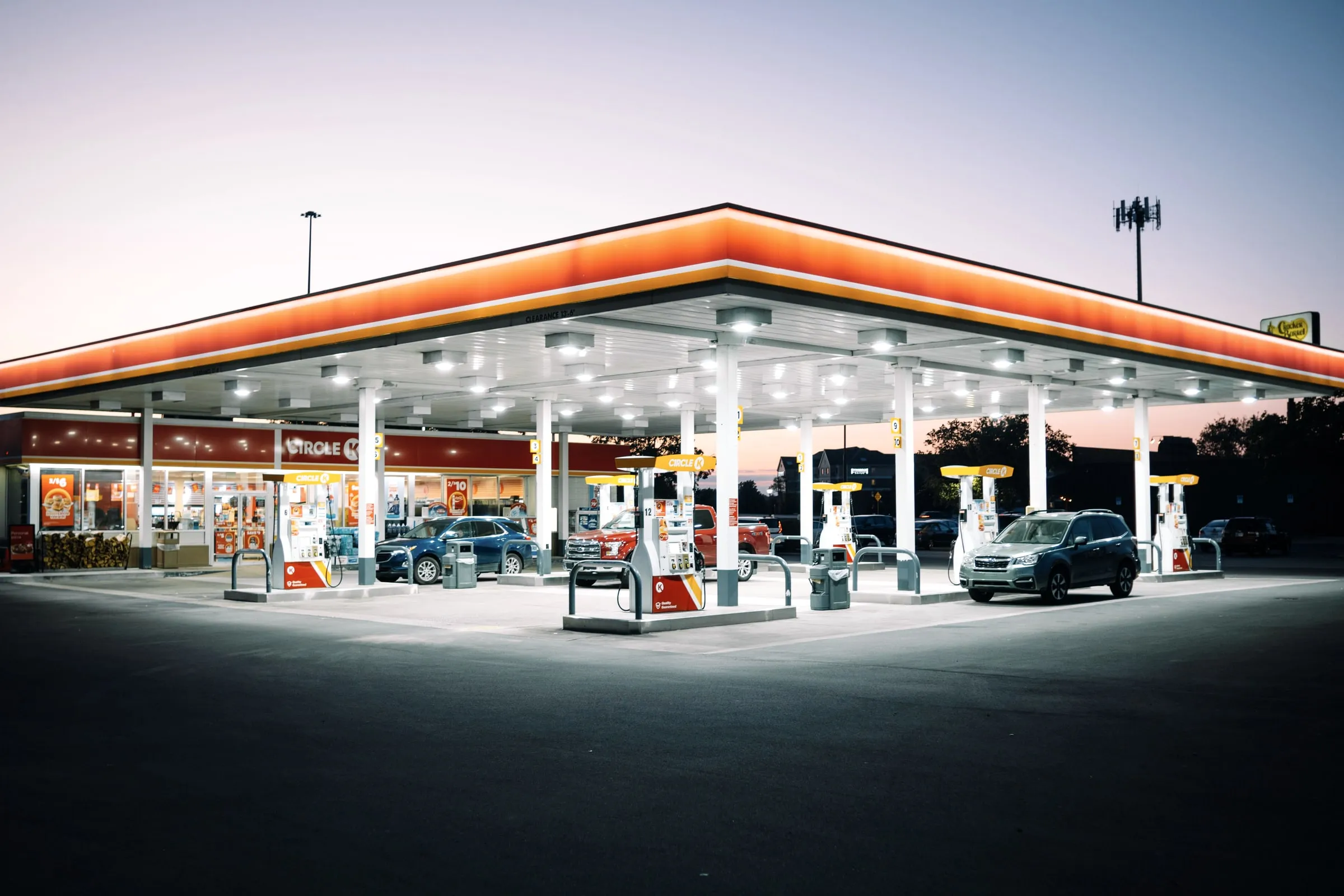
Security Guards for Convenience Stores and Gas Stations
A clerk alone at three in the morning is the exposure. We put an officer at the door with a view of the pumps, and log every round of the forecourt.
Request a proposalThe situation
What a store that never closes deals with
One clerk, one register, no back-up
Overnight most stores run a single clerk behind the counter. That person is the cashier, the stocker and the only witness, and cannot leave the register to deal with a group at the beer cooler or a person asleep against the ice merchandiser.
The forecourt belongs to everyone
Pumps, the air machine and the corner of the lot draw people who never come inside: panhandlers working the islands, cars parked for hours, and drivers who fuel and leave without paying. Almost none of it is visible from the register.
Robbery hours
The stretch between midnight and dawn, when the street is empty and the store is the only lit building for a mile, is when cash counters get hit. Lottery, cigarettes and the ATM inside make the store a target regardless of how little is in the drawer.
Loitering that becomes a fixture
A group that gathers by the door on Friday is back on Saturday, and by the following week customers are fueling somewhere else. Without a consistent response, a trespass problem becomes a reputation problem for the store and for the brand on the canopy.
The post is the door and the pumps together
A convenience store is two properties on one lot: a small sales floor where the money is, and a forecourt the size of a parking lot where anyone can pull in at any hour. The clerk sees the first and almost none of the second. We set the post so the officer covers both. Inside, the position is beside the door, facing the floor with the counter to one side and the glass to the other, so the officer sees a customer walk in and a car pull up to a pump in the same glance. Every round goes out through the door, across the islands, along the side of the building where the ice merchandiser and the propane cage sit, and back through the lot.
Post orders are written with the owner or the district manager before the first night. They name the store’s trespass policy and who is already barred, the hours the beer cave and the lottery counter close, what to do when a fuel tanker or a beer truck arrives, how the store wants drive-offs recorded, and who to call at the store and at the fuel brand after hours.
Overnight is a different job from daytime
Between six in the evening and midnight the officer’s work is crowd work: a full lot, a line at the register, teenagers at the fountain, people in and out of the restroom. The officer is at the door and on the floor, visible, and the value is in what does not happen. After midnight the store empties, the lot goes dark at the edges, and the risk becomes a single car and a single person. The officer spends more of each hour outside, keeps the clerk in sight from the forecourt, and pays attention to a vehicle that arrives without going to a pump. The post orders can set the armed or unarmed status by those hours: an unarmed officer in the evening and a commissioned officer overnight, if the store runs both.
Working with a brand and a district manager
Most Houston convenience stores carry a fuel brand’s name and the brand’s standards for the lot, and most are run by an operator with several locations and a district manager who is not on site at night. The daily report is written for that manager. It arrives with the overnight sales numbers and reads store by store, so a pattern at one location, such as the same car in the lot three nights running, shows up before it becomes an incident. Where the operator wants cameras watched, the officer watches the store’s own system from behind the counter and notes anything the recording should be pulled for.
What changes on a 24-hour corridor
Stores on the feeder roads of the Gulf Freeway, the North Freeway and the Southwest Freeway, and on the long commercial stretches of Bissonnet, Westheimer and FM 1960, never see the street go quiet. Trucks, shift workers and people leaving the bars keep the forecourt busy until dawn, which is good for sales and hard on a lone clerk. On those sites the post is usually armed overnight, the officer spends more time on the islands than at the door, and the marked patrol vehicle, where the operator uses one, is parked where the feeder traffic can see it.
Starting a store post
Dispatch needs the address, the hours the store is open and the hours the owner wants covered, whether the post should be armed, the trespass policy and the current barred list, and a contact who can walk the officer through the store the first night. For a store that has just had a robbery, an unarmed officer can typically be on site within hours and an armed officer follows as soon as the schedule allows. From there the post orders are adjusted through the first week as the officer learns the lot.
How we cover it
Every service, applied to this post.
- Armed security guards
For overnight posts at stores with a robbery history or a location on a 24-hour corridor, a Level III commissioned officer is the usual choice. The officer stands where the counter, the door and the pump islands are all in view, and calls police on any threat rather than acting past what the post orders allow.
- Unarmed security guards
Daytime and evening posts at busy stores run unarmed. The officer manages the door and the forecourt, moves loiterers on under the store's trespass policy, and gives the clerk a second set of eyes on the floor during rushes, restroom traffic and deliveries.
- Vehicle patrol
Operators with several stores along the same highway put one officer in a marked vehicle on a route between them, stopping at each forecourt through the night, checking the lot, the dumpster corral and the side of the building, and staying long enough to be seen from the road.
- Camera monitoring
Where the store has a monitor behind the counter or in the office, the officer uses it to watch the pump islands and the side lot from inside, and steps out when a camera shows a car idling at the edge of the lot or a person moving between the pumps without fueling.
- Incident reporting
The daily report tells the owner what happened at each store overnight: rounds of the forecourt, drive-offs with the plate where it was visible, trespass warnings, the tanker delivery, and any call to police. Operators with several stores get one report per store, in the same format.
A typical post
What a shift looks like here.
The officer arrives at ten, checks in with the clerk, reads the shift notes for anyone barred from the store that week, and walks the forecourt: pumps, air machine, the dark side by the dumpsters, the back door. The first round is logged before the late rush at the cooler.
Through the night the officer splits time between the door and the lot. A car that has sat at pump eight for an hour gets a knock on the window. A person asking customers for money at the islands gets a conversation and, if it continues, a trespass warning under the store's policy. The fuel tanker arrives at two, and the officer watches the lot while the driver is at the fill ports.
Before six the officer walks the lot once more for anything left behind, notes the restroom condition and any pump that was out of order, hands over to the morning clerk, and completes the report so the district manager has it with the overnight numbers.
Reporting
What the daily report covers here
Every client receives a written report each day, and officer performance is reviewed and documented daily. This is what the report records on this kind of post.
- Forecourt rounds with the time, including the pump islands, air station and dumpster corral
- Drive-offs observed, with the pump number, vehicle description and plate where legible
- Trespass warnings issued and people barred from the store under its policy
- Fuel and merchandise deliveries received, with the arrival time and the carrier
- Restroom, cooler and beer cave checks, and anyone found where they should not be
- Calls to police, with the time and the reason
Questions
About convenience stores and gas stations coverage.
Anything else? Call dispatch at (281) 326-9189.
Should the overnight guard at a gas station be armed?
Usually, for stores that stay open through the night on a busy corridor or that have had a robbery. A Level III commissioned officer is trained and licensed to carry, and the presence itself changes who walks in at three in the morning. Stores that close at midnight often run an unarmed evening post instead. We recommend after seeing the store and the hours.
Can the officer stop a customer who drives off without paying?
No. A drive-off is a police matter and the officer does not chase or block a vehicle. The officer records the pump number, the vehicle and the plate where visible, tells the clerk, and the store reports it. That record is what the police and the fuel brand ask for.
How does the guard deal with people asking for money at the pumps?
By the store's trespass policy in the post orders. The officer asks the person to leave the property, explains that the store does not allow solicitation, and issues a trespass warning if they return. Anyone who refuses to leave or becomes aggressive is a call to police. The exchange is kept short and civil.
Can one officer cover more than one of our stores?
Yes, as a vehicle patrol between stores that are close together, with a scheduled stop at each. That works for lots and forecourts. It does not replace an officer inside a store that has a robbery risk, where a fixed post through the night is the right call.
What does the clerk need to do differently when an officer is on post?
Very little. The clerk keeps working the register; the officer handles the door, the lot and any person who is a problem. The two talk at the start of the shift about who is barred and what happened the night before, and the officer leaves notes for the manager in the daily report.
Related pages
Industries we serve
Service areas
Insights
Glossary
Request a proposal
Request a proposal for convenience stores and gas stations.
Two short steps. Dispatch reviews every request and calls you back about coverage. For urgent unarmed coverage we can typically staff most sites within hours.
24-hour dispatch
(281) 326-9189