
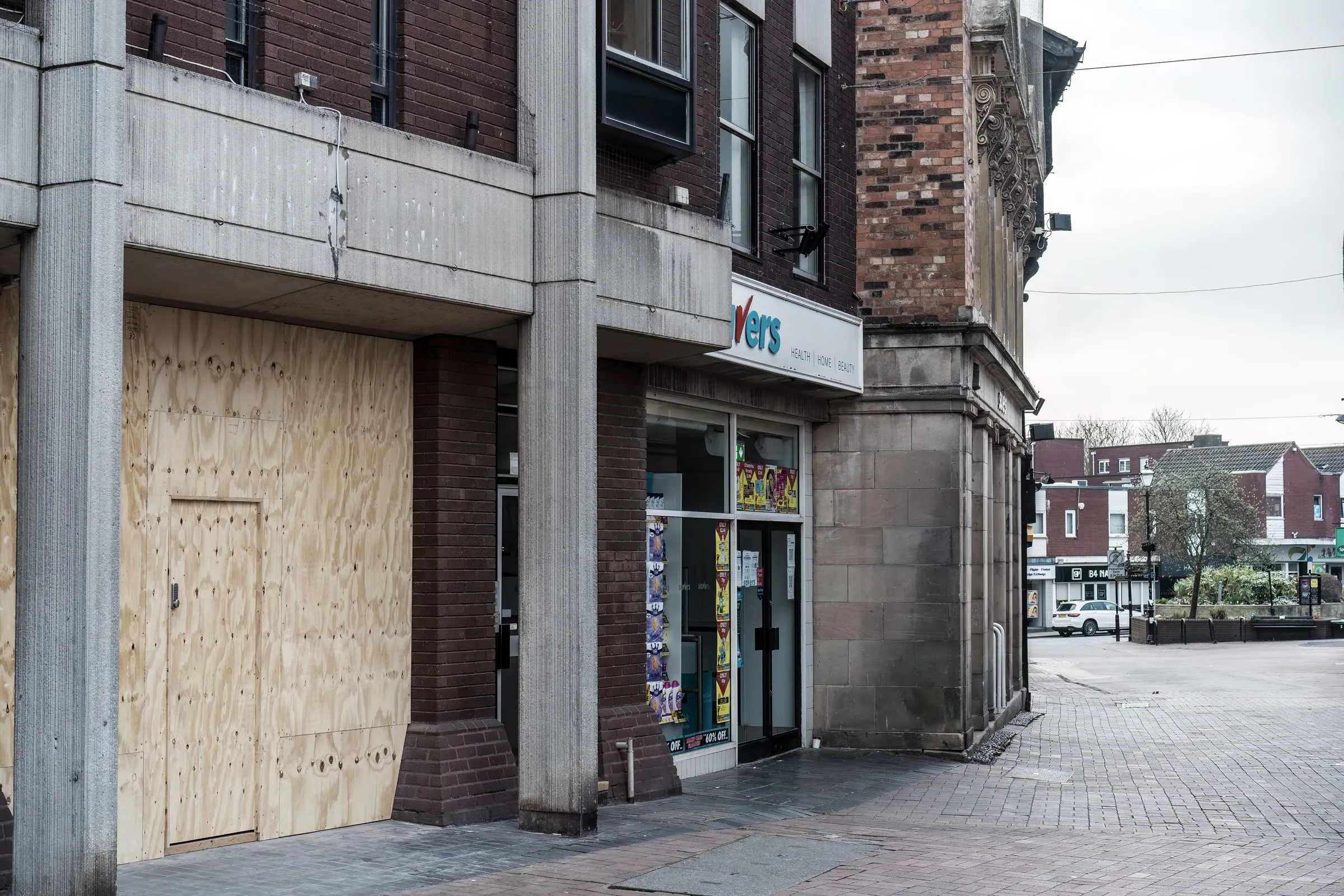
Security Guards for Vacant Buildings
A building with nobody in it, checked by someone who is, so the owner learns about the broken window from the report and not from the fire department.
Request a proposalThe situation
What a vacant building deals with
Scrappers
Copper wire, plumbing, HVAC units on the roof, the transformer in the yard. A vacant building is stripped from the inside out, and the damage done to get at a few hundred dollars of copper runs into the tens of thousands.
Squatters and fire
People who need shelter find a vacant building within days. Cooking fires, candles and heaters in a building with no working alarm or sprinklers are how vacant buildings burn, and the owner's liability does not end at the boarded door.
The insurer's conditions
Vacancy clauses in property policies limit or void coverage after a period unless the building is inspected, secured and, in many cases, watched. The insurer wants a record.
Nobody to notice
A broken window at the back, a door pried on a Saturday, water running from a burst pipe for a week. Without a check, the first person to notice is the neighbor, the fire department or the buyer's inspector.
A building nobody is in
A vacant building’s problem is that nobody is there to notice. The window at the back, the pried roll-up, the water running from a pipe that froze or was cut for the copper: each goes unseen until it is expensive. Price Protection’s vacant building coverage is a written schedule of checks by an officer who gets out of the vehicle at every opening, tests every lock and board, photographs what has changed and reports it that night, so the owner learns about the building from the report and not from the fire department or the buyer’s inspector.
The sheet
Every building gets a sheet: the openings, how each is secured, the roof access, the fence and the gaps, the yard and what is in it, the utilities and whether they are on, the fire system’s status, the owner’s list of people who may enter and the owner’s after-hours number. The sheet is the checklist for each check and it is updated as boards go up and locks change.
Scrappers, squatters and fire
Scrappers strip a building from the inside out and do far more damage than the copper is worth. Squatters move in within days and cook, heat and light with open flame in a building with no working alarm. The checks are frequent enough and irregular enough to find the first entry, and an officer on the property replaces the patrol where the building has been entered or the area is worked openly. Where the fire system is out of service and the fire code official or the insurer requires a watch, a fire watch is kept with rounds and a log.
Visitors and the insurer
Brokers, inspectors, contractors and buyers are admitted by the owner’s list, signed in and out and escorted where the owner requires. The report records each check with times, openings tested, conditions found and photographs, which is the record vacancy clauses and inspection conditions generally call for; owners forward it to the insurer’s file and the policy’s terms govern.
Starting checks
Dispatch needs the building’s address, its openings and how they are secured, the utilities and fire system status, the owner’s list and after-hours number, and the schedule wanted. The supervisor walks the building with the owner’s representative, writes the sheet and the post orders, and checks start on the agreed night. A building just broken into can have an officer on the property within hours.
How we cover it
Every service, applied to this post.
- Vehicle patrol
A marked vehicle checks the building on a written schedule, several times a night or as the owner chooses, with the officer on foot at every opening: doors, windows, roof hatches, the loading dock, the fence and the yard, each tested and logged with the time.
- Unarmed security guards
For buildings that have been entered or are in an area where a drive-by is not enough, an unarmed officer is posted on the property for the hours the owner chooses, walking the interior on rounds and holding the entrance.
- Access control
Contractors, brokers, inspectors and buyers are admitted by the owner's list, signed in and out and escorted where the owner requires, and every key and lock change is recorded.
- Fire watch
Where the building's fire alarm or sprinkler system is out of service and the fire code official requires it, or where the insurer requires it, a fire watch is kept with rounds and a log under IFC 901.7 as adopted locally.
- Incident reporting
A daily report to the owner, the asset manager or the receiver: each check with the time, openings tested, signs of entry, damage photographed, people contacted, utilities and water observed, and visitors admitted, in a form the insurer will accept.
A typical post
What a shift looks like here.
The patrol arrives after dark with the building's sheet: two doors boarded, one roll-up on a padlock, a roof hatch, a fence with a gap at the rear that was repaired last week. The officer walks the perimeter with a flashlight, pulls every padlock, checks the boards for pry marks and the fence gap for new wire, and photographs the roll-up where a fresh scratch shows a pry attempt.
On the second check a car is parked in the yard; the plate is logged and the driver, who says he is looking at the building for a client, has no name on the owner's list and is asked to leave. The rear fence is intact. Water is heard running inside; the officer reports it to the owner's after-hours line and the owner sends the plumber in the morning.
The last check before dawn finds everything as it was, and the report goes out: three checks with times, the pry marks with photographs, the car with the plate, the water. The asset manager forwards the report to the insurer's file.

Reporting
What the daily report covers here
Every client receives a written report each day, and officer performance is reviewed and documented daily. This is what the report records on this kind of post.
- Each check with the time and every opening tested
- Signs of entry or attempted entry, photographed
- Persons and vehicles on the property, with plates and the outcome
- Damage, water, utilities and hazards observed
- Visitors admitted by the owner's list, signed in and out
- Boards, locks, fences and lighting found failed and reported
- Fire watch rounds where a watch is in place
Patrol checks or an officer on site?
A patrol on a written schedule suits a building that is sealed and has not been entered. A building that has been entered, or one in an area where scrappers work openly, needs an officer on the property for the hours the problem runs. The walk-through decides and the report over the first weeks confirms it.
Will the report satisfy our insurer?
The report records each check with the time, the openings tested and the conditions found, with photographs, which is what vacancy clauses and inspection conditions generally ask for. Owners send the reports to the insurer's file; the policy's own terms govern.
What happens if the officer finds someone inside?
The officer does not enter, keeps the person in view where safe, calls the police and the owner's after-hours line, and logs it. Trespass notices are given as the owner's instructions allow. Officers do not remove people by force.
Can you secure openings?
The officer reports failed boards, locks and fences the same night and the owner's contractor repairs them. Where the owner arranges it, the officer can meet the board-up crew and confirm the work.
How quickly can checks start?
Usually within a day. Dispatch takes the building's details, the supervisor walks it with the owner's representative, and the patrol starts on the agreed night. A building that was just broken into can have an officer on the property within hours.
Related pages
Industries we serve
Service areas
Insights
Glossary
Request a proposal
Request a proposal for vacant buildings.
Two short steps. Dispatch reviews every request and calls you back about coverage. For urgent unarmed coverage we can typically staff most sites within hours.
24-hour dispatch
(281) 326-9189