
Answer
What happens if a fire watch finds a fire?
By Price Protection SecurityReviewed TX DPS Lic #B09430601
Short answer
The officer raises the alarm by the method the post orders specify for a building whose system is down, calls 911, warns occupants and starts them toward the exits by the building's plan, uses an extinguisher only on a fire small enough to put out safely and never on one that is growing, meets the fire department at the entrance with the log and the panel information, and records the whole sequence with times.
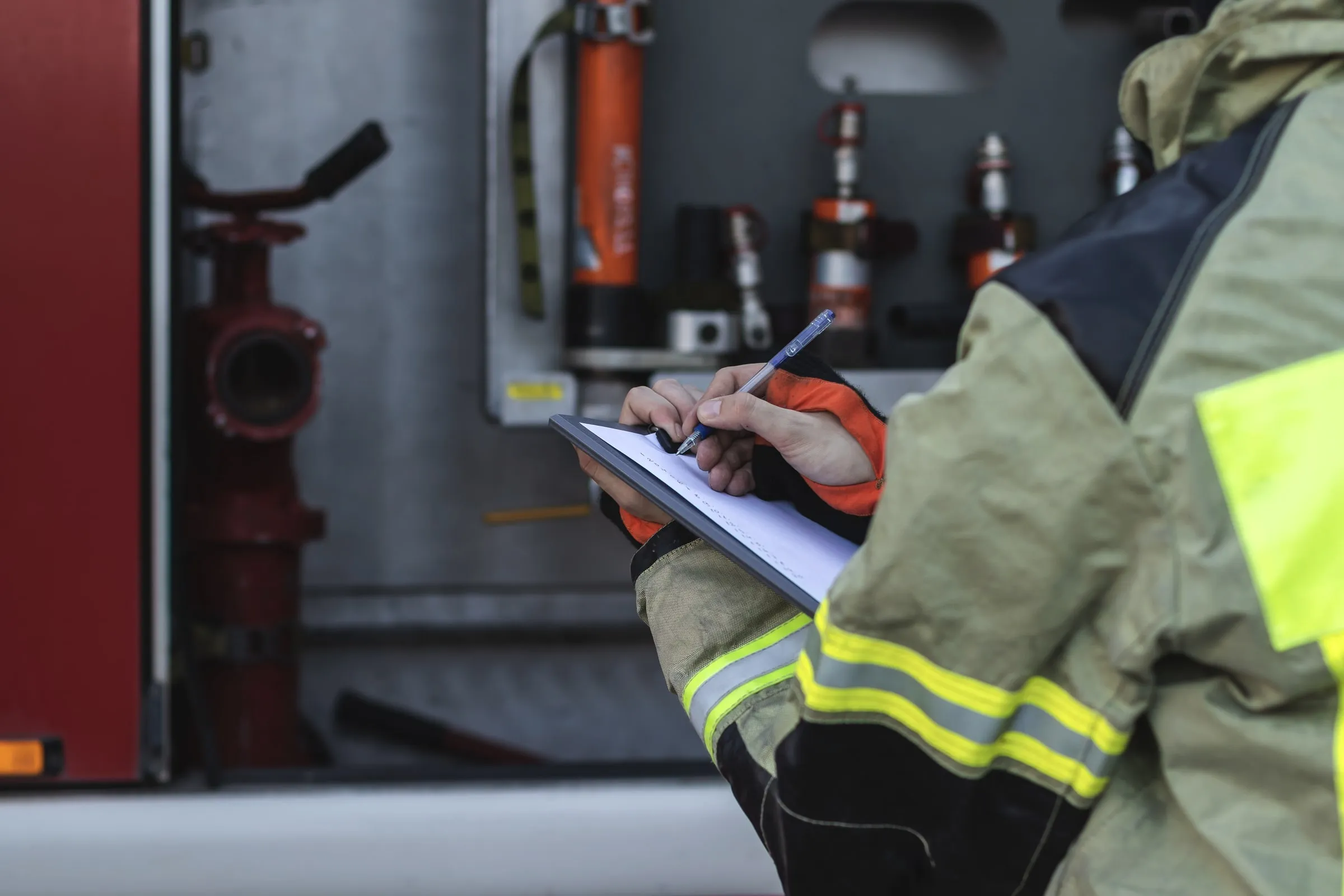
The sequence, in order
Alarm first. In a building whose fire alarm is out of service there is no pull station to rely on, so the post orders specify the method: a voice alarm, air horns, a radio call to staff, a phone tree, a working pull station in an unaffected zone. The officer uses it before anything else. Then 911, with the address, the location in the building and what is burning. Then occupants: the officer warns the people nearest the fire and starts them toward the exits by the building’s evacuation plan, giving particular attention to anyone the post orders identify as needing help.
The extinguisher decision
Officers are trained in fire safety and carry the knowledge to use an extinguisher, and the post orders say where the extinguishers and hose stations are. The rule is simple: an extinguisher is for a fire small enough to put out safely, with an exit at the officer’s back, and for nothing else. A fire that is growing, that has reached the ceiling or that is producing heavy smoke is left to the fire department, and the officer leaves with everyone else.
Meeting the fire department
The officer meets the crew at the entrance the post orders name, with the log, the location of the fire, what was seen, the panel information where there is a panel, keys and gate codes, and the coordinator’s number. Then the officer steps back and does what the crew asks.
The record
The log records the time the fire was found, where, what the officer did and when, the alarm, the call, the evacuation, the fire department’s arrival and the outcome. An incident report follows the same day for the client, the coordinator and, where they ask, the fire marshal and the insurer. On a hot-work watch the sequence is the same, with the permit holder notified as well. The fire watch shift article describes the routine that leads up to this moment, and the extinguisher checks article covers the equipment.
Related questions and pages
Insights
Answers
Glossary
Request a proposal
Request a proposal for your property.
Two short steps. Dispatch reviews every request and calls you back about coverage. For urgent unarmed coverage we can typically staff most sites within hours.
24-hour dispatch
(281) 326-9189