
Operations and reporting
Security Guards and Emergency Evacuations
By Price Protection SecurityReviewed TX DPS Lic #B09430601
Short answer
A security officer supports an evacuation; the officer does not design the plan or decide when to evacuate. When an alarm sounds or an emergency requires clearing a building, the officer follows the property's own evacuation plan and post orders: directing people to the nearest working exit, keeping a route clear, checking assigned areas as they empty, and staying in contact with dispatch and first responders at the assembly point until the building is cleared or the fire department releases it.
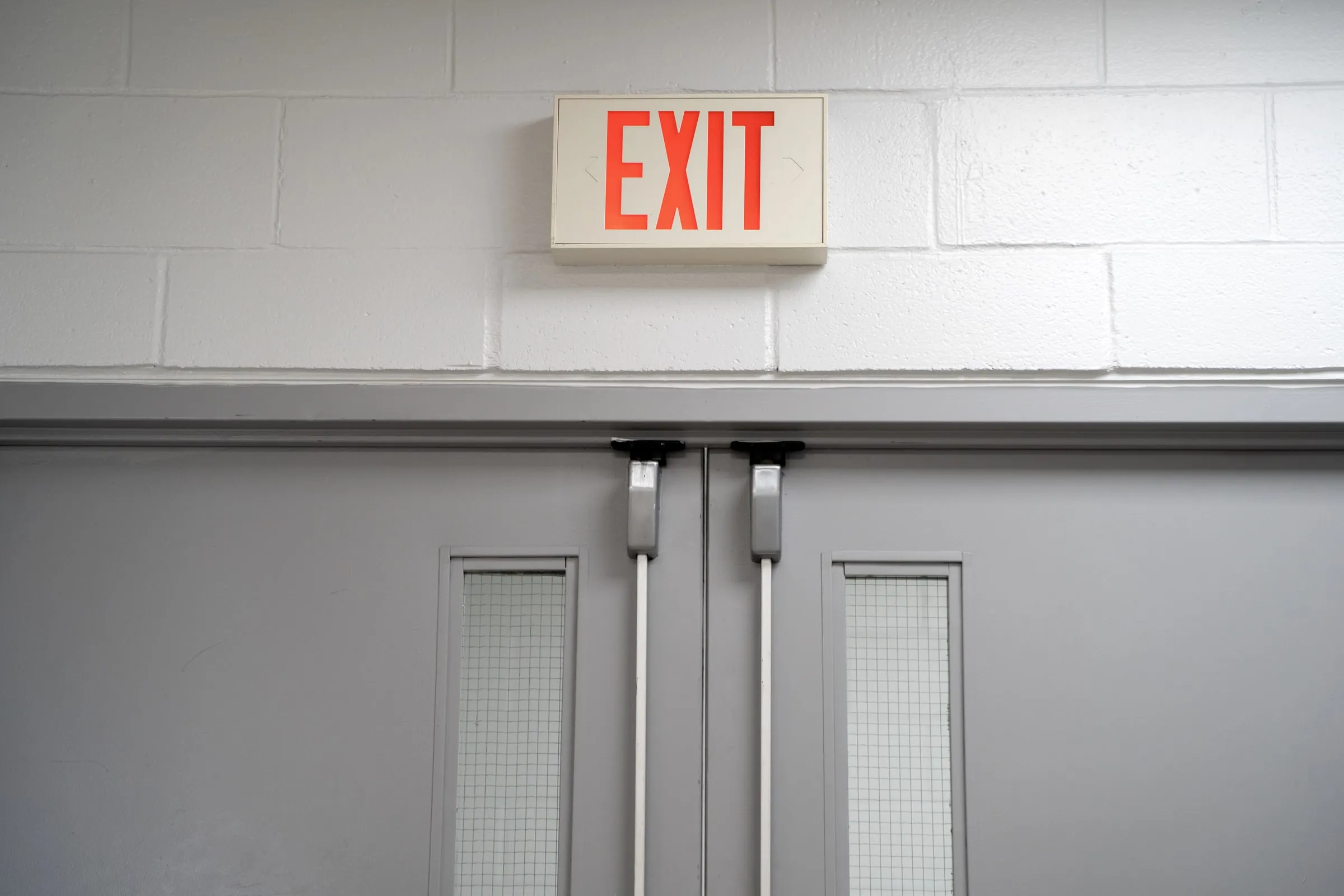
The officer’s role is to execute the plan, not to write it in the moment
Every property with an occupied building has, or should have, its own evacuation plan: which exits serve which areas, where people assemble outside, and who is responsible for checking that an area has cleared. A security officer’s job during an evacuation is to work that plan, not improvise one. Post orders spell out the officer’s specific part before anything happens: which doors to hold or direct people toward, which section of the property to check as it empties, and where to report once outside. This distinction matters because an officer who tries to make evacuation decisions on the fly, rather than executing a plan built in advance, is exactly how confusion spreads at the moment people can least afford it.
What happens from the first alarm to people outside
When an alarm sounds or dispatch relays an order to evacuate, the officer’s first action is usually to help move people toward the nearest working exit, since panic and unfamiliarity with a building are often bigger obstacles than the emergency itself. Doors are propped where post orders call for it, elevators are avoided as an exit route, and anyone who needs help, such as a resident with limited mobility in a designated area, is directed to the accessible route the plan specifies rather than left to find their own way. As areas clear, the officer’s assigned zones are checked, quickly and without lingering in a hazardous space, and what is found, cleared or not cleared, gets reported.
What happens once everyone is outside
The assembly point is where an evacuation either stays organized or falls apart, and the officer’s job there is coordination, not crowd control by force. People are directed to gather in the designated area, kept clear of the building and clear of the path fire apparatus will need, and the officer relays to arriving responders what is known: which areas were checked, whether anyone is reported missing, and what triggered the evacuation if that is known. This handoff to the fire department is often the single most useful thing an officer does during the whole event, because responders arriving cold need exactly that information fast.
Evacuation is not the only order a building can give
An evacuation moves people toward exits and outside; other emergencies call for the opposite, holding people in place. A lockdown secures doors and keeps people away from a threat inside or near the building; a shelter-in-place, more common for a weather event, keeps people inside an interior space away from windows. Post orders for a property cover which of these applies to which trigger, because giving the wrong instruction, telling people to evacuate toward a threat, or to shelter in place during a fire, causes the harm the plan exists to prevent.
Comparing the two most common orders a post has to execute
| Evacuation | Lockdown or shelter-in-place | |
|---|---|---|
| What it does | Moves people out of the building to an assembly point | Holds people in place, secured or away from windows |
| Typical trigger | Fire alarm, gas leak, structural concern | An active threat inside or near the property, a tornado warning |
| The officer’s role | Direct to exits, check areas, coordinate at assembly point | Secure doors as instructed, keep people calm and away from risk, wait for an all-clear |
| Who calls it | The alarm system, the building’s plan, or first responders | The building’s plan, the officer’s post orders, or police |
Why the plan has to exist before the alarm does
None of this works if the plan is invented after the alarm sounds. The walk-through is where a supervisor confirms exit routes, assembly points and any accessibility needs with the client, and those specifics are written into the post orders, not left as general knowledge. A high-rise with a floor-by-floor evacuation sequence needs a different set of officer instructions than a single-story warehouse with one clear route to a yard, and a church with a large weekend crowd needs a plan that accounts for people who do not know the building at all. Price Protection writes this section of the post orders from the client’s own fire safety plan where one exists, and helps identify the gaps where it does not.
Reporting after an evacuation
Once a building is cleared and the emergency is resolved, the event still needs a report the same day: what was found, what areas were checked and by whom, what time the all-clear was given, and any issues with the evacuation itself, such as a blocked exit or a door that did not release. That report is what lets a property fix a real problem in its plan rather than repeat it at the next event, and it is also the record a property manager, an insurer or a fire marshal may ask to see afterward. A vague note that says the building was cleared tells nobody what actually happened; a report that lists each area, the officer who checked it and the time gives the property something it can act on.
Practicing before it matters
A plan that has only ever existed on paper tends to reveal its gaps during the real event, which is the worst time to find them. Where a client wants it, Price Protection’s supervisors will walk a property’s evacuation routes with the officer outside of an actual emergency, confirming which exits are usable, which routes are accessible, and where the assembly point actually sits relative to where fire apparatus needs to park. A high-rise with staged, floor-by-floor evacuation instructions benefits the most from this kind of walk, since the officer’s part of the plan is more complicated than pointing people toward a single door. A property that changes, a new wing, a closed stairwell during renovation, a reconfigured parking lot, needs its evacuation instructions updated at the same time the post orders are updated for anything else, not left as an old assumption nobody has checked recently.
Coordinating with the people who arrive after the officer
By the time fire apparatus or police arrive, the officer is often the only person on scene who has been tracking the situation since it began, which makes that handoff valuable if it is organized and a liability if it is not. Post orders set what the officer should be ready to report: the trigger for the evacuation, which areas have been checked and by whom, whether anyone is known to be unaccounted for, and any hazard the officer observed on the way out, a smell of smoke from a specific direction, a door that would not release, water on a stairwell. Responders arriving without that context have to gather it themselves before they can act, which costs time the property does not have during an active emergency. The fire alarms article covers what happens for the specific case of a fire alarm, and the weather emergencies article covers the shelter-in-place side of this same coordination during a storm.
Questions
Related questions
Does the officer decide when to evacuate a building?
No. That decision belongs to the building's own emergency plan, an alarm system, or the fire department on scene. The officer's post orders say what the officer does once an evacuation is called, not whether to call one.
What does the officer do at the assembly point?
Directs people to the designated area, keeps the area clear for arriving fire apparatus, and relays what is known, such as areas checked and anyone unaccounted for, to the responding fire department and to dispatch.
Does the officer go back into a building during an evacuation?
Only where post orders and training allow it and conditions are safe, typically to sweep a specific accessible area the officer is responsible for. An officer does not enter smoke or an unsafe area; that is the fire department's job.
How is an evacuation different from a lockdown?
An evacuation moves people out toward exits; a lockdown holds people in place, away from a threat, usually with doors secured. The two calls are different, sometimes issued in sequence, and post orders cover both separately.
Related pages
Insights
Answers
Glossary
Request a proposal
Request a proposal for your property.
Two short steps. Dispatch reviews every request and calls you back about coverage. For urgent unarmed coverage we can typically staff most sites within hours.
24-hour dispatch
(281) 326-9189