
Fire watch
Hot Work Fire Watch (Welding, Cutting, Brazing)
A trained watcher stands where the slag falls, not where the welder stands, and stays on station after the torch goes cold for as long as the permit says.
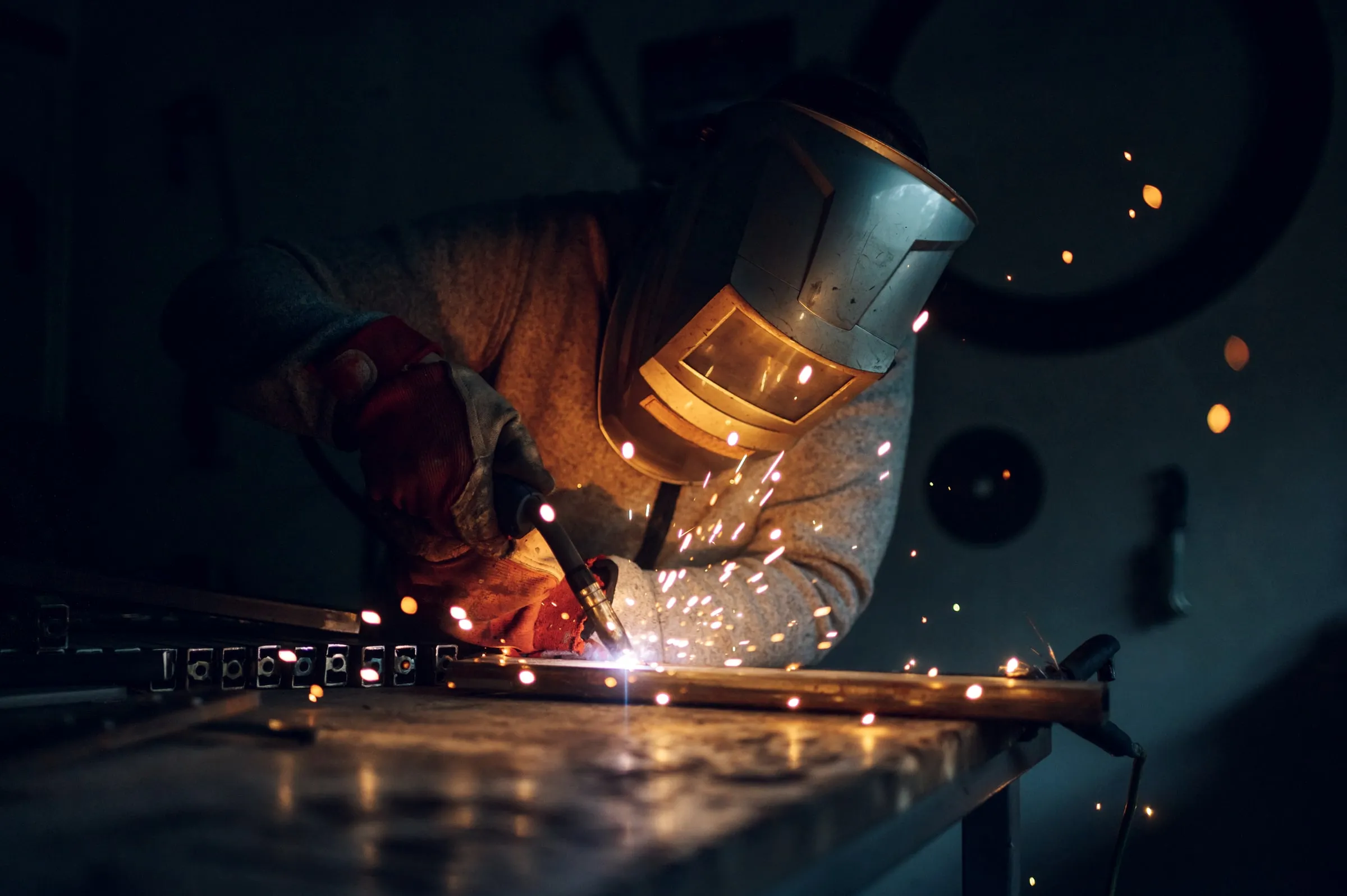
A hot work fire watch is a trained officer assigned to a welding, cutting, brazing or torch job whose only task is to watch for fire: before the work, to see that combustibles are moved or covered; during it, to watch where the sparks and slag travel; and after it, to stay until the permit’s cooling period has run. Price Protection provides hot work watches on construction sites, in plants and warehouses, and on the roofs of occupied buildings across Greater Houston, on a schedule that follows the contractor’s permit rather than the clock.
Where the watch stands
Not next to the welder. The officer’s post is on the side of the work that the welder cannot see: the floor below a deck being cut, the far side of a wall being penetrated, the landscaping and parked cars under a roof edge where slag drops. On a roof job the officer moves between the roof and the interior spaces beneath it. In a plant the officer watches the cable tray, the dust on the rafters and the drum storage that sits just past the 35-foot line. The walk-through with the crew before the first arc decides the post, and the permit records it.
The window after the torch goes out
The hazard does not end with the work. Sparks lodge in insulation, sawdust, the void behind a wall or the felt under a roof membrane and can smolder for a long while before they flame. OSHA’s welding standard keeps the watch in place for at least 30 minutes after hot work ends. NFPA 51B, the standard many permits adopt, asks for an hour and lets the permit authorizing individual add a further monitoring period. Where the two differ, the permit and the authority having jurisdiction decide, and we staff whatever window the permit sets. The log shows when the last weld was made and when the officer finally left, so the permit file closes cleanly. This is a summary, not legal advice.
A post driven by the permit
The permit is the officer’s post order. It names the location, the type of work, the extinguishers required, the combustibles that were moved or protected and the fire watcher. Our officer reads it before the shift, walks the radius with the foreman, checks each extinguisher, and signs where the permit asks for a watcher’s signature. If the crew wants to start before the extinguishers are on hand or before the area is cleared, the officer says so to the authorizing individual, and the work waits. That is the value of a watcher who does not report to the crew. The hot work fire watch checklist lists the checks in the order the officer makes them.
Who calls for a hot work watch
General contractors on high-rise and commercial jobs where steel is being welded above finished floors. Roofing contractors laying torch-applied membranes over apartments and strip centers. Plant and warehouse maintenance managers whose millwrights and pipefitters work near stored product. Property managers whose HVAC or plumbing contractor needs to cut or braze inside an occupied building and whose own staff cannot be spared for an afternoon and the hour after. Each of these has a permit system already; the watch is the part of it that needs a trained pair of eyes.
Starting a hot work watch
Send dispatch the permit or the form the contractor uses, the location and schedule, and the name of the authorizing individual. A supervisor confirms the post with the foreman, and an officer is on site before the first arc, usually the same day for work that comes up at short notice. Every location the crew works gets its own log page, and the client receives the pages with the daily report. Where the job is one part of a longer planned shutdown, the temporary fire watch page describes how the two are scheduled together.
When you need it
When hot work fire watch is the right call.
Combustibles sit within 35 feet of the torch
Roof insulation, stored pallets, a wood-framed wall, the dust in a warehouse rack. OSHA's welding standard makes a fire watch mandatory when anything that burns is within 35 feet of the work, or further out but easy for a spark to reach.
The sparks land somewhere the welder cannot see
Cutting a deck sends slag to the floor below. Welding a pipe penetration heats the far side of the wall. Wall and floor openings that expose combustibles are a trigger on their own, and the watcher's post is on the side the welder cannot watch.
The permit needs a name in the fire watch box
A hot work permit usually has a line for a fire watcher who is not the person holding the torch. A trained officer fills that role, signs the permit and stays for the post-work period without pulling a tradesperson off the crew to do it.
Torch-applied roofing on an occupied building
Modified-bitumen and torch-down roofs go on over occupied apartments, shops and offices. The watch covers the roof edge, the deck below the work and the interior spaces under it, and continues after the last roll is laid.
Starting coverage
What dispatch needs to start.
- A copy of the hot work permit, or the form the contractor will use, so the officer knows the checks it requires
- The location of the work, what will be welded, cut or torched, and what is stored or built around it
- The start time and expected end time for each day, and whether the crew moves between locations
- The name and phone of the permit authorizing individual and the foreman on site
- What extinguishers are on site and where, and whether the building's sprinklers are in service
What the code says
- OSHA 29 CFR 1910.252(a)(2)(iii)
- A fire watch must be provided whenever welding, cutting or brazing is done where combustibles are within 35 feet, where combustibles further away could be ignited by sparks, or where wall or floor openings expose combustibles. The watch continues for at least 30 minutes after the work is finished, and fire watchers must have extinguishing equipment, be trained to use it and know how to sound the alarm.
- Source: OSHA, 29 CFR 1910.252, osha.gov
- NFPA 51B
- The 2019 edition of NFPA 51B, the Standard for Fire Prevention During Welding, Cutting, and Other Hot Work, calls for the fire watch to remain for at least one hour after hot work is completed, with an additional monitoring period where the permit authorizing individual requires it.
- Source: NFPA 51B (2019), nfpa.org
Summaries for planning, not legal advice. The authority having jurisdiction, in Houston the Fire Marshal's Office, decides what applies to a specific building.
Can the welder act as the fire watch?
Not while the torch is lit. The watcher's job is to look at everything the welder is not looking at, and a person behind a hood cannot do that. Permits usually require a separate watcher, and our officer fills that role so the crew stays on the work.
Does grinding or soldering count as hot work for the watch?
The OSHA rule is written for welding, cutting and brazing. Many permits and plant rules treat grinding, soldering and torch work the same way because they throw sparks or heat. We follow the permit: if it calls for a watcher, we post one.
How does the officer know when the post-work period starts?
The crew tells the officer when the last cut or weld is done and the time goes in the log. The countdown runs from that entry, at least 30 minutes under OSHA or an hour under NFPA 51B, and the officer does not leave until the permit's window has run and the area is cool.
What if the crew moves between several spots in one day?
Each location is treated as its own watch. The officer walks the new area first, checks the extinguishers there, and the previous location still gets its post-work period before the officer leaves it. If two locations are active at once, the post orders call for a second watcher.
Whose extinguishers does the watch use?
The ones the permit names, usually the contractor's or the building's. The officer checks that they are charged, correct for the work and within reach before the first arc. If none are on site, the officer tells the authorizing individual before work begins rather than starting without them.
Related pages
Industries we serve
Insights
Glossary
Resources
Where we are
Hot work fire watch across Greater Houston.
Every area below is staffed and supervised from our Sugar Land headquarters. Open an area to see the property types, neighborhoods and questions we hear there.
24-hour dispatch
(281) 326-9189Fort Bend County
Sugar Land and its neighbors, closest to our headquarters.
Houston
Neighborhoods and business districts inside the city.
North and west
Katy and Cypress up to The Woodlands and Conroe.
South and east
Pearland and Clear Lake across to Pasadena and Baytown.
Request a proposal
Request a proposal for hot work fire watch.
Two short steps. Dispatch reviews every request and calls you back about coverage. For urgent unarmed coverage we can typically staff most sites within hours.
24-hour dispatch
(281) 326-9189