
Fire watch and compliance
OSHA Fire Watch Rules for Hot Work: 29 CFR 1910.252 Explained
By Price Protection SecurityReviewed TX DPS Lic #B09430601
Short answer
OSHA's welding standard, 29 CFR 1910.252(a)(2)(iii), requires an employer to assign a fire watch during welding, cutting or brazing whenever combustible material sits within 35 feet of the work, sits farther away but could still be reached by sparks, or is exposed through an opening in a wall or floor. The fire watcher must have extinguishing equipment on hand, know how to use it, be familiar with the alarm system, and stay at least 30 minutes after the work is finished.
The rule, in the words that matter
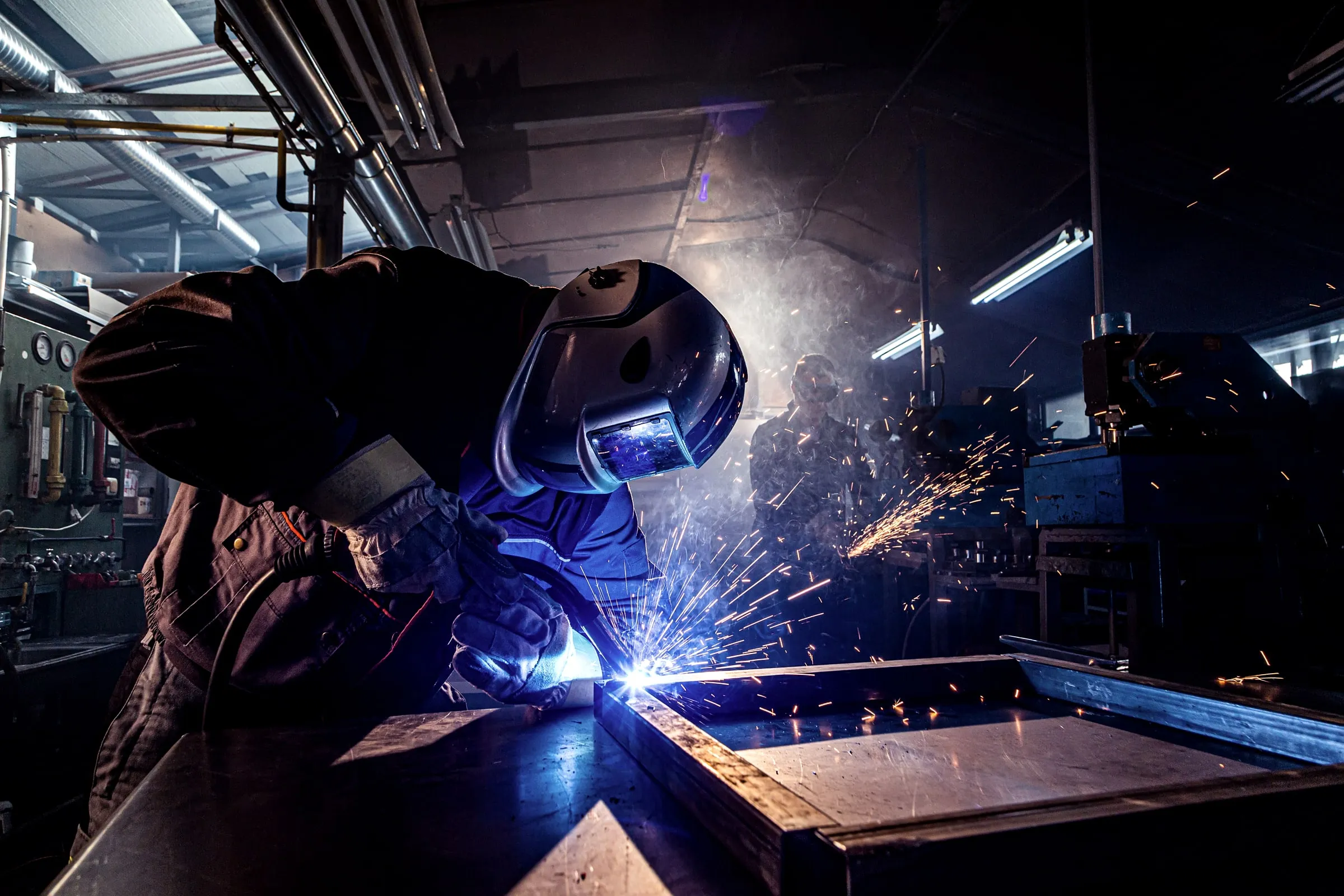
OSHA 29 CFR 1910.252(a)(2)(iii) is part of the general industry welding, cutting and brazing standard, and its fire watch requirement is short: a fire watch is required whenever welding or cutting is performed in locations where a fire might develop, and the standard lists the conditions that make that likely. Combustible material within 35 feet of the work. Combustibles farther than 35 feet that are easily ignited by sparks. Wall or floor openings within 35 feet that expose combustible material in an adjacent area, including a concealed space such as the far side of a partition, above a ceiling or below a floor. Combustible materials adjacent to the opposite side of a metal wall, partition, ceiling or roof that could be ignited by conduction or radiation.
If none of those apply, an employer can reasonably decide a fire watch is not required for that particular job. If any of them apply, the fire watch is not optional, and the standard is explicit that it applies to the employer performing the hot work, not to the property owner separately, though most facility owners require one as a condition of the hot-work permit regardless of who is technically obligated under the standard.
What a fire watch has to be able to do
OSHA’s fire watch requirement is not just a body standing nearby. The standard requires the fire watcher to have fire extinguishing equipment readily available and be trained in its use, and to be familiar with the facilities for sounding an alarm in the event of a fire. Those three things, extinguishing equipment on hand, training to use it, and knowledge of how this particular building raises an alarm, are what separates a compliant fire watch from someone who happened to be standing in the room.
The standard also expects the fire watcher to have no competing duties. A shift lead who is also expediting the job, answering the phone or running the crane cannot simultaneously watch for fire the way the rule intends. Price Protection’s fire watch officers arrive with extinguishing equipment confirmed, a radio, and the building’s alarm method briefed before the torch is lit, precisely so the watch is not divided attention.
The post-work period
Fire from hot work rarely starts while the torch is running; it starts afterward, when slag that rolled into a gap or a spark that landed in insulation has had time to smolder into flame. OSHA addresses this directly: the fire watch must be maintained for at least a half hour after completion of welding or cutting operations to detect and extinguish possible smoldering fires. That 30-minute figure is a floor, not a target, and many sites run longer because the permit or NFPA 51B, which most hot-work permit systems reference, asks for at least an hour. The post-work period article goes through why that gap matters and what the watch does with the time.
| OSHA 29 CFR 1910.252(a)(2)(iii) | NFPA 51B | |
|---|---|---|
| Trigger | Combustibles within 35 feet, or exposed through openings | Combustibles within 35 feet, similar exposure conditions |
| Minimum post-work watch | At least 30 minutes | At least 1 hour |
| Who decides which applies | The standard sets a floor; the site’s permit can require more | The permit authorizing individual, and further monitoring at their discretion |
| Equipment required | Extinguishing equipment, training, alarm familiarity | Consistent with a hot-work permit program |
Where a permit follows NFPA 51B, the longer window controls on that job, and Price Protection staffs whichever period the permit sets rather than defaulting to the OSHA minimum.
The 35-foot distance, and its exceptions
Thirty-five feet is a measured radius from the point of the work, not a rule of thumb, and it is measured in every direction: sideways across a floor, but also up through a ceiling opening or down through a hole in a deck. The standard does not stop at 35 feet, either. Combustibles farther away that could still be reached by a spark carried by wind or a fall from height still trigger the watch, and openings in a wall or floor that expose combustibles on the other side count even when the opening itself sits well inside 35 feet of dense material. The 35-foot rule article walks through how that distance is applied on a real floor plan, including the cases that catch people who measure only the obvious direction.
What OSHA does not specify
The standard is deliberately short on procedure. It does not require a particular log format, a particular interval for checking the area during the work itself, or a specific brand of extinguisher. That is left to the employer and, in practice, to the facility’s own hot-work permit, which is usually more detailed than the OSHA text alone. A permit commonly adds items OSHA does not mention by name: a supervisor’s sign-off before work starts, a requirement to sweep the area for combustibles beforehand, and a written log of the fire watch’s rounds and the post-work period, kept on file in case an inspector or an insurer asks for it later. Price Protection’s fire watch officers work from whichever permit format the site uses, layering the company’s own log over whatever the facility requires.
Where this fits with the rest of a hot-work program
A fire watch is one piece of a larger hot-work permit program that typically also covers moving or shielding nearby combustibles, checking for flammable atmospheres before a permit is issued, and confirming that fire suppression equipment on site is not itself impaired. None of that removes the fire watch requirement or substitutes for it; a fire watch is required whenever the conditions in 29 CFR 1910.252(a)(2)(iii) are met, regardless of what other precautions the crew has already taken. The hot-work fire watch checklist lays out the full sequence a permit holder can use before, during and after the work, with the fire watch as one line among several.
Getting a hot-work fire watch staffed
Most calls for a hot-work fire watch come from a general contractor or a facility’s maintenance department once a welding or roofing permit has been pulled, and the lead time can be as short as the same day. Dispatch needs the address, the scope of the hot work and its schedule, the combustibles nearby that the permit identified, and the permit holder’s contact. Officers arrive with extinguishing equipment confirmed and the log ready, stay through the work and the required post-work period, and hand the completed log to the permit holder at the end. This is a summary, not legal advice. An employer’s own hot-work permit and the site’s authority having jurisdiction set the specifics for a given job.
Questions
Related questions
Does OSHA require a fire watch for every welding job?
No. The rule turns on what is near the work, not on the fact that welding is happening. A shop with a clear metal floor and no combustibles within 35 feet may not need one; the same torch on a wood-framed job site almost always does. The employer, not the welder, makes and documents that call before work starts.
Is a fire watch under OSHA the same person as the welder?
No. OSHA's fire watch has one job: watching for fire. A welder wearing a shield and running a torch cannot also be scanning the surrounding area, so a separate person, with no other assignment during the watch, is designated.
What must a fire watch have with them under OSHA's rule?
Suitable extinguishing equipment within reach, the training to use it, and familiarity with how to sound the alarm for that specific facility. OSHA does not specify a brand of extinguisher or a particular alarm method; it requires the watcher to know the ones the building actually has.
Related pages
Insights
- The 35-Foot Rule: When Welding and Cutting Need a Fire Watch
- Why a Fire Watch Continues 30 Minutes After Hot Work Ends
- Fire Watch During Roofing and Torch-Down Work
- Fire Alarm Outages: When a Fire Watch Is Required
- Fire Extinguisher Checks During a Fire Watch
- Fire Watch After a Fire: Securing a Damaged Building
Answers
Glossary
Resources
Request a proposal
Request a proposal for your property.
Two short steps. Dispatch reviews every request and calls you back about coverage. For urgent unarmed coverage we can typically staff most sites within hours.
24-hour dispatch
(281) 326-9189