
Fire watch and compliance
The 35-Foot Rule: When Welding and Cutting Need a Fire Watch
By Price Protection SecurityReviewed TX DPS Lic #B09430601
Short answer
Under OSHA 29 CFR 1910.252(a)(2)(iii), a fire watch is required whenever welding, cutting or brazing takes place with combustible material within 35 feet of the work, measured in every direction including up and down through floor and ceiling openings. The watch is also required for combustibles beyond 35 feet that sparks could still reach, and for any opening within 35 feet that exposes combustible material in the space beyond it, even one that itself contains nothing flammable.
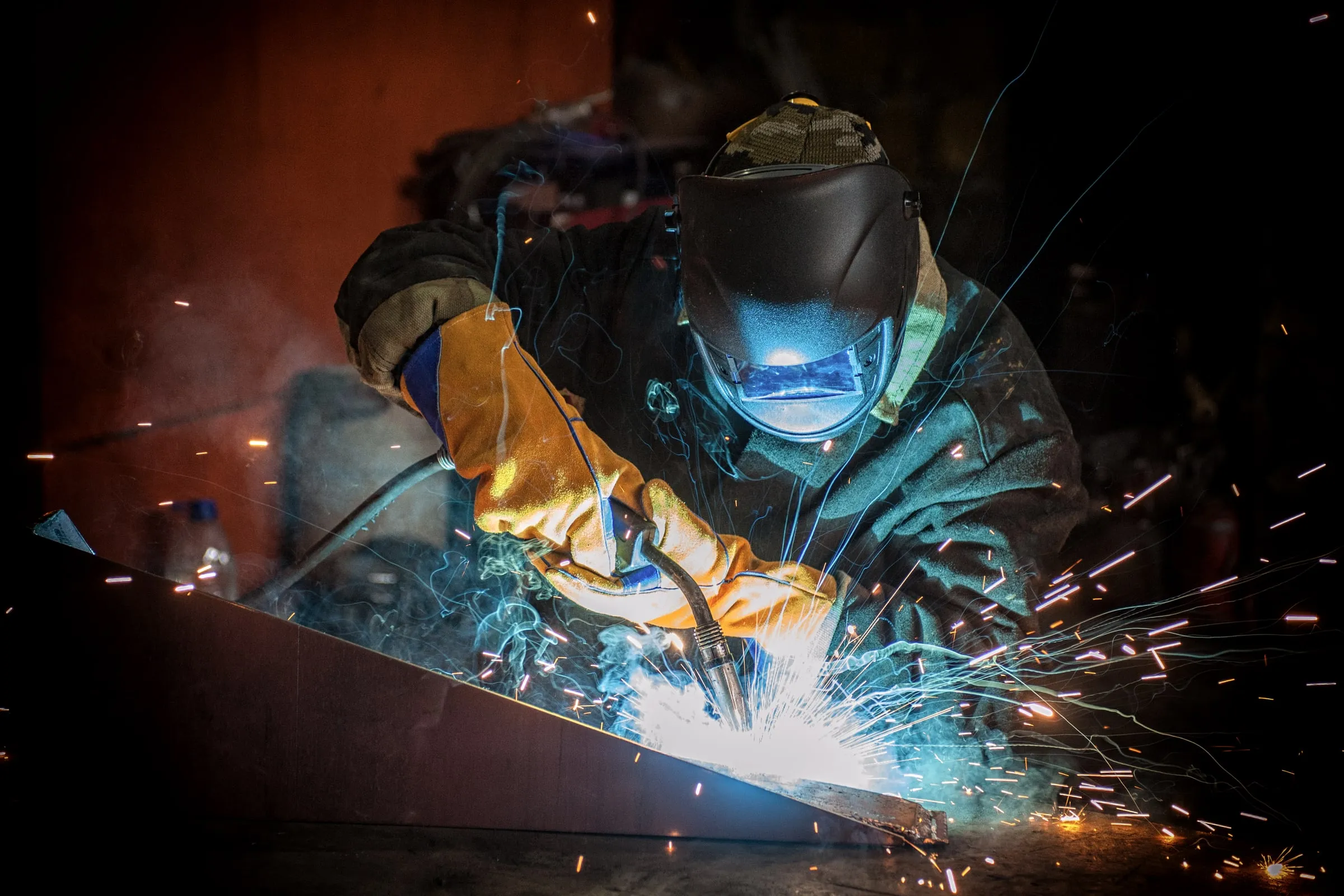
The circle a fire watch has to cover
Thirty-five feet is the distance OSHA’s welding standard, 29 CFR 1910.252(a)(2)(iii), uses to decide when hot work needs a dedicated fire watch, and the practical habit worth building is to think of it as a sphere around the torch, not a line on the floor. A pipefitter cutting a run near a mezzanine has to account for what sits below the opening as much as what sits beside the ladder. A crew welding a bracket near a skylight has to account for the roof membrane above it. The 35 feet applies through openings as readily as it applies across open floor, which is the detail that catches people who measure only in the direction they are facing.
Three ways the rule is triggered
The standard sets out three separate conditions, and any one of them is enough to require the watch.
Combustibles within 35 feet. The most direct case: wood framing, insulation, cardboard, dry vegetation, dust or stored stock sitting inside the radius. This is the scenario most people picture, and on a construction site mid-build it is also the most common, since framing lumber and packaging are rarely far from the work.
Combustibles beyond 35 feet that sparks could still reach. Height, wind and the angle of the cut all extend a spark’s range. Roofing torch work is the clearest example: a spark can roll off a parapet and drop well past 35 feet before it lands, so the watch has to account for where sparks travel, not just where the tape measure stops.
Openings that expose combustibles elsewhere. A hole cut in a wall, floor or ceiling within 35 feet of the work counts even if nothing on the near side is flammable, because it gives sparks a path into a space the welder cannot see: a ceiling void, the floor below, or the next unit over in a multifamily building. Radiant heat through an unprotected metal wall, partition or roof near the work is treated the same way, since heat can ignite what is on the other side without a spark ever crossing.
| Condition | Example | What triggers the watch |
|---|---|---|
| Within 35 feet | Wood framing on a renovation floor | Distance alone |
| Beyond 35 feet, easily ignited | Dry landscaping past a construction fence line | Wind, elevation or angle carrying sparks |
| Opening exposes combustibles | A cored hole above a ceiling with wiring insulation | The path the opening creates, not the distance |
| Conduction through metal | A thin metal wall with storage on the other side | Radiant heat, not a spark at all |
Reading a floor plan before the torch is lit
A fire watch officer or a permit holder walking a site before hot work starts is looking for the same things every time: what is within reach in every direction, what sits above and below the work, what openings exist nearby and where they lead, and what is stored close enough that wind could carry a spark to it. On a renovation floor, that often means checking the unit next door through a shared wall opening as carefully as the room the crew is standing in. On a warehouse mezzanine, it means checking the floor below a grated deck. None of this requires special equipment, only the habit of measuring in every direction rather than the one the welder happens to be facing.
What changes once the watch is confirmed necessary
Once any of the three conditions applies, the requirement is not partial. Combustibles that can be practically moved should be relocated outside 35 feet before work starts; those that cannot, such as a fixed wall assembly, should be covered with a fire-resistant blanket or shield. Openings should be covered or the space below and beside them should be checked as part of the watch’s route. The fire watch itself then holds through the work and for the post-work period the permit sets, since heat that traveled through an opening or a wall does not stop being dangerous once the torch goes off.
Multi-story buildings and shared walls
The 35-foot radius gets harder to picture, not easier, once a building has more than one occupied level or a shared wall between units, and this is where a fire watch officer’s route often differs most from what a permit form suggests on paper. Cutting near a shared wall between two tenant spaces in a strip center means the watch has to account for what sits on both sides, not just the side the crew can see. Welding on an upper floor above a finished ceiling means checking the plenum space itself, not just the floor the torch is touching. A multifamily renovation with several units mid-turn at once compounds this further, since the openings between adjoining units multiply the number of spaces a single fire watch officer has to cover on each round. Where the areas within 35 feet of the work are too spread out, or split across a wall or a floor, for one officer to watch continuously, the practical answer is a second officer rather than a longer interval, since the standard does not allow a fire watch to leave any part of the 35-foot zone unattended for the sake of covering more ground.
Booking a watch for hot work
A general contractor or facility manager arranging hot work should identify the combustibles and openings within 35 feet before calling dispatch, since that information shapes the post orders and, in some cases, whether more than one fire watch officer is needed to cover work happening on two sides of an opening at once. Price Protection staffs hot-work fire watch across Greater Houston, including construction and renovation sites where the 35-foot radius crosses into occupied or adjoining space. This is a summary, not legal advice. The site’s own hot-work permit and its authority having jurisdiction govern the specifics of a given job.
Questions
Related questions
Is 35 feet measured on the floor only?
No. It is a radius from the point of the work in every direction: across a floor, but also up through a ceiling tile or skylight opening, down through a hole cut in a deck, and through a doorway into an adjoining room. A crew cutting near a floor opening has to think about what is directly below, not just what is beside them.
Do sparks that land outside the 35-foot circle ever matter?
Yes. The standard covers combustibles beyond 35 feet if they are easily ignited by sparks, which in practice means dry grass, sawdust, paper stock or an open drum of solvent well outside the circle can still put the job under a fire watch requirement if wind or elevation could carry sparks that far.
What counts as a combustible for this purpose?
Anything that burns: wood framing, paper and cardboard, foam and fiberglass insulation, dry vegetation, plastic sheeting, dust accumulation, and stored materials such as pallets or mulch. Metal decking, concrete and masonry are not combustible themselves, but they conduct heat, which is why the standard also covers the far side of a metal wall or floor near the work.
Related pages
Industries we serve
Services
Insights
- OSHA Fire Watch Rules for Hot Work: 29 CFR 1910.252 Explained
- Why a Fire Watch Continues 30 Minutes After Hot Work Ends
- Fire Watch on Construction Sites: Hot Work, Temporary Systems and Handover
- Fire Alarm Outages: When a Fire Watch Is Required
- Fire Extinguisher Checks During a Fire Watch
- Fire Watch After a Fire: Securing a Damaged Building
Glossary
Resources
Request a proposal
Request a proposal for your property.
Two short steps. Dispatch reviews every request and calls you back about coverage. For urgent unarmed coverage we can typically staff most sites within hours.
24-hour dispatch
(281) 326-9189