
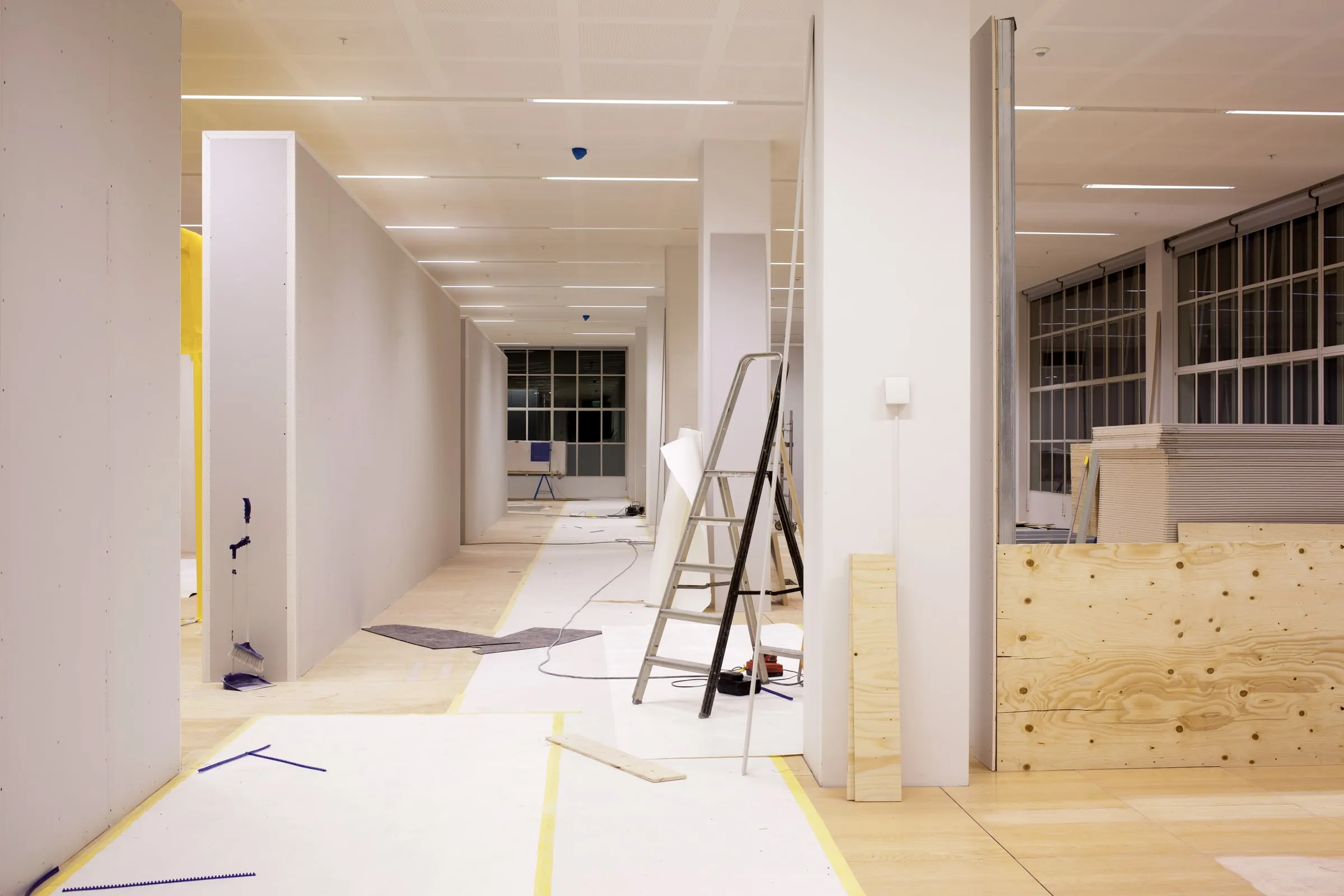
Security for Renovation and Tenant Improvement Projects
The rest of the building is still open for business. We control who reaches the work floor after hours and keep the crew out of everywhere else.
Request a proposalThe situation
Why a job inside an occupied building is a different risk than a fenced lot
The rest of the building is still working
A tenant improvement job usually shares an elevator, a loading dock and a lobby with tenants, employees or customers who have nothing to do with the construction. A crew that props a fire door for convenience or leaves a suite unlocked at the end of a shift has opened a path into space well beyond their own.
Many small subs, one set of keys
A buildout brings electricians, drywall, flooring and low-voltage subs through the same suite over a matter of weeks, each with their own crew and their own schedule, and each needing access to a space that is not theirs to secure once they leave for the day.
Tools and material staged inside an active building
Unlike a fenced lot, a renovation site keeps its material inside a building that other people can walk into during business hours. Tools, fixtures and finish material staged in a hallway or an unfinished suite are exposed to anyone in the building, not just to whoever could get past a perimeter fence.
Work that only happens after the building closes
Noise, dust and disruption from demolition, coring or duct work often has to wait until tenants and customers have gone home, which means the crew with the most access to the building works the hours when the fewest other people are there to notice anything wrong.
A construction site inside a working building
A tenant improvement or renovation job does not get its own fence, because it does not have its own building. It shares a lobby, an elevator bank and often a loading dock with tenants, employees or customers who have no reason to expect a crew with a key cart and a stack of drywall in the hallway. Price Protection’s post for a project like this starts from the building’s own access rules, not from a construction fence, because the risk is not someone climbing over a perimeter; it is someone walking through a door the crew left open.
The post orders are written with both the general contractor’s superintendent and the property manager, and they say which hours the crew may access the floor, which elevator or stairwell they use, what happens with a fire door propped for a material delivery, and who at the property management office gets called if a tenant reports noise, dust or an unfamiliar person in a hallway that is not part of the job. Where the building already has its own front desk or lobby security, the construction post is built around that coverage rather than duplicated on top of it.
Many subs, one floor, no separate perimeter for each
A buildout moves through a sequence of subs, demolition, framing, MEP rough-in, drywall, flooring, low-voltage, finish, each on site for days or weeks and each needing access to the same suite. None of them is responsible for securing the floor once their own crew leaves for the day; that falls to the post. The officer works from a daily list the superintendent provides naming which subs are expected and for how long, and a crew that is not on the list, or shows up outside its window, is held and confirmed rather than waved through because the truck outside says the right company name.
Working after the tenants go home
Demolition, coring and duct work are usually restricted to the hours after other tenants and customers have left, which means the crew with the most unsupervised access to the building works precisely when the fewest other people are there to notice a problem. The insight on contractor and visitor check-in procedures covers how that access is typically structured across a commercial building; on a renovation job it is the backbone of the post, because the check-in list is the only record of who was in the building that night and why.
Material staged where anyone can walk past it
Unlike a fenced lot, a renovation site keeps its tools, fixtures and finish material inside a building other people can enter during business hours. A pallet of flooring or a box of fixtures staged in a hallway outside the suite is visible to anyone walking that floor, tenant, cleaning crew or delivery driver, not only to someone who defeated a perimeter. The officer’s rounds check that material is inside the secured suite rather than staged in common space, and the insight on preparing a site for overnight coverage covers storage practices that apply here even without a fence to rely on.
Starting a post inside an occupied building
To begin, dispatch needs the building address and suite, the property manager’s access rules and any existing front desk coverage, the general contractor’s sub schedule, and the hours construction work is permitted. An unarmed officer can typically be scheduled within hours for an urgent buildout, and coverage is set against the project’s phase schedule so the post runs when the access risk is highest rather than for the full length of the lease.
How we cover it
Every service, applied to this post.
- Unarmed security guards
An unarmed officer controls after-hours access to the floor or suite under construction, checking each sub's crew against the day's work list, confirming the elevator or stairwell used is the one authorized, and keeping the crew out of tenant spaces and common areas not part of the job. Buildout projects rarely run more than a few weeks to a few months, and coverage is scheduled around the specific phases, demolition, rough-in, finish, that call for a supervised after-hours presence rather than staffed for the life of the lease.
- Access control
Building access outside the construction hours the property manager has approved is logged by sub and by name, keys or fobs issued for the work are tracked, and any door propped for convenience, especially a fire door, is closed and reported rather than left as the crew left it.
- Camera monitoring
Where the building has cameras in the lobby, the loading dock or the elevator lobby, the officer checks them for activity on the floor under construction outside the hours the crew is scheduled to be there.
- Incident reporting
The daily report lists which subs were on site and their hours, material staged in hallways or common areas, doors found propped or unlocked outside the approved window, and any tenant or building staff who reported an issue with dust, noise or access.
A typical post
What a shift looks like here.
The officer starts by confirming which subs are scheduled for that evening against the work list the general contractor's superintendent sent, and checks that the floor is secured the way the prior shift left it, dust barriers intact and fire doors closed.
Through the evening the officer's rounds cover the work floor and the paths the crew uses to reach it, the loading dock during material deliveries, and the common areas and stairwells the crew is not authorized to use, closing any door propped for convenience and noting who propped it.
At the end of the access window the officer confirms every sub's crew has left, checks that tools and material are stored inside the suite rather than left in a hallway, and writes the report for the property manager, who often reads it before any tenant complaint reaches them.

Reporting
What the daily report covers here
Every client receives a written report each day, and officer performance is reviewed and documented daily. This is what the report records on this kind of post.
- Subs and crews on site, by trade and by hour
- Doors found propped or unlocked outside the approved access window
- Material or tools staged in hallways or common areas, by location
- Elevator and loading dock use outside the scheduled window
- Dust barriers and fire doors checked at the start and end of access
- Tenant or building staff reports of noise, dust or unauthorized access
Questions
About renovation and tenant improvement coverage.
Anything else? Call dispatch at (281) 326-9189.
Do you coordinate with the building's own management or security desk?
Yes, and the post orders are written to match whatever access rules the property manager already has, including any building security desk that controls the lobby or the elevators. The construction post covers the work floor and the crew's path to it; it does not replace the building's own front desk coverage.
How do you manage access when five different subs are on different schedules?
Against a work list the general contractor's superintendent provides for each shift, naming which subs are expected and for how long. A crew that shows up outside its scheduled window, or one not on the list at all, is held at the access point and confirmed before being let onto the floor.
What happens if a fire door has been propped open?
It is closed and the officer notes who propped it and why, since a fire door held open is both a code issue and an open path into the rest of the building. Repeated instances go to the general contractor's superintendent as a safety item, not just a security note.
Can coverage be scheduled only for certain phases of the buildout, like demolition?
Yes. Many tenant improvement jobs need a supervised presence only during noisy or high-access phases, demolition, MEP rough-in, floor finish, and a lighter schedule or none at all during quieter phases like paint and punch list. Coverage is set to the phase schedule rather than the full lease term.
Does the crew need an escort, or just a check-in?
That depends on the building. Some property managers require every after-hours crew to be escorted to and from the work floor; others are satisfied with a checked-in crew working unescorted within a secured floor. The post orders state which the building requires, and the officer follows that rather than defaulting to one approach.
Related pages
Industries we serve
Service areas
Insights
Glossary
Resources
Request a proposal
Request a proposal for renovation and tenant improvement.
Two short steps. Dispatch reviews every request and calls you back about coverage. For urgent unarmed coverage we can typically staff most sites within hours.
24-hour dispatch
(281) 326-9189