
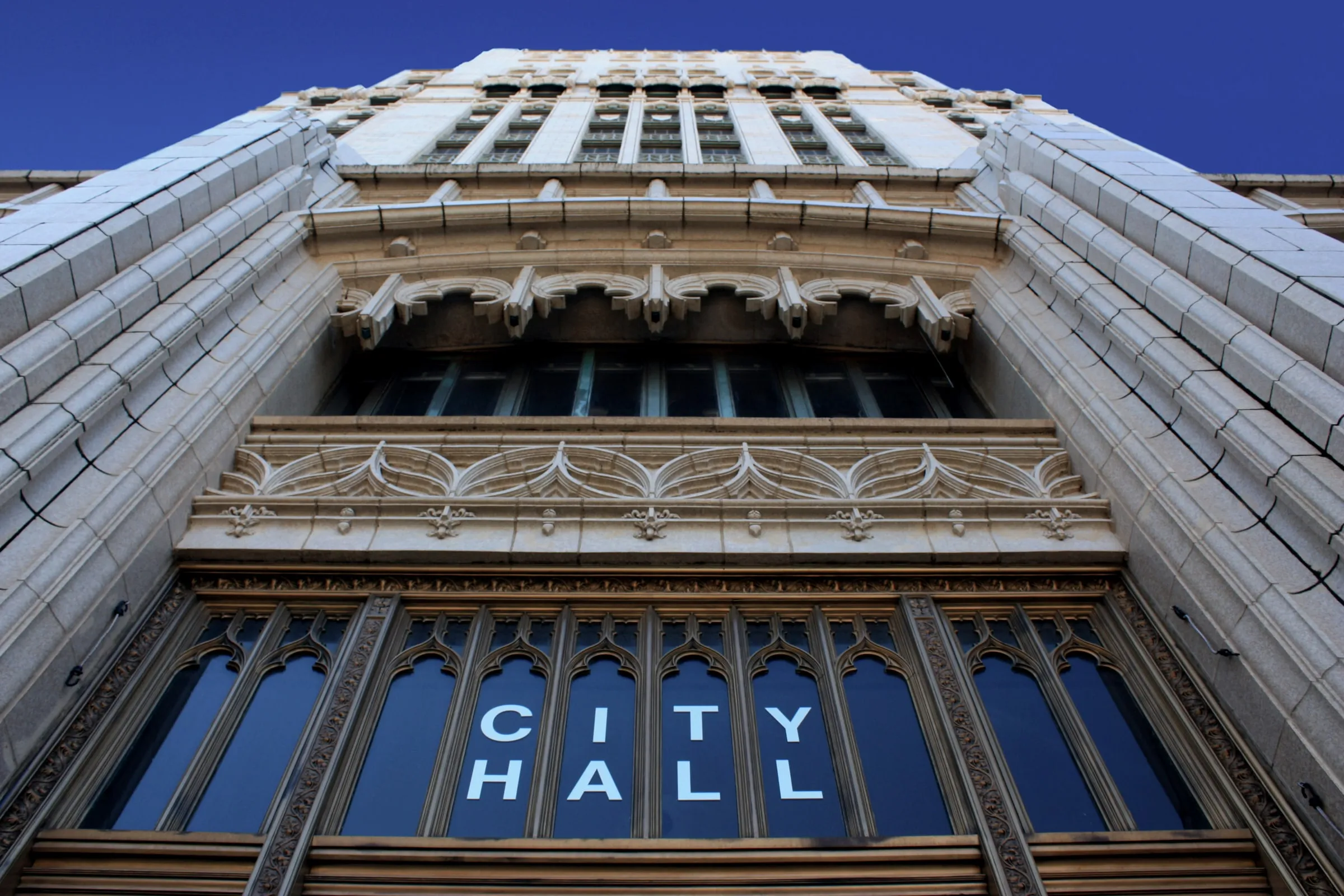
Security Guards for Municipal Buildings
A courteous lobby post for a building the public has every right to enter, and coverage for the evening meeting that runs late.
Request a proposalThe situation
What a municipal building deals with
The public is the point
A permit office, a utility billing counter, a municipal court annex: the building exists for people to walk in, some of them angry about a bill, a citation or a denial. Staff at the counter need someone between them and the worst afternoon.
Meetings that run late
Council, commission and board meetings bring the public into the building at night, sometimes in numbers and sometimes upset. The meeting ends at eleven and staff walk to the lot in the dark.
Records, cash and equipment
Cash at the counters, records in the vault, servers in the closet, vehicles in the yard. The building is known and lightly staffed after five.
Procurement rules
A public entity buys security through a process: licensing, insurance, certifications, references and a scope that has to be priced the same by every bidder. The company has to be ready for the paperwork.
A building the public is entitled to enter
Municipal security is different from private security in one way that shapes everything: the public has a right to be there. A permit office cannot turn people away, a council chamber is open by law, a utility counter has to take the complaint. Price Protection’s post for a municipal building is written with that in mind: a courteous lobby presence that greets, directs and watches, moves closer when a counter gets tense, and calls the police only when there is a threat. The post orders are written with the facilities manager and the department heads whose counters are covered, and they restate the entity’s own policies on visitors, screening, after-hours access and public meetings. Department heads whose counters see the most difficult traffic, the utility office and the permit desk in most cities, get a say in where the officer stands and when the officer moves closer.
Meetings
Council, commission, board and zoning meetings bring the public into the building at night. The officer covers the chamber doors, watches the public comment period, handles a disruption by the entity’s procedure and the presiding officer’s direction, and stays until the last staff member has reached the lot. Entities that need coverage only for meetings book it that way.
The building after hours
Cash at the counters, records, servers, vehicles in the yard. Rounds cover the staff doors, the records room, the server closet and the yard gate, contractors are signed in and out, and after-hours access is by the list the entity provides. Several buildings can be covered under one contract with a report sectioned by building.
Procurement
Public entities buy security through a process, and the company is prepared for it: the Texas DPS license, the certificate of insurance naming the entity, the certifications the entity’s program recognizes, sample post orders and reports, references and a price on the stated scope. The marks the company displays are listed on its licensing page.
Starting a post
The process begins with the entity’s purchasing office or the facilities manager: the buildings, the hours, the meetings, the counters of concern, the entity’s policies and the procurement requirements. The supervisor walks each building with the facilities manager, the proposal is written to the entity’s scope, and the post starts on the contract date.
How we cover it
Every service, applied to this post.
- Unarmed security guards
An unarmed officer in the lobby for the building's public hours, greeting, directing, watching the counters, walking the building and handling the upset visitor courteously, with post orders written with the facilities manager and the department heads whose counters are covered.
- Armed security guards
Where the entity has decided on an armed post, for a court annex or a building with a history, a commissioned officer holds the lobby under post orders that keep observe-and-report the default, with the police called for enforcement.
- Access control
Visitor sign-in where the building uses it, screening at the entrance where the entity has chosen it, staff-only doors checked on rounds and after-hours access by the list the entity provides.
- Camera monitoring
The building's cameras watched from the lobby post between visitors, with clips pulled for the facilities manager or the police on request.
- Incident reporting
A daily report to the facilities manager: visitors of note, contacts at the counters, meeting coverage, doors, after-hours access and anything a department head asked the post to watch for, in a form the entity can file.
A typical post
What a shift looks like here.
The lobby officer opens the post with the building: the day's meetings, a contractor in the server room, a resident the utility office expects to be difficult about a shutoff. Through the morning the officer greets, directs people to the counters and watches the utility window, where a man raises his voice; the officer moves closer, the clerk finishes, and the man leaves.
At midday the officer walks the building: staff doors, the records room, the vehicle yard gate, the server room where the contractor is signed in. Cameras are watched between visitors. A person sleeping in the lobby is woken courteously, offered the information the post orders provide and leaves.
The council meeting starts at six. The officer covers the chamber doors, watches the public comment period, and stays until the last staff member has walked to the lot at half past ten. The report lists the utility window contact, the sleeper, the contractor, the meeting and the doors, and the facilities manager files it.

Reporting
What the daily report covers here
Every client receives a written report each day, and officer performance is reviewed and documented daily. This is what the report records on this kind of post.
- Lobby coverage hours and visitors of note
- Contacts at the counters and the outcome
- Building rounds: staff doors, records, server room, yard gate
- Contractors and after-hours access signed in and out
- Public meeting coverage: attendance flow, disruptions, staff escorted to the lot
- Camera observations acted on and clips pulled
- Anything a department head asked the post to watch for
Is Price Protection set up for public procurement?
Yes. The company holds Texas DPS license B09430601, carries the insurance a public entity requires, and displays City of Houston MBE, Texas HUB and City of Houston Office of Business Opportunity marks. Bid packages, certificates and references are supplied with the proposal.
How do officers handle an angry member of the public?
By training in de-escalation and by the post orders: move closer to the counter, let the clerk finish, speak calmly, ask the person to step away if needed, and call the police only if there is a threat. Officers do not detain or remove people except as the law and the post orders allow.
Can you cover evening meetings only?
Yes. Some entities cover the lobby by day and add an officer for meeting nights; others cover only the meetings. The proposal prices the hours the entity chooses.
Do officers screen visitors?
Where the entity has chosen screening for a building, officers apply the entity's procedure at the entrance. Most municipal buildings use a lobby post without screening, and the post orders say which.
Can the same company cover several buildings?
Yes. Several buildings are covered under one contract with post orders for each and one report sectioned by building, and officers are assigned to a building so staff know them.
Related pages
Industries we serve
Service areas
Insights
Answers
Glossary
Request a proposal
Request a proposal for municipal buildings.
Two short steps. Dispatch reviews every request and calls you back about coverage. For urgent unarmed coverage we can typically staff most sites within hours.
24-hour dispatch
(281) 326-9189