

Security Guards for Labor Disputes and Strikes
Gates that stay open, people who get in and out safely, and a written and recorded record of every incident, with officers who never take the bait.
Request a proposalThe situation
What a workplace deals with during a labor dispute
The gate
A picket line forms at the gate, and everything the employer needs, deliveries, non-striking staff, contractors, customers, has to pass through it. Whether the gate stays open, lawfully and safely, is the whole dispute for the people on both sides of it.
Provocation
Picket lines are designed to be seen and heard, and some people on them want a reaction. An officer who argues, shoves or films with a phone in someone's face becomes the story and the evidence against the employer.
Property and people
Vehicles are keyed and tires slashed, fences cut, equipment tampered with, and staff who cross the line are followed to their cars. The employer owes those staff a safe way in and out.
The record
Every incident at the gate becomes a claim, a complaint or an exhibit. The employer's counsel needs times, descriptions, plates and video that were taken calmly and kept properly.
The plan is written with counsel
Security during a labor dispute is a legal matter as much as a physical one, and Price Protection writes the plan with the employer and its counsel before the first shift. The post orders restate it: which gate serves deliveries and which serves staff, who is on the access list, how a vehicle is walked through a slowed line, how a blocked gate is documented and when the police liaison is called, what officers say to picketers and what they never do. Officers are briefed on the instruction that matters most: observe, report, escort, and never confront.
The gates
The dispute happens at the gate. The officers’ job is to keep it usable for lawful traffic: deliveries walked through, staff escorted in and out, contractors admitted by the list, a blocked gate documented and reported rather than forced. Every delay and every block is logged with times, plates and the video reference, so the employer’s record is a record and not a recollection.
Provocation and the record
Picket lines want a reaction and an officer who gives one becomes the story. Officers do not argue, do not touch, do not film in anyone’s face and do not respond to shouting; they log it. Cameras on the gates and the perimeter record continuously, incidents are documented on video and in writing, and clips are preserved for counsel in the format counsel requests. Staff who report threats or being followed have it recorded verbatim. Officers wear body cameras only where the employer and counsel have decided on them and the post orders say so.
People and property
Staff who cross the line are escorted to and from their cars, and the routes they use are patrolled. The perimeter, the employee lots, the fences and the equipment are checked on rounds, and damage is photographed and reported the same shift. Where the employer and counsel have assessed a specific threat, commissioned officers hold positions away from the line.
Preparing
Disputes are usually foreseeable, and the plan is written ahead: the gates, the lists, the cameras, the police liaison, the reporting format. Where a walkout is sudden, dispatch takes the details and unarmed officers can typically be at the gates within hours while the plan is written with counsel the same day.
How we cover it
Every service, applied to this post.
- Unarmed security guards
Unarmed officers posted at the gates and on the perimeter for the duration of the dispute, keeping the entrances usable, escorting staff and vehicles through the line as the plan and the law allow, and instructed to observe, report and never confront.
- Access control
Gates worked by the plan agreed with the employer and counsel: which gate is for deliveries, which for staff, who is on the access list, how a vehicle is walked through and how a blocked gate is documented and reported to the police.
- Camera monitoring
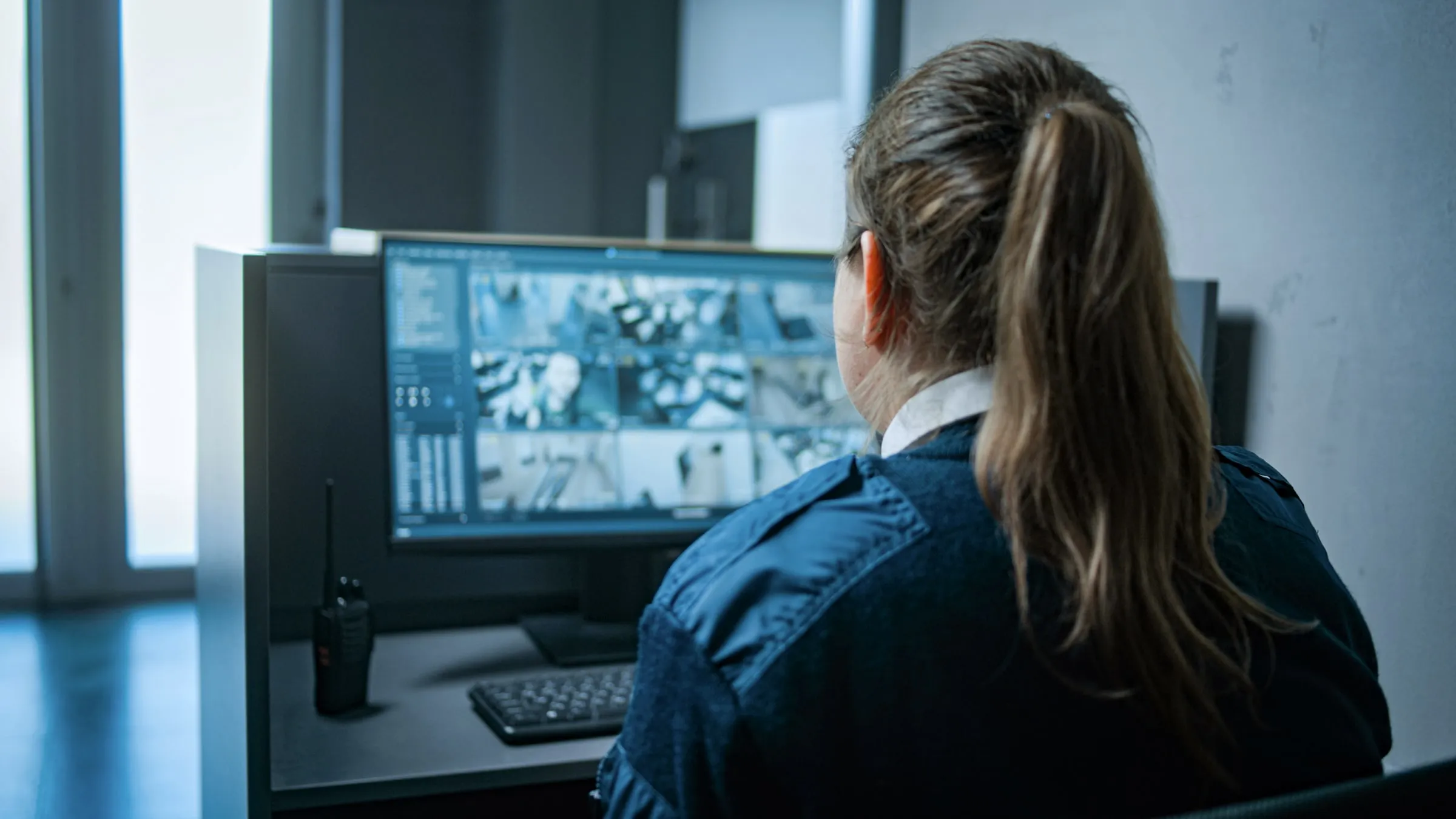
Fixed cameras on the gates and the perimeter, provided by the employer or arranged for the dispute, watched and recorded, with incidents documented on video and in writing and clips preserved for counsel.
- Vehicle patrol
A marked vehicle patrolling the perimeter, the employee lots and the routes staff use to reach the site, checking fences and equipment and escorting vehicles where the plan calls for it.
- Armed security guards
Where the employer and counsel have assessed a specific threat, commissioned officers hold positions agreed in the plan, positioned away from the line, with observe-and-report the default and the police informed.
- Incident reporting
A daily report to the employer's designated contact and counsel: gate operations by hour, vehicles and staff escorted, incidents with times, descriptions, plates and the video reference, police calls and property damage found, in the format counsel requests.
A typical post
What a shift looks like here.
The lead officer meets the plant manager and counsel before the shift change that starts the strike: the delivery gate, the staff gate, the access list, the camera positions, the police liaison's number, the instruction that officers do not speak to picketers beyond a courteous request. Officers take the gates as the line forms across the road.
A delivery truck arrives and the line slows it; the officer walks beside the cab, asks the picketers to allow it through, records the delay and the plate of a car that blocks the gate, and calls the police liaison when the block continues. The truck enters. A picketer shouts at an officer, who does not respond and logs it. A staff member's car is escorted out at the end of the day shift and followed by a pickup, whose plate is recorded.
Overnight the perimeter patrol finds a cut fence panel behind the yard and photographs it, and the cameras at the gate record the line thinning. The report to the manager and counsel lists the gate operations by hour, the blocked truck with the video reference, the shout, the escort and the fence.
Reporting
What the daily report covers here
Every client receives a written report each day, and officer performance is reviewed and documented daily. This is what the report records on this kind of post.
- Gate operations by hour: open, slowed, blocked, with times
- Vehicles and staff escorted through the line, with plates and times
- Incidents with descriptions, plates, times and the video clip reference
- Police liaison calls and responses
- Property damage found: vehicles, fences, equipment, photographed
- Perimeter patrol rounds and conditions
- Threats or intimidation reported by staff, recorded verbatim
Do officers confront picketers?
No. Officers keep the gates usable, escort people and vehicles, make courteous requests, document and call the police liaison. They do not argue, touch, film in anyone's face or respond to provocation. The instruction is written into the post orders and reviewed with counsel.
Who decides how the gates are run?
The employer and its counsel, in the plan written before the dispute. The post orders restate the plan: which gate serves which traffic, the access list, how a blocked gate is handled and documented and when the police are called.
Can you provide cameras and video?
The employer's cameras are used where they cover the gates; where they do not, temporary cameras are arranged for the dispute. Incidents are documented on video and in writing and clips are preserved for counsel.
How quickly can officers be in place?
Disputes are usually foreseeable and the plan is written ahead. Where a walkout is sudden, unarmed officers can typically be at the gates within hours and the plan is written with counsel that day.
Are officers licensed for this work in Texas?
Every officer holds a Texas DPS registration or commission under Occupations Code chapter 1702 and works for a Class B licensed company. Officers have the authority of any private person and rely on the police for enforcement.
Related pages
Industries we serve
Service areas
Insights
Answers
Glossary
Request a proposal
Request a proposal for labor disputes and strikes.
Two short steps. Dispatch reviews every request and calls you back about coverage. For urgent unarmed coverage we can typically staff most sites within hours.
24-hour dispatch
(281) 326-9189