
Licensing, training and the law in Texas
Security Guards and Video Recording: Texas Rules
By Price Protection SecurityReviewed TX DPS Lic #B09430601
Short answer
Price Protection officers monitor and reference a client's own camera systems as part of a post; the company does not install personal recording devices beyond what the post orders and the client's system already provide. Camera footage is used to document rounds, support incident reports and give police a starting point when they respond. Coverage sits in areas with no reasonable expectation of privacy, entrances, lobbies, parking, common areas, not in restrooms or private living spaces.
What “video recording” means on a Price Protection post
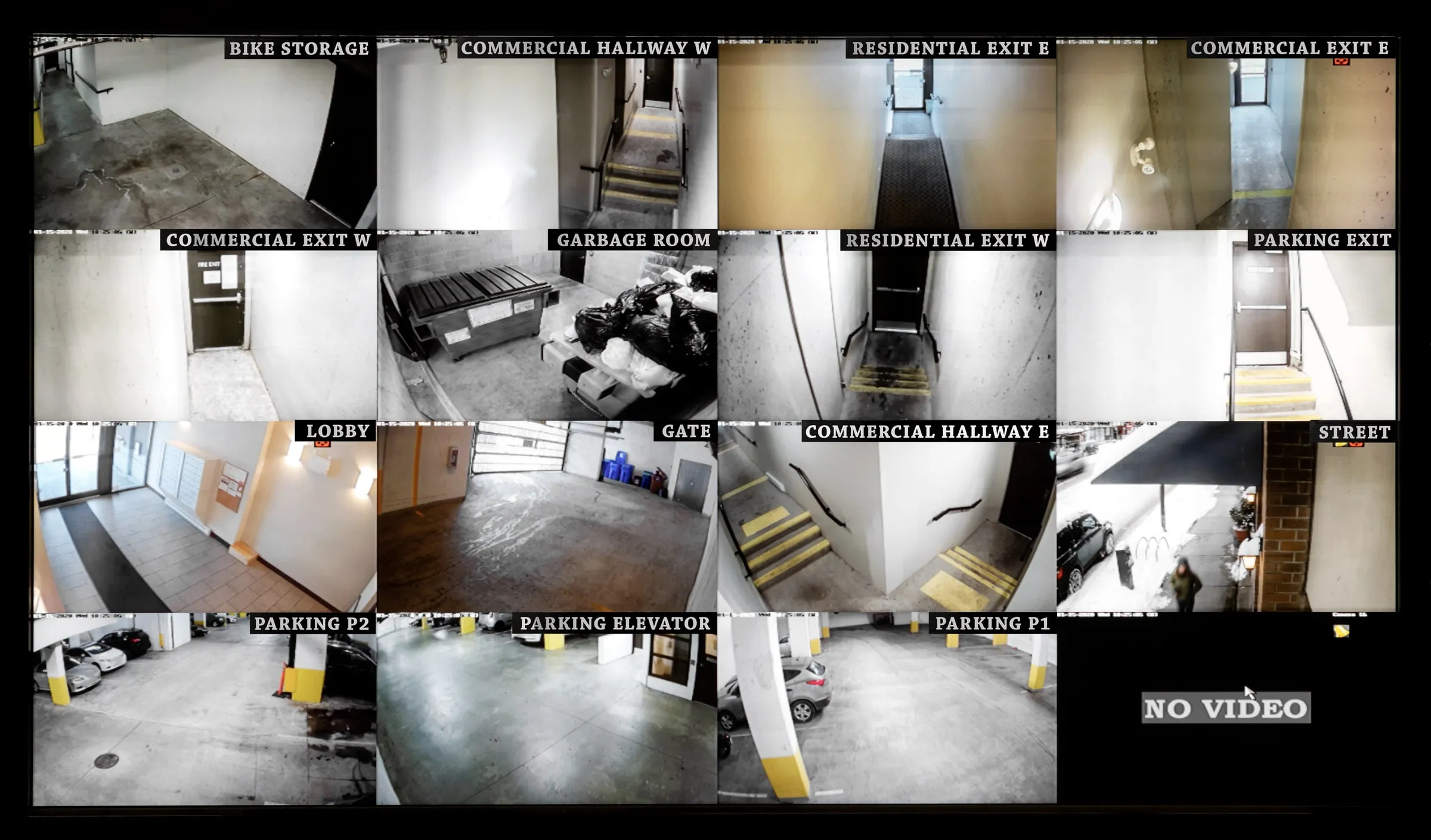
When video comes up in a security proposal, it almost always means one specific service: an officer monitoring a client’s own existing camera system as part of a patrol or a static post, not the company installing, owning or independently operating separate recording equipment. Real-time monitoring of the client’s cameras is one of the services layered into a post where the property already has a system in place, and it works alongside rounds, access control and reporting rather than replacing any of them. An officer watching a monitor bank is doing the same job as an officer walking a physical round, extending the coverage to areas the officer is not standing in at that moment.
Where the cameras are, and who owns them
The camera system itself, the hardware, the recordings, the storage, belongs to the property, not to Price Protection. An officer’s role is to watch the feeds during a shift, note anything that needs attention, and reference specific footage when writing an incident report. This distinction matters because it means the property retains control of its own recordings and their retention, while the officer’s contribution is the attention paid to the feeds and the documentation built around what was seen, which is a service layered onto an existing system rather than a separate recording operation the company runs independently.
What the camera reference in a report is for
When an incident report describes something an officer saw, on a round or on a monitor, it typically includes a camera reference, the specific camera and approximate time, so that the footage can be located later if needed. This matters most when police get involved: a description backed by a camera reference gives responding officers, and later an investigator, a concrete starting point rather than a secondhand account alone. It is also what supports the documentation behind a trespass warning or a shopkeeper’s-privilege detention, where a clear record of what was observed and when protects the property and the officer if the event is later questioned.
Where camera coverage does not extend
Camera monitoring on a Price Protection post covers areas with no reasonable expectation of privacy: entrances, lobbies, parking areas, common hallways, exterior grounds, loading docks. It does not extend into restrooms, individual apartment interiors, offices behind closed doors or other private spaces, regardless of whether a client’s broader camera system happens to include cameras there; an officer’s monitoring role is to watch the feeds a property provides for security purposes in shared and access-controlled areas, not to extend observation into private space. Where a property’s own system includes cameras in more sensitive locations, questions about that placement belong to the property and its own legal counsel, not to the security company staffing the monitoring post.
What officers do and do not do with footage
| Officers do | Officers do not do |
|---|---|
| Watch live camera feeds during a shift as part of the post | Install, own or independently operate a separate camera system |
| Reference specific footage and timestamps in an incident report | Alter, delete or take footage off the property |
| Flag something seen on camera for a round or a call to police | Decide the property’s camera placement or retention policy |
| Treat camera coverage as one more tool alongside physical rounds | Monitor areas outside what the client’s own system covers |
How this fits into the rest of a post
Camera monitoring is one input into the same daily report every post generates, alongside rounds, access checks and any incidents. A supervisor reviewing the report sees what the cameras showed the same way they see what a physical round found, and the two are meant to complement each other rather than one substituting for the other; a camera can watch an area continuously, but it takes a person to interpret what is seen and decide when it warrants action. This is why camera monitoring is staffed as part of a post with an officer present, not sold as a standalone remote-viewing service separate from the rest of the coverage.
What a client should decide separately
Questions about signage, retention periods, who else can access recordings, and where cameras should or should not be placed are property-level decisions that belong to the client and, where needed, the client’s own legal counsel, not to the staffing of a monitoring post. Price Protection’s role is watching and referencing the system the property already has in place as part of the coverage a post provides. This is a summary, not legal advice; a property with specific questions about its own camera system and how it is used, including signage and retention, should raise them with its own counsel rather than rely on this description of how monitoring fits into a post.
How monitoring supports, rather than replaces, an officer’s judgment
A camera can watch continuously, but it cannot decide what a movement or a gathering means, call a resident by name, or judge whether a maintenance worker at an odd hour is expected or not. Officers are trained to treat the monitor bank as one more input alongside the rounds, the post orders and their own knowledge of the property’s routine, not as a replacement for walking the grounds or a substitute for judgment. A well-run monitoring post catches things a physical round would miss between checkpoints, and a well-run physical round catches things a fixed camera angle cannot see at all; the two are meant to work together, following post orders that specify how each is used and when an officer calls police rather than continuing to observe.
Questions
Related questions
Do Price Protection officers wear body cameras?
This page describes camera monitoring as a service, real-time monitoring of a client's own systems; it does not represent that officers wear personal recording devices, which is not a service listed on this site.
Who owns the camera footage from a property?
The client's own camera system belongs to the client. An officer's role is to monitor it as part of the post and reference relevant footage in reports; the underlying recordings remain the property's system and property's records.
Can an officer install cameras on a property?
Camera monitoring, as staffed by Price Protection, means an officer watches and references a client's existing system as part of a post; installing or configuring a camera system is a separate, technical service this page does not address.
Does a client need to post signage about cameras?
Signage practices are a decision for the property and its own policy or counsel; this page does not give guidance on notice requirements, and a property should decide its own signage approach separately from staffing a monitoring post.
Related pages
Services
Insights
Glossary
Request a proposal
Request a proposal for your property.
Two short steps. Dispatch reviews every request and calls you back about coverage. For urgent unarmed coverage we can typically staff most sites within hours.
24-hour dispatch
(281) 326-9189