
Security Guards for Manufactured Home Communities
A patrol on your streets that residents recognize, community rules applied fairly and vacant homes checked, with a report to the manager every morning.
Request a proposalThe situation
What a manufactured home community deals with
Streets, not buildings
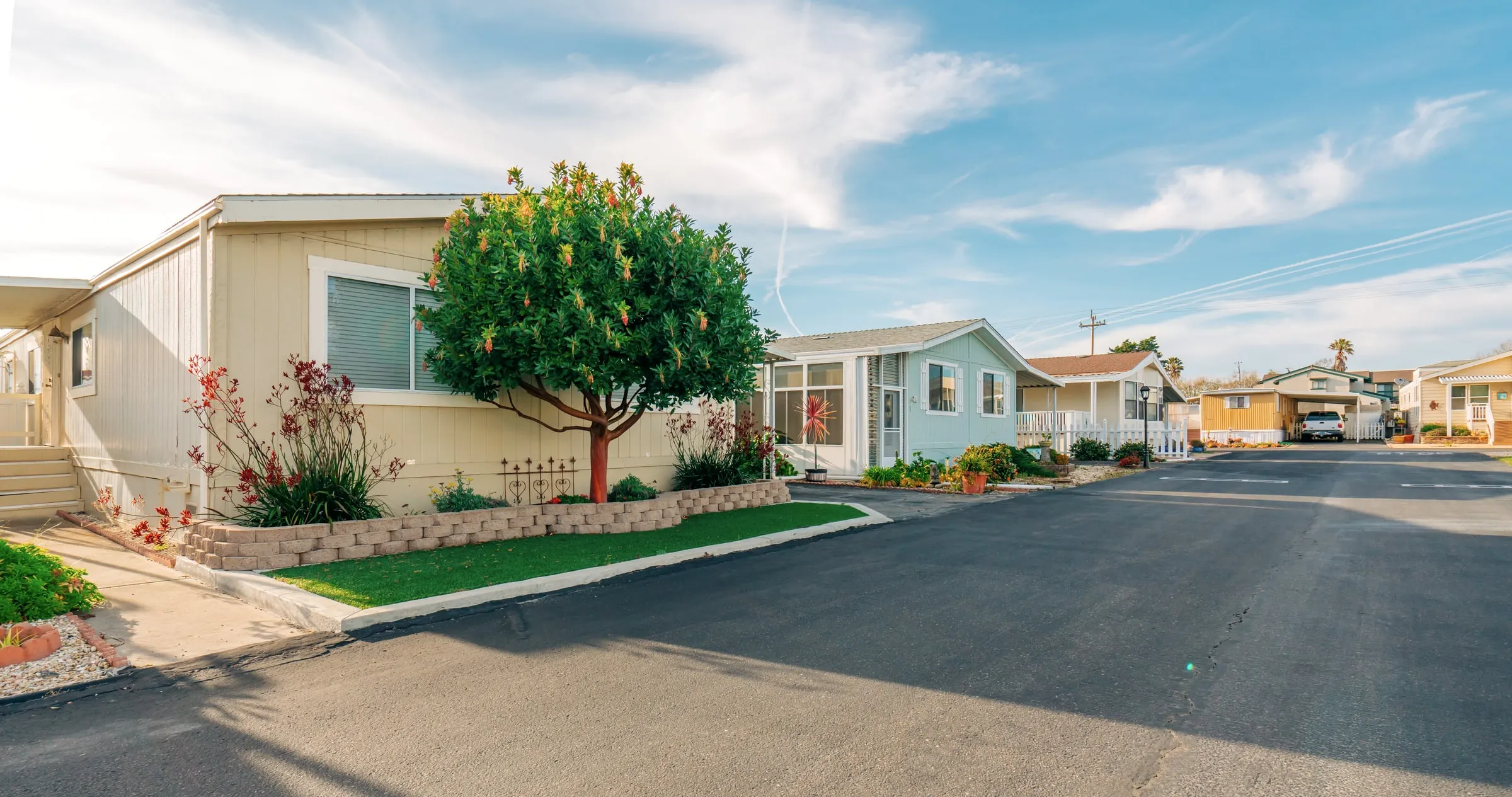
A manufactured home community is a neighborhood of private streets with homes on lots, some owned and some rented, an entrance that may or may not have a gate, and an office that closes at five. The exposure is spread across every street.
Vacant homes and lots
Homes between residents, homes under repair and empty lots are entered, stripped of copper and appliances, and occupied by people who were not invited. Neighbors notice late.
Rules that need a presence
Speed limits, parking, pets, noise, guests and the pool. The community has rules in the lease; the manager cannot be on the street at ten at night applying them.
Outsiders who cut through
Communities on busy roads get cut-through traffic, people looking for someone who moved away and the occasional car that circles. Residents want someone to notice.
A neighborhood of private streets
A manufactured home community is closer to a subdivision than to an apartment complex: private streets, homes on lots, an entrance, an office that closes at five and a set of rules in the lease. Price Protection covers it the way it covers a subdivision, with a marked vehicle on a written route that drives every street several times a shift in a varied order, stops on foot at the entrance, the amenities and the vacant homes, and logs each round for the manager.
Vacant homes and lots
The vacant homes are the community’s most exposed property: entered for copper and appliances, occupied by people who were not invited, damaged before the next resident arrives. The post orders list them for each shift and they are checked on foot every round, doors and skirting tested. A home found open is secured, photographed and reported that night; a home found occupied is not entered and the police are called. The manager receives the photographs in the morning report and decides on boarding, repair or a notice, with the patrol checking the home again that night.
Rules on the street
Speed, parking, noise, pets, guests, the pool. The rules are in the lease and the post orders restate them as instructions with the lot numbers. The officer applies them with a courteous word first and logs the contact; the manager enforces through the lease from the log. Officers do not tow, fine or evict, and the report keeps the manager’s follow-up honest.
The entrance and the outsiders
Communities on busy roads draw cut-through traffic and cars that circle. The patrol notices, logs plates and descriptions, and calls the police where the post orders direct. A gate, where there is one, is checked each round for faults and shared codes and is covered in person when it fails. Residents learn the vehicle and the officers within weeks and flag the patrol down with what they have seen.
Starting a patrol
Dispatch needs the community’s map, the hours the owner wants, the rules from the lease, the vacant homes and lots, the gate details if any and the manager’s after-hours number. The supervisor drives the community with the manager after dark, writes the post orders and the route and the patrol starts on the agreed night.
How we cover it
Every service, applied to this post.
- Vehicle patrol
A marked vehicle drives every street, the entrance, the mail area, the pool or playground and the vacant homes and lots on a written route with checkpoints on foot, several times a shift in a varied order, with each round logged.
- Unarmed security guards
The patrol officer is unarmed and courteous, knows the community's regulars within weeks, applies the rules in the post orders with a word first and logs what the manager needs to follow up.
- Access control
Communities with a gate get it checked each round for faults, tailgating and shared codes, and the officer covers the entrance in person when the gate fails. Contractor and mover hours in the rules are applied.
- Incident reporting
A daily report to the community manager: rounds, vacant home and lot checks, rule contacts with the lot number, vehicles of interest with plates, entrance and gate conditions, lighting out and anything the manager asked the patrol to watch for.
A typical post
What a shift looks like here.
The evening patrol starts at the entrance and drives every street in order the first time: the mail kiosk, the pool closed at the posted hour, the playground, the four vacant homes on the list with their doors and skirting checked on foot, the two empty lots. A trailer parked on the street against the rules is logged with the lot number.
Later rounds vary the order. A car circling with no plate light is followed at a distance and its description logged; it leaves through the entrance. A loud gathering on lot 38 is asked to lower the volume and does. A vacant home's rear door is found open, secured, photographed and reported to the manager's after-hours line.
Before dawn the last round checks the vacant homes again and the entrance, and the report is written: rounds with times, the trailer, the car, lot 38, the open door with photographs and the street light out on the main loop.

Reporting
What the daily report covers here
Every client receives a written report each day, and officer performance is reviewed and documented daily. This is what the report records on this kind of post.
- Rounds with times and the streets, entrance and amenities covered
- Vacant homes and lots checked, with any found open, entered or occupied
- Rule contacts by lot number and the outcome
- Vehicles of interest and cut-through traffic, with plates or descriptions
- Gate and entrance conditions, tailgating and shared codes
- Lighting out and hazards on the streets
- Resident reports taken on the round and passed to the manager
Questions
About manufactured home communities coverage.
Anything else? Call dispatch at (281) 326-9189.
Can the patrol enforce our community rules?
The patrol applies them on the street with a courteous word and logs the contact with the lot number. The manager enforces through the lease from the log. Officers do not tow, fine or evict.
How often is each street driven?
Several times a shift, in a varied order, with the minimum rounds written into the post orders. Vacant homes and the entrance are checked on foot on each round.
What about a vacant home found open?
It is secured as far as possible, photographed, logged and reported to the manager's after-hours line the same night. If someone is inside, the officer does not enter and the police are called.
Do residents know the officer?
Within weeks. The same officers are assigned to the community, the vehicle is marked and residents flag the patrol down with what they have seen. Their reports go to the manager in the morning.
What hours make sense?
The hours the problems happen: late evening through early morning for most communities, with weekend afternoons added where the pool or the streets are the issue. The proposal prices the window the owner chooses.
Related pages
Industries we serve
Services
Service areas
Insights
Glossary
Request a proposal
Request a proposal for manufactured home communities.
Two short steps. Dispatch reviews every request and calls you back about coverage. For urgent unarmed coverage we can typically staff most sites within hours.
24-hour dispatch
(281) 326-9189