
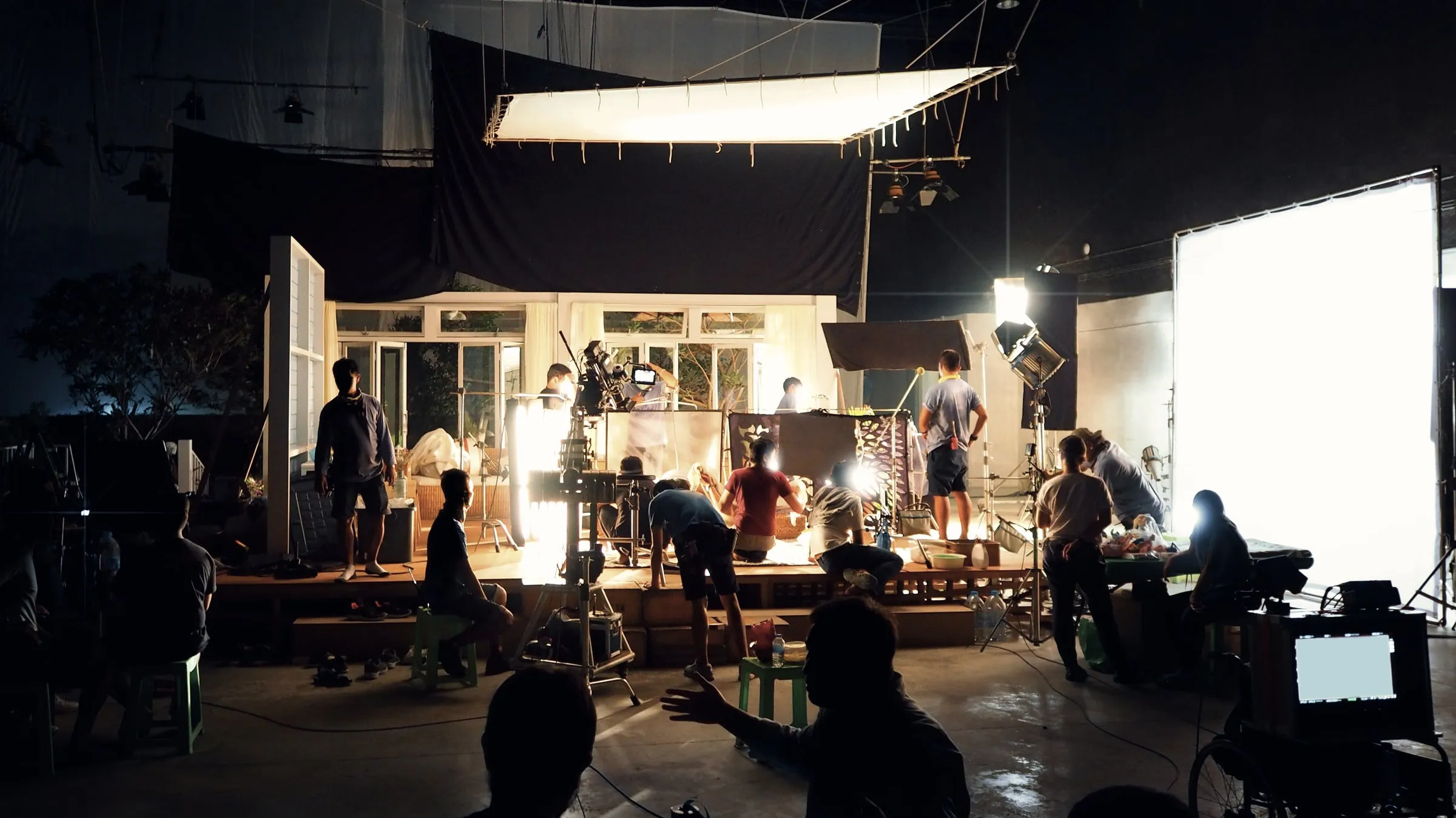
Security Guards for Film and Production Sets
The perimeter held, the trucks watched overnight and the public kept out of the shot, on the production's schedule and the location's terms.
Request a proposalThe situation
What a production deals with on location
Equipment on trucks overnight
Camera, grip, electric and wardrobe trucks parked at base camp or on a street hold the production's most expensive assets in vehicles anyone can see. The overnight is the exposure, and insurers require it covered.
The public and the shot
A shoot on a street or in a public place draws onlookers, phones, cars that will not stop and people who walk into the frame. Lockups need someone at each end who can hold traffic and pedestrians courteously within the permit.
The location
A private home, a business, a church or a warehouse lent to the production for a day has an owner watching and a neighborhood that did not sign anything. Damage, access and noise complaints land on the location manager.
Talent and crew
Recognizable talent draws people to base camp and the set; a crew of dozens from many departments needs a credential system that works at a gate and a trailer door.
On the call sheet
A production runs on a call sheet, and its security runs on the same one. Price Protection’s officers arrive before crew call, take base camp, the set perimeter and the lockups by the location manager’s plan, stay through wrap and cover the trucks overnight, and change with the schedule day to day. The post orders are written with the location manager: the trailer line and the trucks, the passes and the list, the lockup points and the permit’s terms, the location owner’s rules and the neighbors.
Base camp and the trucks
Base camp holds the trailers, the trucks and the crew parking, and the trucks hold the production’s most expensive equipment in vehicles anyone can see. Officers work the base camp gate by the list during the day and walk the trucks and the trailers on the hour overnight, checking padlocks and seals and watching any cameras between rounds. Insurers who require overnight coverage receive the report in their format. Trucks parked on a public street rather than a lot get a vehicle as well as the officer on foot, because the street is where the equipment is most visible.
The set and the lockups
A shoot in a public place draws onlookers, phones and cars. Officers at the lockup points hold pedestrians and traffic courteously during takes and release them between, within the permit, and work with the police where the permit requires them for the closure. The public is kept outside the perimeter and away from the trailer line without confrontation.
The location and the neighbors
A private home, a business or a church lent for a day has an owner and a neighborhood. Officers keep the location’s own doors and rooms as the owner’s agreement requires, note the condition at wrap, answer neighbors’ questions with the location manager’s number and log complaints so the location manager hears them first.
Booking
Dispatch, or a call to the office, begins with the location manager or the coordinator: the dates and the call sheet, base camp and the set, the lockups and the permit, the trucks and the overnight, the passes and any talent concern. Officers are booked by the day and the next day’s call is confirmed with dispatch each evening.
How we cover it
Every service, applied to this post.
- Unarmed security guards
Unarmed officers at base camp, the set perimeter, the lockup points and the trailer line by the location manager's plan, on the production's call sheet hours and through the overnight with the trucks, in the uniform or plain dress the production prefers.
- Access control
Crew and talent credentialed by the production's list and passes, vendors and extras admitted by the coordinator's schedule, the public held outside the perimeter and the lockups, and the location's own doors and rooms kept as the owner's agreement requires.
- Vehicle patrol
For base camps spread across lots and streets, a vehicle covers the trucks, the trailers and the crew parking overnight and during the shoot, and works the street at wrap when the equipment is loaded.
- Camera monitoring
Where the production or the location has cameras on base camp and the trucks, the overnight officer watches them between rounds and clips are kept for the production's insurer on request.
- Incident reporting
A report each day to the location manager or the UPM: posts by call time, credential refusals, public contacts at the lockups, overnight rounds and the trucks checked, damage to the location noted at wrap and any incident, in the format the production's insurer or the studio requests.
A typical post
What a shift looks like here.
The officer arrives at base camp before crew call and meets the location manager: the trailer line, the trucks, the crew parking, the set two blocks away, the lockup points on the street the permit closes at nine, the passes and the list, the talent's trailer, the neighbor who has complained already. Officers take the base camp gate and the lockups as the crew arrives.
Through the day the lockups hold pedestrians and cars courteously during takes and release them between, a man who wants a photograph with the talent is walked away from the trailer line, a delivery for craft services is checked against the coordinator's schedule, and a neighbor's question about the closure is answered with the location manager's number. At wrap the equipment is loaded and the trucks are locked.
Overnight the officer walks the trucks and the trailers on the hour, checks the padlocks and the seals, watches the cameras between rounds and turns away two people looking at the camera truck. The report goes to the location manager before the next call, with the overnight rounds and the day's contacts.
Reporting
What the daily report covers here
Every client receives a written report each day, and officer performance is reviewed and documented daily. This is what the report records on this kind of post.
- Posts staffed by call time and wrap
- Credential refusals at base camp and the set
- Lockup contacts with the public and any incidents
- Overnight rounds with times, trucks and trailers checked, seals and locks
- Deliveries and vendors admitted by the schedule
- Location condition at wrap and any damage noted
- Neighbor contacts and complaints passed to the location manager
Do you cover the trucks overnight?
Yes. An overnight officer walks the trucks and the trailers on the hour, checks the padlocks and the seals and watches any cameras between rounds. Productions whose insurers require overnight coverage of equipment receive the report in the insurer's format.
Can officers hold a street lockup?
Officers hold pedestrians and traffic courteously at the lockup points within the production's permit and release them between takes. Where the permit requires police for the closure, the production arranges it and officers work with them.
How do you handle the public and fans?
Courteously and firmly: held outside the perimeter, walked away from the trailer line, not confronted. Officers do not use force except to defend someone from harm, and the police are called for anyone who will not leave.
Can you work on the production's schedule?
Yes. Posts follow the call sheet, including early calls, late wraps, splits and overnights, and coverage changes with the schedule day to day. Dispatch takes the next day's call from the coordinator.
Do you cover studio and warehouse shoots?
Yes. Studio and warehouse builds are covered at the door, the parking and the overnight the same way, with the building's owner's rules restated in the post orders.
Related pages
Industries we serve
Insights
Request a proposal
Request a proposal for film and production sets.
Two short steps. Dispatch reviews every request and calls you back about coverage. For urgent unarmed coverage we can typically staff most sites within hours.
24-hour dispatch
(281) 326-9189