
Property manager guides
Security Guard Uniforms: Marked Presence vs Low Profile
By Price Protection SecurityReviewed TX DPS Lic #B09430601
Short answer
A marked uniform, reading clearly as security, is the default for most posts because being seen is most of what a static or patrol officer contributes: a person planning trouble notices the presence first. A lower-profile look, business dress such as a blazer and tie, fits posts where a property wants the feel of a staffed desk, or a situation such as an HR meeting where a visible uniform would draw more attention than the moment calls for. The property's own goal decides which is right.
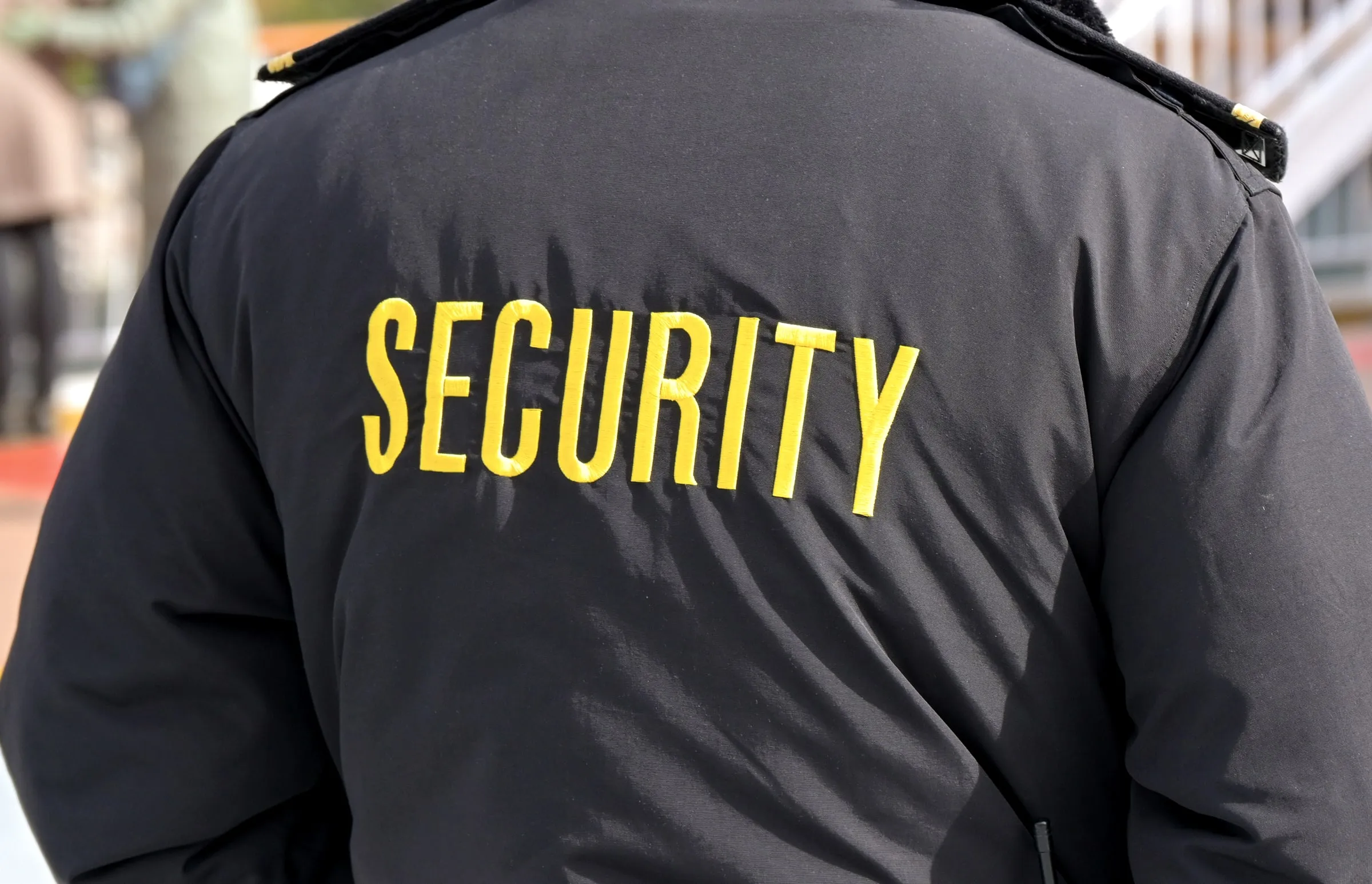
The marked uniform is the default because presence is the product
For most posts, patrol, gate, lobby and event coverage among them, the largest part of what an officer contributes happens before anything goes wrong: a would-be trespasser sees the presence at the entrance and picks a different property, a resident sees the vehicle on its round and does not need to call about the noise down the hall. That effect depends on the presence being obvious. A shirt with SECURITY across the back, a marked jacket, a visible radio and, where the post calls for it, a marked patrol vehicle all do the same job: they tell anyone looking at the property, at a glance, that someone is watching. This is why a marked uniform is the starting point for garden and high-rise communities, gated entrances, construction sites, retail exteriors and most patrol work, and it is what Price Protection assigns unless a property asks for something different.
A low-profile look trades visibility for a different feeling
Some posts are better served by an officer who reads as staff rather than as a guard. A Class A office lobby or a luxury residential tower often wants the desk to feel staffed rather than watched, and a blazer and tie does that while the officer performs exactly the same access control and rounds a uniformed officer would. A leasing office wants prospective residents greeted by someone who looks like part of the team, not a security checkpoint at the door of a home they are considering. And a small number of situations call for something more deliberate than either: an HR-led termination or a workplace concern where the point of the presence is to be available and calm without turning the moment into a visible security event for everyone else in the office to notice. In each of these cases the officer’s duties and training do not change; only the clothing does, and it is chosen to match what the property wants people to feel when they see the post, not to hide that the property has security at all.
The choice comes down to what people are supposed to notice
The clearest way to make the decision is to ask what the property wants a visitor, a resident or a passerby to register first. If the answer is “that this property is watched,” a marked uniform is doing its job. If the answer is “that this desk is staffed and helpful” or “that this meeting is being handled quietly,” a lower-profile look does more for the property than a uniform would, even though the underlying post is identical.
| Choice | What it signals | Where it tends to fit |
|---|---|---|
| Marked uniform | The property is actively watched; deterrence is the point | Patrol posts, gated entrances, construction sites, retail exteriors, most static posts |
| Business dress (blazer, tie) | The desk is staffed and the building runs smoothly | Class A office and residential lobbies, leasing offices, front-of-house posts |
| Discreet or plain uniform by arrangement | The presence is available without becoming the focus of the moment | HR-led situations, specific workplace concerns, by agreement with the client |
None of these rows changes what the officer is trained to do or how the post orders read; they change how the officer is dressed to meet the property’s own goal for that post.
The vehicle and the small details follow the same logic
A marked patrol vehicle extends the same idea across a larger property: a lettered SUV moving through a lot at a predictable but varied interval is visible from every unit and every corner, which is exactly the point on a garden community or a commercial lot. Some properties, particularly ones concerned about a specific individual or a sensitive situation, ask for an unmarked vehicle instead, trading the deterrent value of visibility for a lower profile that does not announce the patrol before it arrives. The same logic that governs the uniform governs the vehicle, the badge and even the radio: each detail either advertises the post or blends it in, and the property’s own goal decides which is right. This choice is usually made once, at the walk-through, and revisited only if the property’s situation changes.
The choice is not permanent, and mixed posts are common
A single property does not have to pick one answer for every post it runs. A community can staff its gate and vehicle patrol in a marked uniform for the deterrence and run its clubhouse or leasing desk in business dress for the welcome it wants prospective residents to feel, with both decisions written into the same set of post orders. An office tower can do the same across a lobby desk and a loading dock. What matters is that each post’s choice is made deliberately, matched to what happens at that specific spot on the property, rather than defaulting the whole site to one look because that is what the first post happened to use.
Getting the choice wrong shows up quickly
A property that wants deterrence and puts its officer in business dress loses the visible effect that was the point of hiring a patrol in the first place; a lobby that wants a welcoming desk and instead gets a heavily marked uniform can make tenants feel like they are entering a checkpoint rather than a building. Neither mistake is about the officer’s competence, and both are easy to correct once noticed. The uniform decision belongs on the walk-through checklist alongside the hours and the route, discussed as a question of what the property needs people to feel, and it can be revisited at any renewal as the property’s own situation changes.
Questions
Related questions
Does a marked uniform actually change behavior, or is that just an assumption?
It is the basic logic of a static or patrol post: an officer's job on most properties is to be there before something happens, not to intervene after. A uniform that reads as security from across a parking lot or a lobby is what makes the presence register in the first place. A property that wants that effect chooses the uniform that produces it.
Can a community switch from a uniformed look to business dress later, or the other way around?
Yes, and it is a normal request to make at renewal or after a change on the property, such as a new lobby renovation or a change in the kind of activity the property is seeing. The post orders are updated to reflect the new choice, and it does not require a new contract.
Is fully plainclothes coverage available?
It exists as a narrower arrangement for specific situations, such as retail loss prevention where the store's own policy calls for it, and it is discussed and agreed with the client before it is used. It is a different assignment from a low-profile uniform choice, which still identifies the officer as security, just less prominently.
Does armed coverage change the uniform decision?
Not by itself. A commissioned officer can be dressed in a marked uniform or in business dress depending on the post, with the firearm carried in a retention holster either way under the post orders. The armed or unarmed decision and the uniform decision answer different questions and are made separately.
Related pages
Industries we serve
Insights
Request a proposal
Request a proposal for your property.
Two short steps. Dispatch reviews every request and calls you back about coverage. For urgent unarmed coverage we can typically staff most sites within hours.
24-hour dispatch
(281) 326-9189