
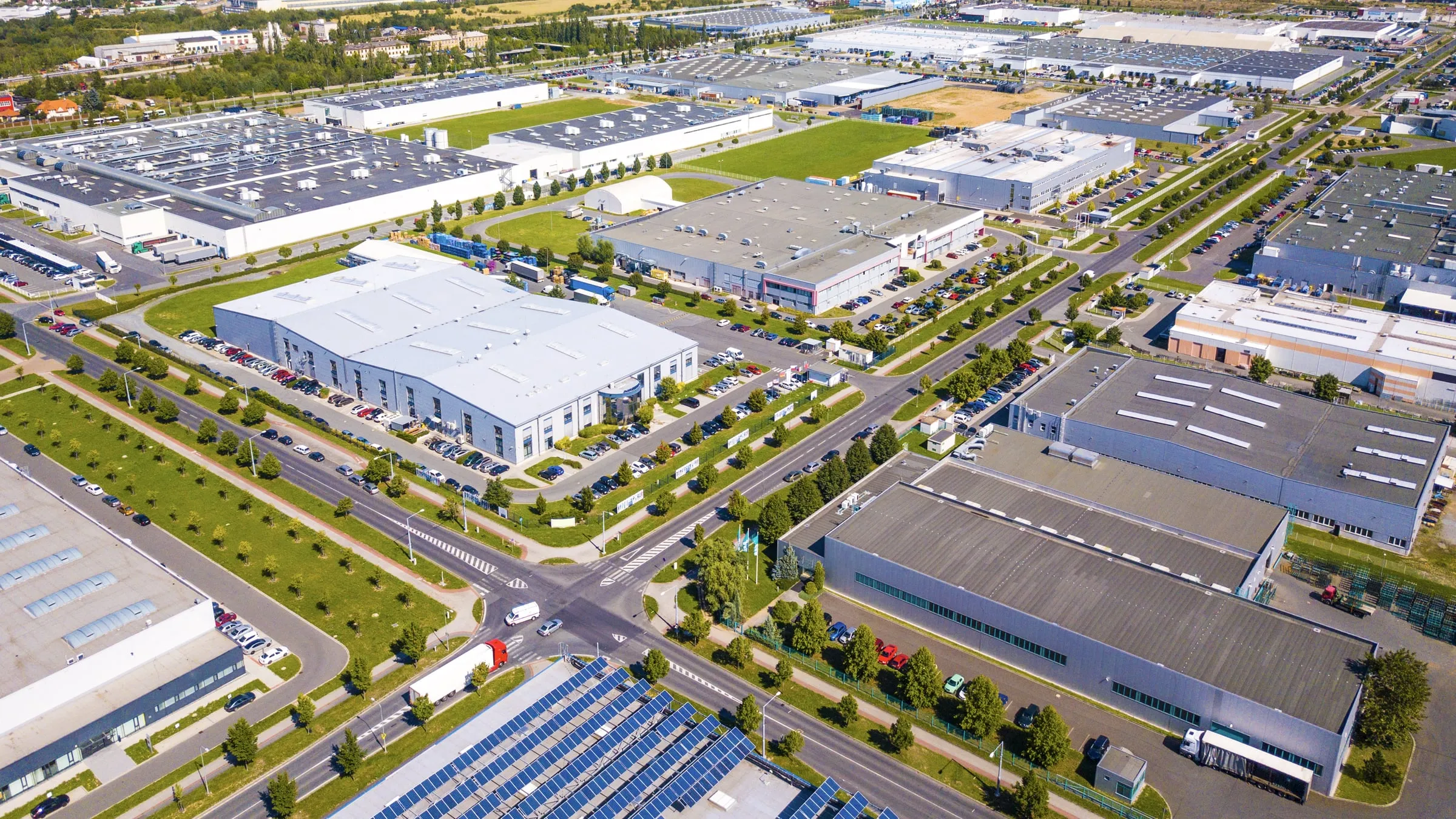
Security Guards for Industrial Parks
A patrol that covers the whole park, not one tenant's fence line, so a problem at building six is seen even when the post started the shift at building one.
Request a proposalThe situation
What a multi-tenant industrial park deals with along its shared roads
No single tenant owns the perimeter
An industrial park's fence line, entry road and shared drives belong to the park association or the owner, not any one tenant, and a tenant watching only its own dock has no reason to notice a break-in at the building next door.
Buildings change hands and crews mid-lease
Flex space turns over as businesses grow out of a bay or downsize into one, and a park with several move-ins and move-outs a year has a steady stream of unfamiliar trucks and crews that a tenant list from six months ago will not explain.
Docks and bays run on different schedules by tenant
One tenant receives freight at dawn, another runs a second shift until midnight, and a park's actual traffic pattern looks nothing like a single business's hours, which means no single tenant's schedule is a safe guide for when the park needs to be watched.
The shared road is also the getaway route
A park built around one or two entry roads means anyone with a reason to be inside the fence and anyone without one uses the same drive, and a park with no one watching that road has no way to tell the difference until something is already gone.
A shared driveway, several tenants
An industrial park is one property with many businesses inside it, and none of those businesses is responsible for what happens outside its own bay door. The fence line, the entry road and the shared drives belong to the park’s ownership or management company, and that is who Price Protection writes the post orders with. A patrol built for the whole park covers ground no single tenant would ever think to watch, because no single tenant’s lease extends past its own loading dock.
New occupants moving in and out
Flex space turns over faster than an office lease, and a park running several move-ins and move-outs in a given season sees a steady stream of trucks and crews that were not there the week before. The officer works from the property manager’s move schedule, confirming a crew and a unit before waving a truck further into the park, and pays closer attention to the loading area on move days than on an ordinary Tuesday, since that is when the park’s traffic looks least like its normal pattern.
Trucks, docks and the perimeter road
A park with tenants running dawn deliveries, second shifts and everything in between has no single schedule that describes the property’s actual activity, and a patrol built around one tenant’s hours misses everyone else’s. The vehicle patrol instead runs the shared roads on a set loop through the day and into the night where coverage extends that far, checking dock doors, bay entrances and the entry road itself, since that road is the one route both a legitimate delivery and a break-in use to reach the property.
Working with the park’s management office
The property manager or park association is the officer’s point of contact for tenant lists, expected deliveries and move schedules, not any individual business inside the park. That single point of contact matters more here than in a single-tenant property, because the officer’s coverage spans buildings whose day-to-day operators may never speak to each other, and the daily report goes back to the one office that can act on a pattern across the whole property.
Starting coverage
To begin, dispatch needs the park’s address, a map or list of the buildings and their tenants, the entry points the patrol should cover, and any known move-ins or move-outs already scheduled. A vehicle patrol can typically start within hours of a signed proposal, with post orders and the patrol route refined over the first weeks as the officers learn each building’s delivery pattern.
How we cover it
Every service, applied to this post.
- Vehicle patrol
A marked patrol vehicle runs the park's shared roads and building perimeters on a set round, checking docks, bay doors and parking areas across every tenant rather than one, and is the most direct coverage for a property built around multiple buildings instead of one.
- Access control
Where the park has a staffed or gated entrance, the officer checks vehicles against the day's tenant and delivery list, and logs trucks and crews tied to a move-in or move-out against the property manager's schedule.
- Unarmed security guards
A fixed unarmed post at the main entrance or a shared amenity building covers the hours the park wants a person checking arrivals rather than relying on patrol rounds alone, particularly during a high-turnover season with several tenants moving at once.
- Camera monitoring
Where the park owns entrance and common-area cameras, the officer monitors them during the patrol shift and pulls footage for the property manager when a tenant reports a break-in or missing equipment at a shared loading area.
- Incident reporting
The daily report covers the park rather than a single building: patrol rounds completed, docks and bays checked, move-in and move-out activity, and any tenant's building that needs the property manager's attention.
A typical post
What a shift looks like here.
The daytime patrol runs the park's roads on a set loop, checking dock activity against the day's expected deliveries, and stopping at any building with a truck or crew not on the property manager's list to confirm who they are working for before continuing the round.
A move-in or move-out day changes the shift's focus: the officer works from the schedule the property manager provided, confirms the crew and the unit before allowing access, and watches the loading area more closely than usual since move days bring the most unfamiliar trucks the park sees in a given month.
Evening rounds slow the pace but not the coverage, checking that dock doors closed for the day are actually down, that a bay left open for a late shift is one the tenant list explains, and that the shared entry road is quiet rather than hosting a vehicle with no reason to be there.
Overnight coverage, where the park has it, is built around the entry road and the buildings with the least natural activity, since an empty bay at two in the morning is the park's most exposed hour and the one a daytime-only patrol would never see.

Reporting
What the daily report covers here
Every client receives a written report each day, and officer performance is reviewed and documented daily. This is what the report records on this kind of post.
- Patrol rounds completed, by building and by time
- Dock and bay doors checked, open or closed against the tenant's schedule
- Move-in and move-out activity, with the unit and the crew
- Vehicles or persons at a building without a matching tenant record
- Entry road and perimeter fence checked for damage or forced entry
- Deliveries and trucks logged against the day's expected schedule
Does coverage apply to the whole park or just one tenant's building?
The proposal is typically written for the park's owner or management company and covers the shared roads, perimeter and common areas across every building, though an individual tenant can also contract for its own bay separately.
How do you handle a truck at a building with no listed delivery?
The officer stops to confirm who the crew is working for before it proceeds further into the park, checks it against the day's schedule from the property manager, and logs the stop whether or not the delivery turns out to be legitimate.
Can you cover a move-in without disrupting other tenants' deliveries?
Yes. The officer works from the property manager's move schedule alongside the park's normal delivery traffic, checking each against its own list rather than treating every truck on the property the same way that day.
Do you patrol at night if the park has no gate?
Yes, an ungated park can still be covered by a vehicle patrol on a set round through the night, which is often the only practical coverage for a property with multiple open entrances rather than a single staffed gate.
How fast can coverage start after a break-in at one building?
An unarmed patrol can typically begin within hours of a signed proposal, and the post orders can prioritize the affected building and its dock while the rest of the park's coverage builds out over the following days.
Related pages
Industries we serve
Services
Service areas
Insights
Glossary
Request a proposal
Request a proposal for industrial parks.
Two short steps. Dispatch reviews every request and calls you back about coverage. For urgent unarmed coverage we can typically staff most sites within hours.
24-hour dispatch
(281) 326-9189